
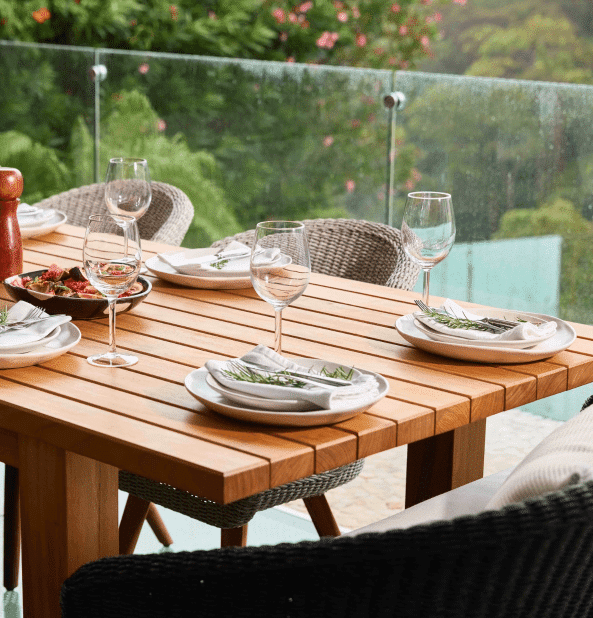
A teak dining table beside a pool, or a lounge setting exposed to a long western afternoon, has to do more than look beautiful. Australian outdoor spaces ask a great deal of their materials. So, is teak weatherproof? High-quality teak is exceptionally weather resistant, but it is not entirely maintenance-free or impervious to every condition.
The distinction matters when you are investing in furniture intended to shape the way you live outdoors. Teak has earned its place in luxury outdoor design because it performs remarkably well through heat, rain, humidity and salt-laden air. Its longevity, however, depends on the grade of timber, the construction of the piece, drainage, placement and the finish you prefer over time.
Is teak weatherproof or simply weather resistant?
Teak is naturally weather resistant rather than technically waterproof. The timber contains a high concentration of natural oils and dense grain, both of which help repel moisture and make it less inviting to rot, warping and insect activity than many other timbers.
When rain falls on well-made teak, water is far less likely to penetrate deeply or cause the swelling and splitting associated with lower-density hardwoods. In a properly designed outdoor setting, this gives teak an impressive ability to remain stable across changing seasons.
Yet no timber should be treated as invulnerable. Standing water, persistent shade, poor airflow and inadequate joinery can shorten the life of any piece. Teak’s natural qualities provide an excellent foundation, but thoughtful design and sensible care protect the investment.
Osier Belle selects A6-grade teak sourced from Jepara, Indonesia, for its outdoor furniture. The timber is carefully selected and kiln-dried before manufacture, helping control moisture content and improve stability before it is exposed to Australia’s changing outdoor conditions. This preparation is an important part of long-term performance, alongside teak’s natural resistance to the elements.
Why teak performs so well outdoors
The appeal of teak is both practical and visual. Fresh teak has a warm honey-to-golden tone, with grain variation that brings depth and character to architectural outdoor spaces. Over time, exposure to sun and rain allows the surface to develop a soft silver-grey patina.
This change is primarily cosmetic and does not, by itself, mean the timber has failed. For many homeowners and designers, the silvery finish is part of teak’s appeal. It sits beautifully beside pale stone, rendered walls, concrete and established greenery. Others prefer to retain more of teak’s original golden tone through regular cleaning and appropriate timber protection.
Its performance comes from several inherent material qualities:
- Natural oils that help the timber resist moisture absorption.
- A tight, dense grain that supports stability and strength.
- Good resistance to decay and insects when compared with most timbers.
- A surface that remains comfortable to touch in varied conditions, especially compared with metal in full sun.
These qualities make teak particularly suited to Australian terraces, covered entertaining areas, poolside settings and exposed balconies. Still, material quality is not interchangeable. A beautiful photograph cannot reveal whether timber has been properly dried, selected for its grade or joined with hardware capable of enduring coastal exposure.
Australian sun is teak’s real test
Rain is only one part of the equation. In much of Australia, ultraviolet exposure is the more persistent challenge. Strong sun gradually changes teak’s surface colour, dries its outer fibres and can encourage fine checking – small, shallow lines in the grain. This is a normal movement in natural timber and does not necessarily affect structural integrity.
Premium construction makes a visible difference here. Timber should be carefully seasoned before manufacture, with generous proportions, clean joinery and adequate allowance for natural expansion and contraction. Fine furniture is designed with the understanding that timber is a living material, not a static synthetic surface.
If your setting will sit in direct sun for much of the day, expect its colour to evolve more quickly. This can be desirable, particularly in contemporary landscapes where a weathered silver tone adds quiet refinement. If you want to preserve a more uniform golden appearance, regular upkeep is required. There is no coating that permanently freezes teak’s original colour while allowing it to live outdoors naturally.
Osier Belle treats its teak furniture with Cutek before it leaves the factory. This penetrating timber treatment is intended to help protect the wood against moisture exposure while allowing it to move naturally outdoors. The available Cutek finishes, including Clear and Black Ash, also provide different aesthetic options. As with any exterior timber treatment, ongoing maintenance depends on exposure and the appearance the owner wishes to retain.
How does teak handle rain, humidity and coastal air?
Teak is an excellent choice for humid climates and wet seasons because of its oil content and low tendency to retain water. However, the details around the furniture are as important as the material itself. Water must be able to drain from tabletops, seat frames and beneath furniture feet. Constant contact with wet paving, lawn or pooled water creates a harsher environment than occasional rainfall.
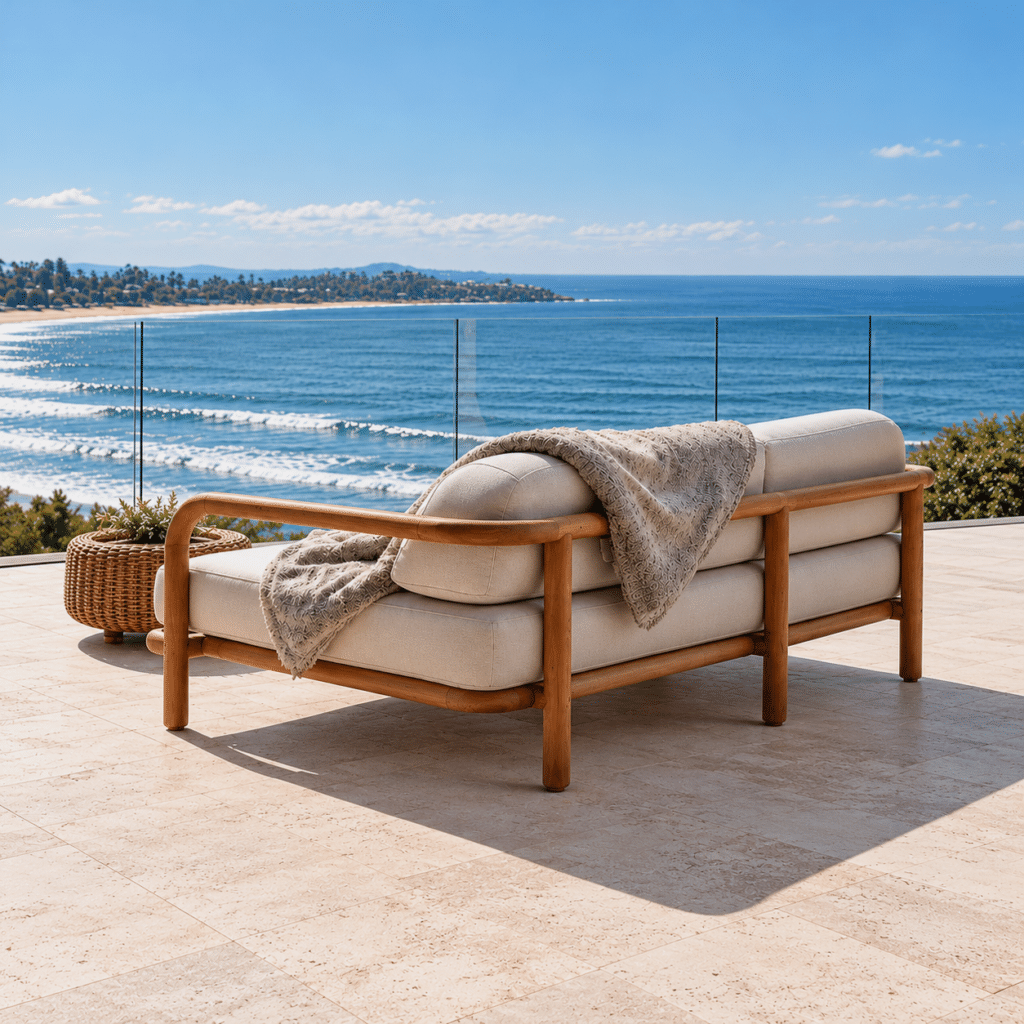
For homes near the coast, teak is often favoured for its capacity to withstand salt air. The timber itself is well suited to coastal environments, although regular fresh-water rinsing helps remove salt deposits and other residue that can accumulate on exposed furniture surfaces.
A covered terrace offers useful protection from constant weather, but it also needs airflow. In enclosed, damp areas, mould and surface mildew can develop on teak just as they can on any exterior surface. This is usually treatable with gentle cleaning, but prevention is simpler: allow air to circulate and avoid leaving wet cushions or covers on the timber for extended periods.
Placement makes a difference
Before selecting a teak dining setting or lounge, consider more than dimensions and style. Review drainage falls, pool fencing, access points, overhead cover and the orientation of the space. A setting beneath a deciduous tree may receive shade and beauty, but also leaf litter, tannin stains and seasonal moisture. A balcony facing the ocean may need a more regular rinse than one sheltered by surrounding buildings.
This is the level of planning that turns outdoor furniture into a considered extension of the home rather than an afterthought.
Caring for teak without overworking it
Teak care should match the look you want and the exposure the furniture receives. For a naturally weathered finish, a gentle clean once or twice a year is often enough. Use a soft brush, mild soapy water and clean water to rinse. Brush in the direction of the grain and avoid aggressive pressure washing, which can roughen the surface and strip softer grain fibres.
For those who prefer to maintain teak’s original appearance, the treatment already applied to the furniture should guide ongoing care. Osier Belle’s teak is treated with Cutek before delivery, so subsequent maintenance should follow the appropriate Cutek product guidance rather than introducing unrelated oils, varnishes or generic timber treatments.
Cutek penetrates the timber rather than forming a heavy surface film, allowing the wood to continue moving naturally as outdoor conditions change. The frequency of cleaning and reapplication will depend on exposure, the selected finish and the appearance you wish to maintain. Osier Belle also offers a professional teak maintenance service for clients who prefer specialist assistance with ongoing care.
Furniture covers can be helpful during long periods of non-use, particularly beneath trees or in dusty locations. Choose a breathable cover and only use it when the furniture is fully dry. Trapping moisture beneath a non-breathable cover can create the very surface issues you are trying to avoid.
What can compromise teak’s longevity?
Teak’s reputation can lead people to overlook the role of craftsmanship. Lower-grade teak may include more sapwood, inconsistent grain or inadequate drying. These variables can affect colour consistency, movement and long-term resilience. The thickness of the timber, the quality of joints and the hardware specification are equally significant. Osier Belle’s approach begins with selecting premium teak and kiln-drying the timber before it is worked into furniture. Controlling moisture content during preparation helps reduce the risk of excessive movement once the finished piece is exposed to fluctuating outdoor temperatures and humidity.
A teak piece should feel substantial and balanced. On tables, look for practical details such as slatted tops or discreet drainage provisions where appropriate. On seating, consider how water can drain away and whether the cushions are designed for outdoor exposure. Osier Belle uses Urecel QuickDry Foam and 100% solution-dyed acrylic fabrics, helping cushions manage moisture and prolonged outdoor use. During extended severe weather or periods of non-use, sensible protection and storage can still help preserve their appearance.
Everyday use also leaves its mark. Sunscreen, food spills, red wine and damp planters can stain untreated timber if left in place. Wipe spills promptly, use coasters or placemats for entertaining, and keep planters raised so water cannot sit beneath them. These small habits preserve the finish without making the space feel precious or untouchable.

Teak is a long-term material choice
Teak is not the right answer for every project. Its natural colour will evolve with outdoor exposure, and maintaining a particular finish requires ongoing care. For homeowners who appreciate natural grain, gradual weathering and the character of solid timber, these qualities are often part of its appeal rather than drawbacks.
For design-led homes, its versatility is part of its strength. Teak can soften a crisp contemporary pool zone, bring warmth to stone-heavy courtyards, or create a more relaxed counterpoint to formal architecture. It works best when its natural evolution is embraced rather than resisted.
Teak’s natural weather resistance makes it an excellent choice for Australian outdoor furniture, provided the timber is properly selected, prepared and maintained. The key is understanding that weather resistance does not mean maintenance-free. With appropriate care and realistic expectations about natural colour changes, quality teak can remain a lasting part of an outdoor setting for many years.
