
Salt air has a way of exposing shortcuts. What looks polished on a showroom floor can start to pit, fade, crack or loosen surprisingly quickly once it is placed near the ocean. If you are searching for the best outdoor furniture for coastal areas, the decision is less about following trends and more about choosing materials, construction and proportions that can handle a harsher environment without compromising on style.
For Australian homes by the beach, that balance matters. Outdoor spaces are often the most used parts of the property – the terrace where everyone gathers at sunset, the poolside zone that doubles as a second living room, or the balcony that needs to look refined year-round. In coastal settings, beautiful design still matters, but it has to be backed by genuine durability.
What coastal conditions really do to outdoor furniture
Coastal environments are demanding in ways that inland buyers sometimes underestimate. Salt carried in the air settles on surfaces and works its way into finishes, fittings and frames. Constant UV exposure can bleach colour, dry out natural fibres and weaken materials that were never engineered for Australian conditions. Humidity encourages mould and mildew, while strong winds test the stability of lightweight pieces and poorly considered silhouettes.
That means the best outdoor furniture for coastal areas is rarely the piece with the most decorative finish or lowest price point. It is usually the one made with a disciplined material palette, quality joinery and thoughtful detailing that allows it to age well.
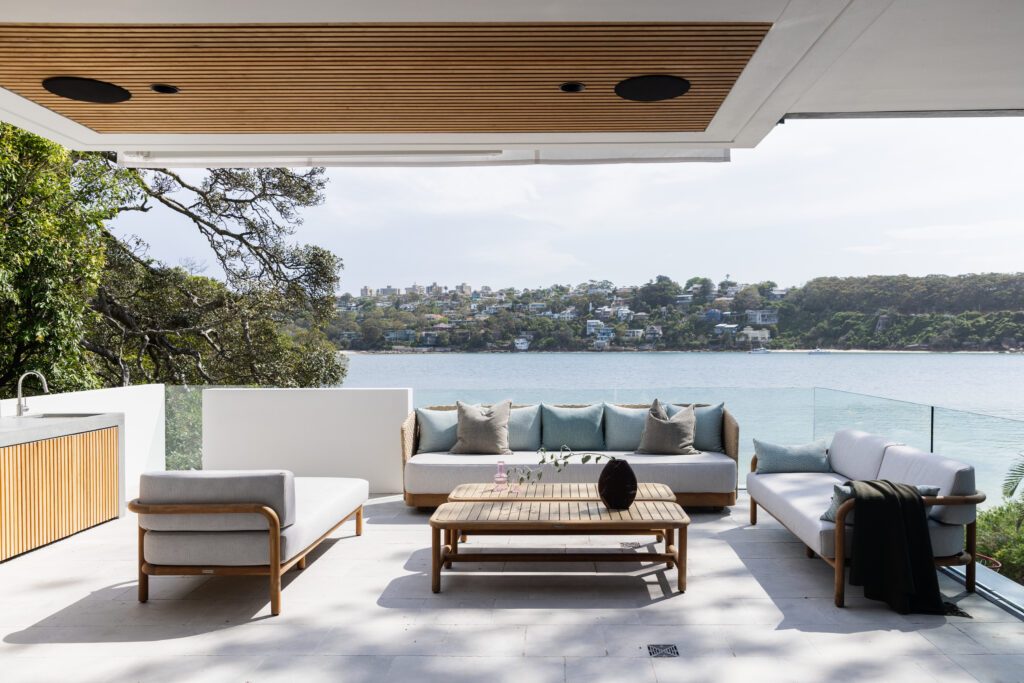
The best materials for outdoor furniture in coastal areas
Material choice is where most good decisions begin. Not every outdoor material performs equally near the coast, and the differences become obvious over time.
Teak for natural longevity
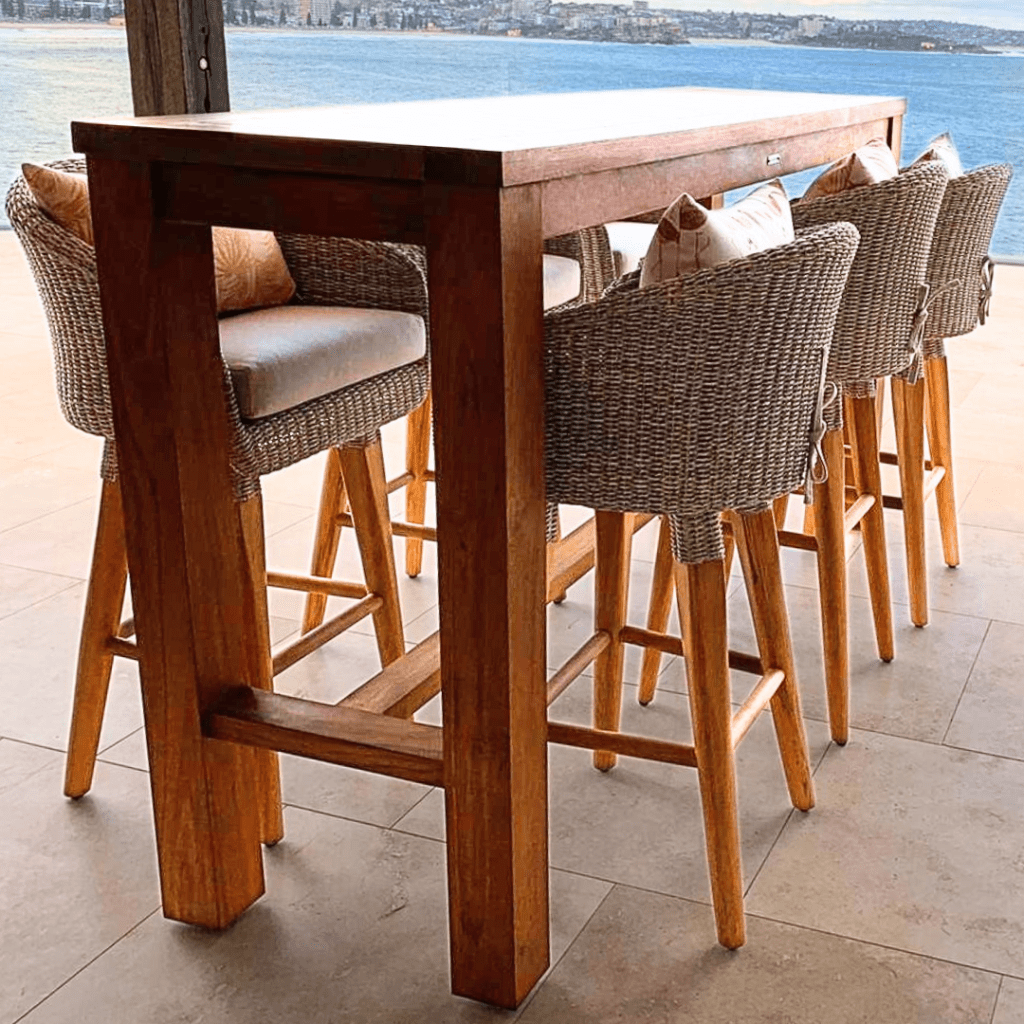
Teak remains one of the strongest choices for coastal living, particularly for dining tables, chairs, benches and occasional pieces. Its natural oil content helps it resist moisture and makes it more stable than many other timbers in exposed settings. It also carries a visual warmth that suits contemporary Australian architecture, softening stone, concrete and crisp white façades.
Quality and preparation still matter. Osier Belle sources its teak from Jepara, Indonesia, with timber selected and kiln-dried before being handcrafted into furniture. The teak is also protected before leaving production rather than arriving as raw timber requiring its first treatment from the homeowner.
The trade-off is that teak changes over time. Left to weather naturally, it develops a silver-grey patina. Many homeowners love that relaxed appearance, particularly in beachfront settings. Others prefer to maintain more of the original golden tone, which requires regular care. Neither approach is wrong – it depends on the look you want and the maintenance you are comfortable with.
Powder-coated aluminium for low-maintenance performance
For many coastal homes, powder-coated aluminium is one of the most practical structural materials available. It is relatively lightweight, strong and resistant to corrosion when properly prepared and finished, making it well suited to lounges, dining settings and modular pieces.
Quality matters here. Thin frames, weak welds and poorly prepared coatings can reveal themselves quickly in salty air.
Osier Belle uses substantial welded aluminium frames beneath its handwoven wicker furniture. This is an important distinction: the visible wicker creates softness and texture, while the aluminium beneath provides the structural integrity required for long-term outdoor use.
Outdoor wicker with the right construction
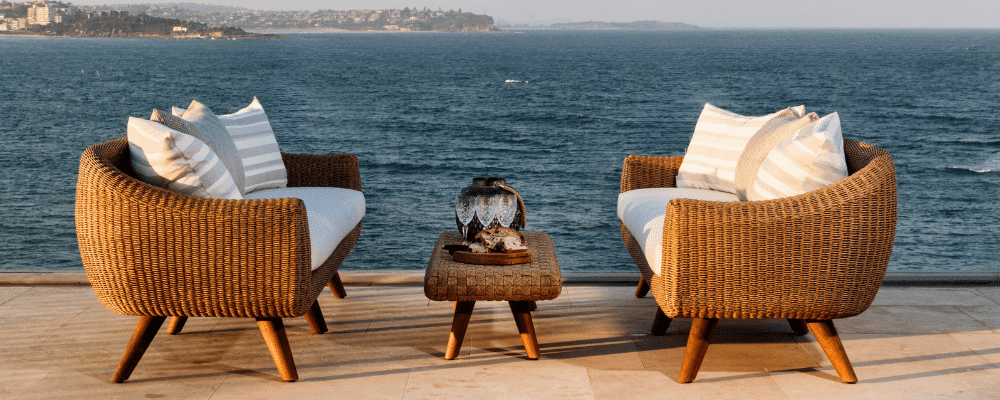
Wicker can work exceptionally well in coastal settings when it has genuinely been developed for outdoor use. Premium synthetic wicker offers texture, softness and a more inviting residential feel than some harder materials, particularly for deep seating, daybeds and occasional chairs.
Osier Belle uses Rehau and Viro synthetic wicker, handwoven by skilled craftspeople at its own factory. The synthetic fibre is selected to cope with UV and moisture without the absorbency associated with natural rattan and similar fibres.
The frame beneath the wicker is just as important as the weave itself. A beautifully woven exterior over a weak frame is still a compromised piece of furniture. Look at the complete construction rather than judging quality from the visible surface alone.
Performance fabrics and quick-dry cushioning
In coastal areas, upholstery is often where disappointment starts. Cushions that hold water, fabrics that fade unevenly or inserts that never quite dry can make even a beautiful setting difficult to live with.
Osier Belle uses solution-dyed acrylic outdoor fabrics alongside Urecel QuickDry Foam, which has an open-cell construction designed to allow water to drain and air to circulate through the cushion. That combination is particularly useful around pools and exposed coastal entertaining areas where furniture needs to recover quickly after moisture.
Removable cushion covers also make ongoing cleaning more manageable when salt, sunscreen and everyday outdoor use inevitably leave their mark.
What to avoid near the coast
Some materials and finishes simply ask too much of a coastal environment. Steel that is not adequately protected can corrode. Lower-grade timbers may warp, split or deteriorate faster than expected. Decorative coatings can blister or peel, while natural indoor-grade wicker and rattan are poorly suited to ongoing moisture and UV exposure.
It also pays to be cautious with overly intricate designs. Furniture with unnecessary seams, crevices or decorative joins can collect salt, sand and moisture, making maintenance harder. Simpler forms often perform better and tend to remain visually relevant for longer.
Design matters just as much as durability
The best outdoor furniture for coastal areas should withstand the climate, but that is only half the brief. It also needs to suit the architecture of the home and the way the space is used.
A broad terrace overlooking the water can accommodate generous modular lounges, sculptural dining settings and layered occasional seating. A compact balcony may require slimmer frames, lower visual bulk and pieces that allow easy circulation around balustrades and doors.
Scale is where many outdoor spaces fall short. Furniture that is too small can make a premium home feel underdone, while oversized pieces can restrict movement and create visual clutter.
Made-to-order furniture can be particularly useful here. Osier Belle can customise dimensions including length, width and height across suitable designs, as well as cushion thickness, wicker, fabric and finishes. Rather than compromising the entire setting around a standard furniture footprint, the piece can be more closely considered against the architecture.
How to choose pieces that will last beautifully
If longevity is the goal, look beyond surface appearance. Ask how the frame is made, what the joinery is like, how the finish has been applied and whether the cushions have been engineered for outdoor use rather than simply covered in outdoor fabric.
Comfort deserves the same scrutiny. Deep seating feels luxurious, but it needs the right seat height and support to remain practical. Dining chairs should suit the table physically as well as visually. Sun loungers should be stable, comfortable and easy enough to reposition as conditions change.
For an entire outdoor zone, combining materials can create a more resolved result. A teak dining table, handwoven lounge setting and concrete coffee table can sit comfortably together when their tones, scale and detailing have been considered as one scheme.
Maintenance should be realistic, not burdensome
Even the best-made outdoor furniture benefits from care near the coast. Salt deposits should be rinsed or wiped away periodically, particularly from frames and exposed surfaces. Cushions should be protected during extended periods of bad weather, and timber care should reflect the finish you want to maintain.
Osier Belle also offers custom protective covers, including made-to-measure options, for periods when furniture will be left unused or exposed to prolonged weather. A cover should always be breathable and fitted over dry furniture rather than used to trap moisture underneath.
Luxury outdoor furniture should not feel like a full-time job. The right material choices and construction should reduce unnecessary maintenance rather than create more of it.
Furniture made with Australian coastal living in mind
Osier Belle was established around the need for luxury outdoor furniture capable of handling Australian conditions, and that becomes particularly relevant near the coast. Controlling design and production through its own factory allows material selection, frames, weaving, upholstery and finishing to be considered together rather than sourced as disconnected components.
Choosing for the coast is ultimately about restraint and confidence. Invest in materials suited to salt, sun and moisture, construction that supports their longevity, and proportions that work naturally with the home. The strongest coastal settings do not simply survive their location; they look as though they belong there.
