
A terrace can look generous on a plan yet feel surprisingly constrained once doors swing open, a dining setting is in place and guests begin moving between the kitchen, pool and view. To arrange terrace seating well, treat the space as an outdoor room with clear purpose, not simply a surface to fill. The most successful layouts make conversation feel effortless, protect the outlook and leave enough room to move without turning sideways around furniture.
For a refined result, begin with how you want to live there. A terrace used for long lunches needs a different rhythm from one designed for sunset drinks, quiet morning coffee or a family poolside retreat. The furniture should support that occasion while holding its own against the architecture, landscape and Australian climate.
Start with the terrace, not the furniture
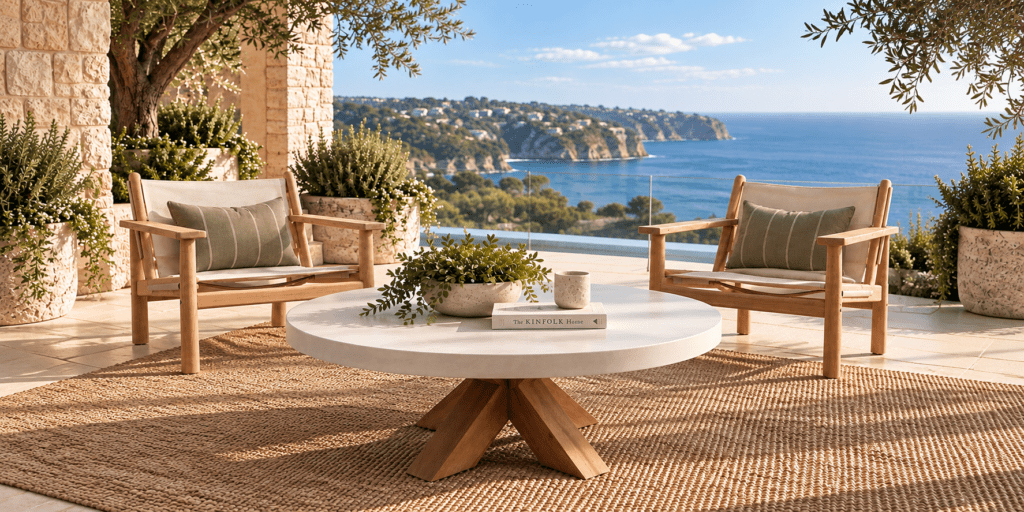
Before choosing a sofa or setting, study the terrace as it behaves throughout the day. Note where the sun lands in summer and winter, how wind moves through the space, where rain reaches, and which views deserve to remain open. On coastal sites, salt air and gusts can be just as influential as the floor plan. In dense urban settings, privacy from neighbouring windows may be the greater concern.
Measure more than the overall footprint. Record the location and swing of doors, steps, pool fences, balustrades, outdoor kitchens, planters and downpipes. Allow for the depth of open sliding doors and the path from inside to outside. This is where a considered layout distinguishes itself: it anticipates movement rather than correcting it after delivery.
Also consider the sightline from indoors. When viewed through a large glazed opening, the back of a lounge can become a major visual element. A low-profile modular sofa may preserve a view to the garden or water, while a beautifully finished timber dining table can create a strong architectural focal point. With Osier Belle’s made-to-order furniture, suitable designs can be adjusted in length, width, height and cushion proportions to respond to these architectural considerations. On a terrace with uninterrupted views, for example, a lower-backed seating arrangement or customised seat height can help preserve sightlines from inside the home without sacrificing comfort outdoors.
Create zones with a clear reason to exist
Large terraces often benefit from two or three distinct zones, but only when each has a purpose. A dining zone closest to the kitchen makes serving simpler. A lounge zone slightly removed from the house feels more relaxed and gives guests a reason to linger. Near a pool, a pair of sun loungers and a small table can create a dedicated place for towels, books and a cool drink without crowding the main entertaining area.
On a compact terrace, one adaptable setting may be the wiser choice. A generous round dining table can host lunch, cards and evening drinks, while a pair of occasional chairs can be drawn into conversation when required. Trying to force a dining set, deep lounge, daybed and sun loungers into a limited area tends to make every piece less useful. Where a terrace needs to serve several purposes, furniture with integrated storage can also reduce the number of separate pieces required. Osier Belle’s Tressé Outdoor Storage Sofa and Poolside Daybed with Storage incorporate concealed storage into the seating itself, helping keep cushions and outdoor essentials close at hand without adding another cabinet or chest to the layout.
Use changes in orientation to define each zone. A lounge arranged at right angles to the home can frame an outlook and create a sense of enclosure. A rug designed for outdoor use, a substantial planter or a side table placed between chairs can reinforce the boundary without erecting a physical barrier. The goal is cohesion, not a collection of isolated furniture groupings.
Give conversation a natural shape
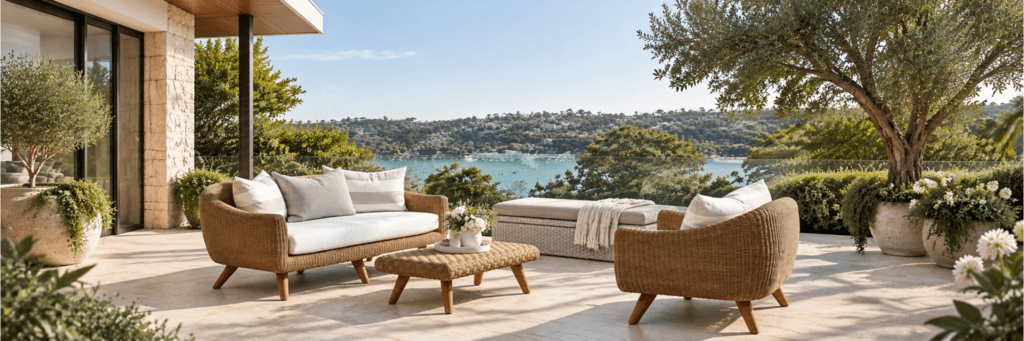
For relaxed seating, place sofas and chairs close enough that people can speak comfortably without raising their voices. Facing pieces encourage connection, while an L-shaped configuration suits a corner and offers generous seating with a contained footprint. If a view is the hero, angle the arrangement towards it rather than automatically facing every seat towards the house. Osier Belle’s modular collections, offer different ways to build these arrangements. Individual modules can be configured into longer sofas, corner settings or more open conversation layouts, depending on the collection. This allows the seating to respond to the terrace’s proportions and the way people gather rather than relying on one fixed arrangement.
A central coffee table or ottoman gives the group an anchor. It should be close enough to reach from every seat, but leave sufficient space to sit down and stand up comfortably. Where space is tight, consider slim occasional tables beside each chair instead of one large central piece.
Protect circulation as carefully as the view
A beautiful terrace arrangement fails when every route becomes an obstacle course. Keep primary paths direct: from the house to the dining table, from the door to the pool, and from seating to steps or gates. As a guide, allow around 900 mm for a main walkway where possible. Secondary gaps can be tighter, but should still feel comfortable when someone is carrying plates or moving a chair.
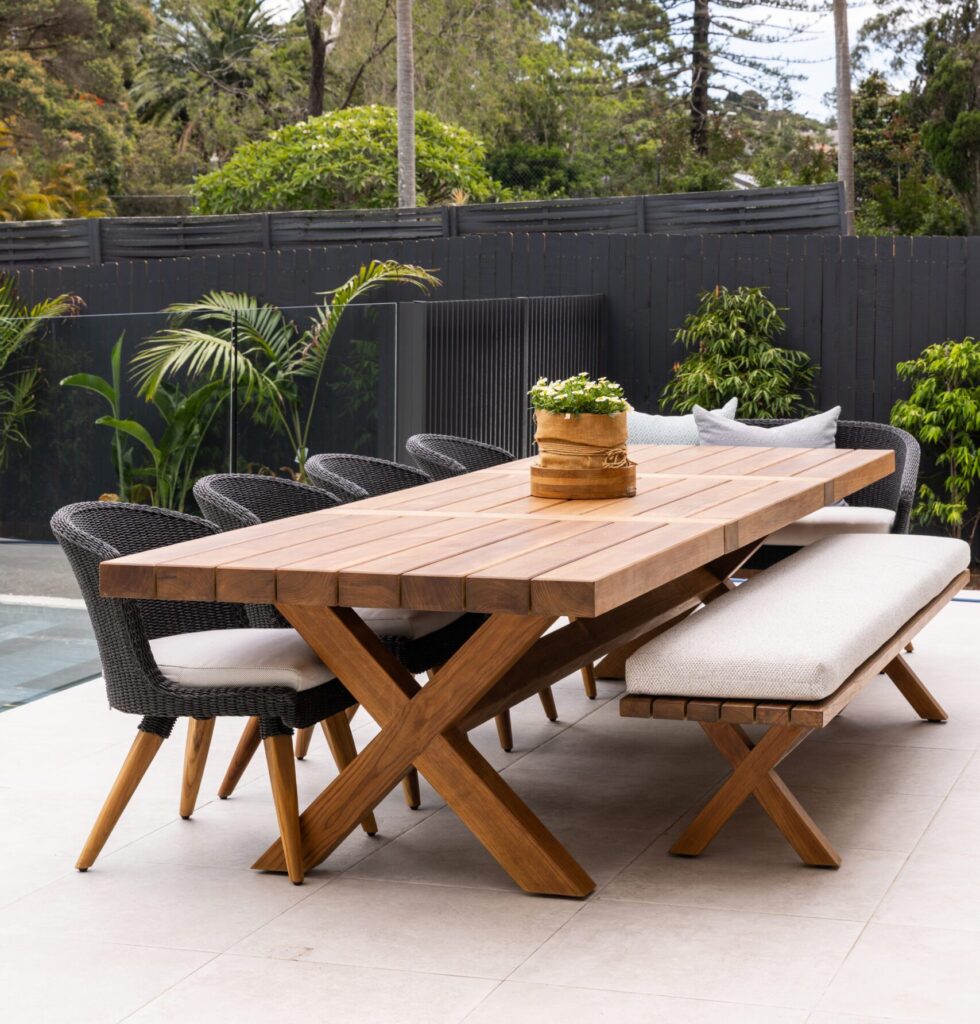
Dining chairs need room to slide back. A table may technically fit against a wall, yet become impractical once seats are occupied. Plan generous clearance around the setting, especially at the ends of a long table where guests naturally pass through.
This is also the point to make decisions about scale. A large modular lounge can be magnificent on a broad rooftop terrace, but on a narrow balcony it may close down the very openness you are trying to create. Conversely, undersized pieces can look temporary against expansive stone paving and tall architectural walls. Furniture should have enough presence to relate to the building, without dominating the available floor area.
This is where small dimensional adjustments can make a significant difference. Osier Belle can customise suitable sofa and dining designs to better suit the available footprint, whether that means reducing a lounge’s depth to preserve a walkway or adjusting a table’s dimensions to allow more comfortable circulation behind dining chairs.
Choose materials for the conditions you actually have
Outdoor furniture is an investment in years of use, so material selection should be driven by exposure as well as aesthetic preference. Teak develops a silver-grey patina as it weathers, or can be maintained to retain more of its original warmth. Osier Belle sources A6-grade teak from Jepara, Indonesia, with finished teak furniture treated with Cutek before leaving the factory. Its natural grain works particularly well with stone, rendered walls and established planting.
Wicker introduces texture and softness, particularly in lounging arrangements, but quality matters. Osier Belle uses premium Rehau and Viro synthetic wicker, handwoven by skilled craftspeople and selected for prolonged outdoor exposure. The consistency and detail of the weaving are particularly important on furniture viewed from several angles across an open terrace.
For contemporary settings, concrete tables and sculptural forms bring visual weight. Osier Belle’s glass fibre reinforced concrete furniture is sealed for outdoor use, although substantial pieces still require careful consideration of access, placement and any relevant structural load limits.
Cushions deserve equal scrutiny. Osier Belle uses Urecel QuickDry Foam, designed to encourage drainage and airflow, together with 100% solution-dyed acrylic outdoor fabrics. Its Fabric Portfolio includes textiles from Sunbrella, Dickson Constant and Agora, offering a wide selection of colours and textures suited to outdoor living.
Light tones can look fresh and expansive but may require more attentive care around children, pets and pool traffic. Deeper neutrals are often more forgiving, while scatter cushions provide an opportunity to introduce colour or pattern without committing the entire setting to a passing trend.
Plan shade as part of the seating layout
Shade should not be an afterthought. If the most comfortable lounge position is unusable by mid-afternoon, the layout needs revisiting. A quality parasol can provide flexible cover for a dining setting or reading chair, while a fixed pergola offers stronger architectural definition. Check the parasol’s canopy reach, base location and opening clearance before deciding where furniture sits.
Think seasonally too. A terrace that welcomes winter sun may need adjustable shade rather than permanent coverage. Retractable options and movable pieces preserve flexibility, allowing the space to change as the weather and occasion require.
Build a layered setting, then edit it
Once the primary seating is placed, add the practical details that make it feel resolved: a side table beside every lounge position, a place for a tray near the dining table, and discreet storage for cushions or pool accessories where relevant. Lighting should support the way you use the terrace after dark. Low, warm illumination around paths and planting is often more inviting than a single bright overhead fitting.
Accessories should add comfort and texture without obscuring the furniture’s design. A few generous planters, outdoor cushions in complementary tones and a carefully chosen lantern can give the terrace a lived-in elegance. Too many small objects, however, create visual noise and make the area harder to maintain.
Osier Belle’s design consultations can help resolve these decisions before furniture is ordered. By reviewing measurements, photographs, architectural plans and material preferences, the team can assess seating configurations, proportions and finishes, including where made-to-order adjustments may help the furniture work more comfortably within the terrace.
The final test is simple: walk the terrace as you would on a busy Saturday afternoon. Open the doors, pull out a dining chair, carry a tray, look towards the view and sit in every position. If the space feels easy at each step, the seating arrangement is ready to become part of your everyday life.
