
A well-positioned outdoor daybed changes the rhythm of a home. It creates a destination beside the pool, beneath a covered terrace or at the quiet end of a garden, inviting an afternoon that is not scheduled around anything at all. More than an occasional seat, outdoor daybeds bring the generous comfort of an interior lounge into the open air – with the scale, materials and engineering to suit the Australian climate.
For a considered outdoor setting, the daybed should feel intentional rather than simply oversized. Its proportions, canopy, cushion configuration and finish all influence how it sits within the architecture around it. The right piece becomes a defining element of the landscape. The wrong one can make even a generous space feel congested or exposed.
Begin With the Purpose of Your Outdoor Daybed
Before choosing a silhouette, consider how the daybed will be used. A poolside daybed has different requirements from one positioned on a terrace outside the main bedroom. By the pool, easy access, quick-drying upholstery and a frame that can tolerate sunscreen, splashing and reflected heat deserve priority. In a more sheltered courtyard, deep cushioning and a sculptural profile may take precedence.
For many homes, the appeal is shared relaxation. A round or generously proportioned double daybed gives couples and families room to stretch out, while a pair of individual loungers can offer greater flexibility around a pool. If the intention is to create a private reading corner, a cocooning design with an integrated canopy or high back can provide a genuine sense of retreat.
Think about the view from the daybed as carefully as the view towards it. Orient it towards water, established greenery or a feature wall where possible. Avoid placing it where occupants look directly into harsh western sun, a boundary fence or the busiest circulation route through the outdoor area.
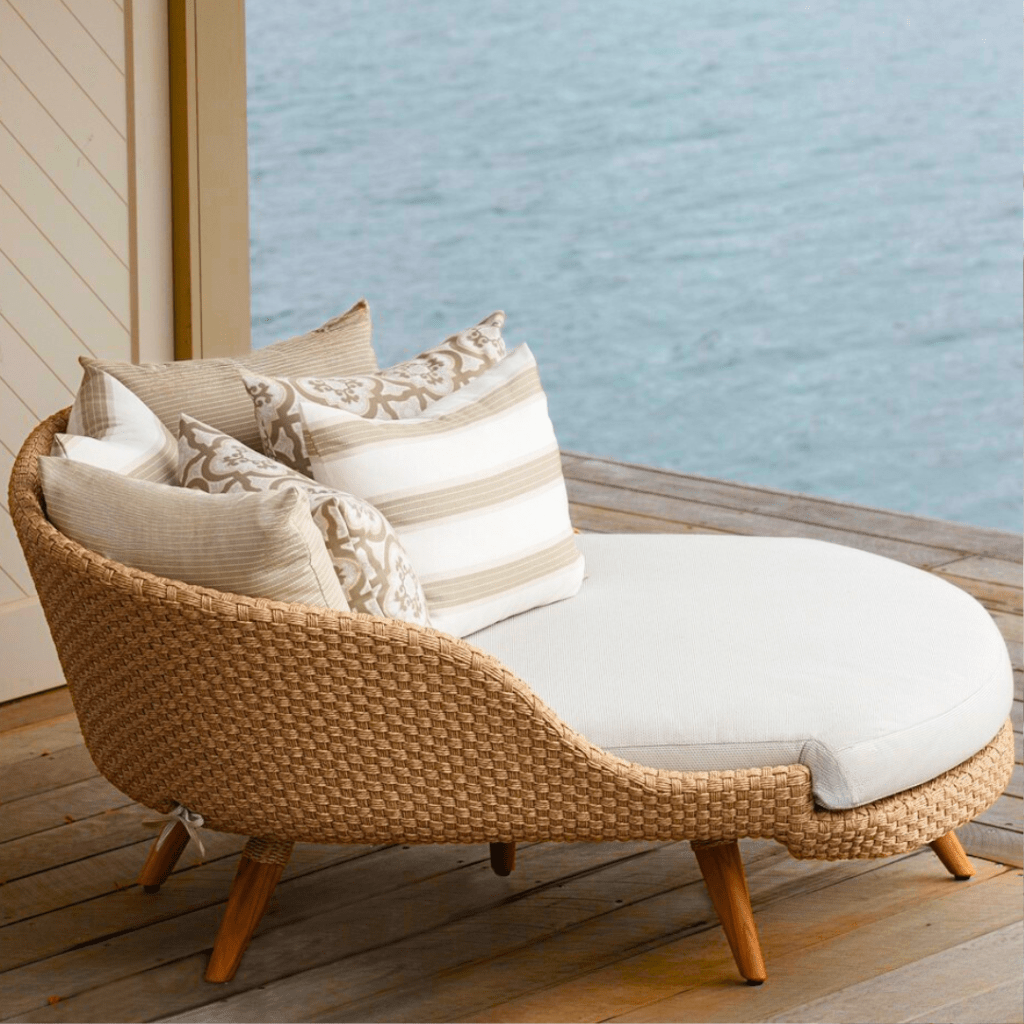
Get the Scale Right Before You Fall for the Design
Daybeds are intentionally substantial. Measure the footprint, then measure the space around it. Pool fences, doors, outdoor kitchens and pathways can turn a design that technically fits into one that feels oversized.
Access is just as important. Large pieces may need to pass through side gates, lifts, stairwells or narrow corridors. This is where Osier Belle’s made-to-order capability becomes useful. Because furniture is produced through its own factory, dimensions can be modified across suitable designs to resolve architectural or access constraints rather than requiring clients to choose the nearest standard size.
Materials That Earn Their Place Outdoors
Luxury is not simply a deep cushion and dramatic shape. It is the frame beneath the cushion, the integrity of the weave, the timber selection and the way those materials respond after several Australian summers.
For woven daybeds, Osier Belle uses premium Rehau and Viro synthetic wicker handwoven by its own skilled craftspeople. The wicker sits over substantial aluminium frames rather than lightweight structures hidden beneath the weave. Teak brings a different character. Osier Belle selects its teak in Indonesia, kiln-dries it before production and protects its teak furniture before delivery, allowing natural timber to be used confidently in exposed outdoor settings.
The Outdoor Teak Daybed can therefore create a particularly strong connection to natural stone, timber architecture and established landscaping, while woven designs introduce softer texture around harder pool and terrace surfaces.
Cushions Need More Than a Beautiful Fabric
A daybed is only as inviting as its cushions. Deep seat pads, supportive foam and generous scatter cushions create the indulgent appearance people expect, but the internal construction is what determines whether that comfort lasts beyond a season.
Osier Belle uses 100% solution-dyed acrylic outdoor fabrics alongside Urecel QuickDry Foam, designed to drain water and allow air to circulate through the cushion core. That distinction matters on a daybed because of the sheer volume of upholstery involved. A conventional foam insert can retain substantial moisture after rain, while purpose-designed outdoor foam is built around recovery and airflow.
Removable covers also simplify cleaning, particularly around pools where sunscreen, wet bathers and everyday use are unavoidable.
Canopies and shade should have a job to do
A canopy can create the unmistakable sense of retreat associated with resort-style daybeds, but it should never be selected purely for the photograph.
On fully exposed terraces, adjustable shade can extend the hours the daybed remains comfortable. In windy elevated locations, however, a large canopy can become impractical. Where permanent shade already exists beneath a pergola or roofline, a lower open daybed may integrate more naturally with the architecture.
The surrounding space can also provide the shade. A carefully positioned parasol gives more flexibility than committing to an enclosed form where conditions change throughout the day.
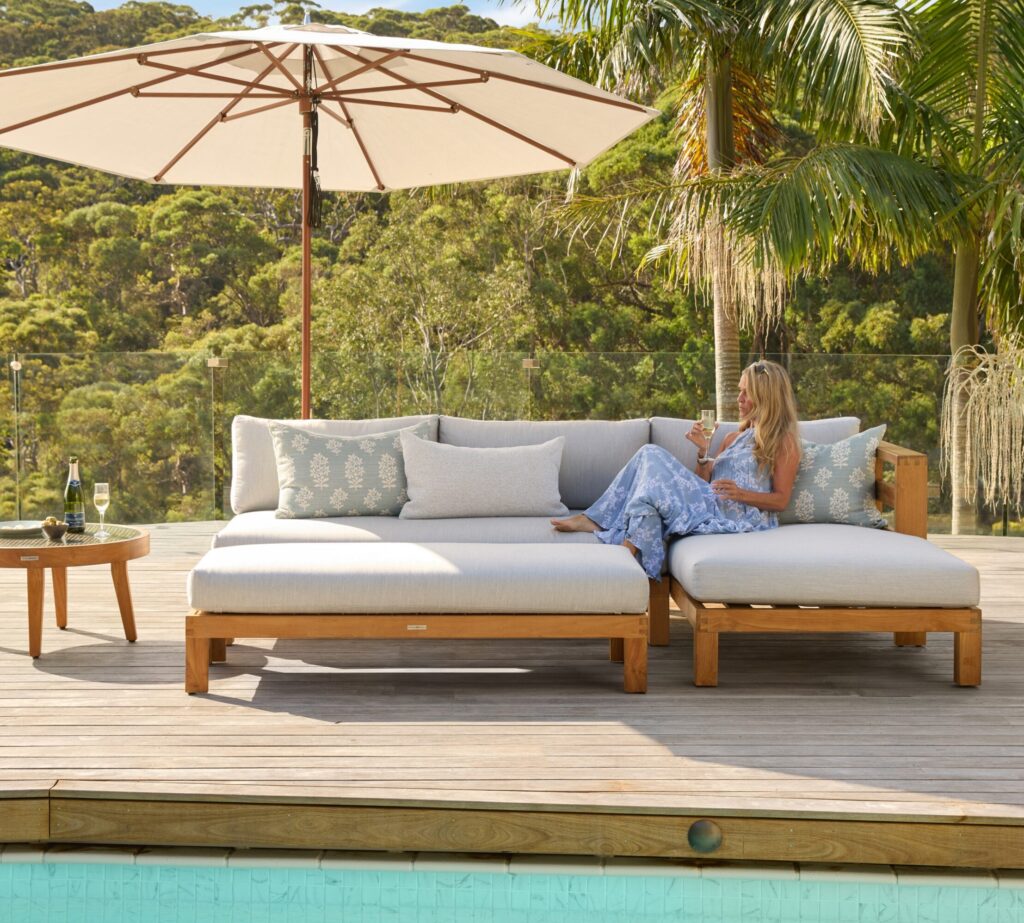
Create a Setting, Not an Isolated Piece
The most successful daybeds belong to a complete outdoor composition. A low side table gives occupants somewhere to place a book, drink or sunscreen. Nearby planters can add privacy and soften hard architectural edges. A complementary sofa setting, occasional chairs or dining zone can carry the same material language through a larger entertaining area.
Keep the immediate surrounds restrained. A daybed already has presence, so it rarely needs many competing accessories. One beautifully proportioned side table, a quality outdoor throw for cooler evenings and a considered selection of cushions are usually enough. The aim is ease, not display.
For designers working across a larger residence, repeat one or two cues from the interior – perhaps the warmth of timber, the curve of a chair or a particular neutral tone. This gives the transition from inside to outside a sense of continuity and makes the daybed feel integral to the home rather than added at the end of the project.
Make the daybed fit the life around it
An outdoor daybed should feel indulgent because you actually use it, not because it occupies the largest amount of space. The best starting point is therefore not simply “which daybed do I like?” but where it will sit, who will use it, how much sun and wind reach the location and how it relates to the rest of the outdoor setting.
Osier Belle’s range makes those distinctions possible – from sculptural woven double daybeds to cleaner teak forms and modular designs. Combined with the ability to customise suitable pieces, the result can feel less like a standalone product and more like something that was considered alongside the home from the beginning.
