
An outdoor parasol does more than provide shade. The right design can make a dining setting comfortable through a long summer lunch, protect a poolside lounge from harsh afternoon sun and help define an outdoor zone within a larger terrace or garden.
Choosing one, however, requires more than matching the canopy to your furniture. Size, orientation, wind exposure, canopy position, anchoring and the movement of the sun all affect how useful a parasol will be once it is installed.
For Australian homes, where outdoor areas may contend with intense UV, coastal conditions and changing weather, it pays to consider the parasol as part of the wider outdoor design rather than an accessory added at the end.
Start with where you actually need shade
Before comparing parasol styles, consider when and where shade is needed most.
A dining area used mainly at lunchtime has different requirements from a west-facing lounge exposed to low afternoon sun. Poolside furniture may need protection through the hottest part of the day, while a balcony may only receive direct sun for a few hours.
Observe the space at different times if possible. Note where the sun falls in the morning, around midday and later in the afternoon.
The position of the sun also changes throughout the year, so a parasol that provides ideal shade in summer may cast it differently during spring or autumn.
This is one reason Osier Belle offers ShadeSketch for Tuuci parasols, which can help predict how shade will fall across a space according to location, orientation, time of day and time of year. Rather than selecting a canopy based only on its dimensions, the aim is to understand where its shade will actually land.
Cantilever or centre pole parasol?
One of the first decisions is whether a cantilever or centre pole parasol better suits the furniture arrangement.
Centre-pole parasols
A centre pole parasol has a mast positioned directly beneath the centre of the canopy. It is a classic solution for outdoor dining tables designed with a central parasol opening and can also work as a freestanding shade solution. Because the weight is centred beneath the canopy, centre pole designs generally have a relatively efficient footprint. This can make them useful for smaller terraces and courtyards where circulation space is limited.
The compromise is the mast itself. When positioned through a dining table, it occupies some of the tabletop and limits your ability to move the canopy independently of the furniture.
Cantilever parasols
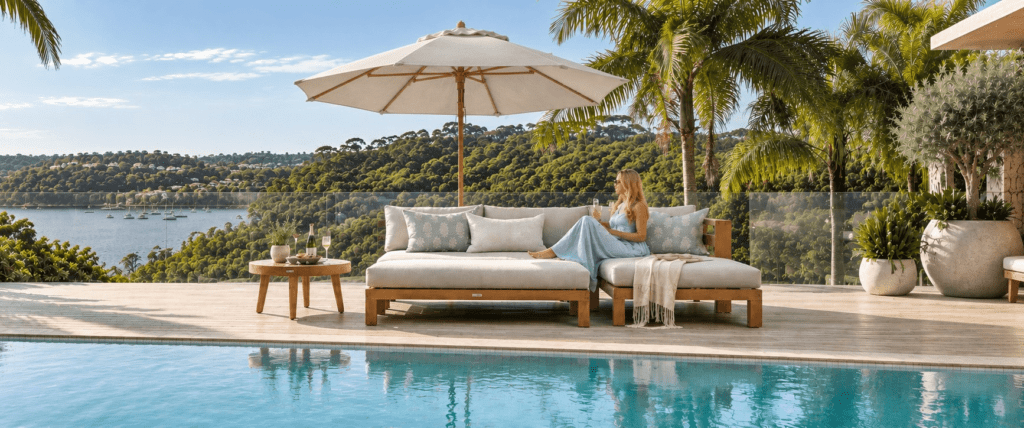
A cantilever parasol suspends the canopy from a mast positioned to one side. This leaves the area beneath the canopy unobstructed. That makes cantilever designs particularly useful over outdoor sofas and lounges, daybeds, poolside settings and dining tables without a central parasol opening.
Depending on the design, the canopy may also rotate or tilt to respond to changing sun angles.
The trade-off is that the mast, arm and base require their own space beside the furniture. A substantial cantilever parasol therefore needs to be planned into the layout rather than positioned wherever there happens to be room left over.
For a more detailed comparison, see our guide to cantilever versus centre pole parasols.
Choose the right parasol size
A parasol should provide enough coverage to protect the people using the setting, not simply the furniture directly beneath its centre.
For dining areas, the canopy generally needs to extend beyond the table so chairs remain shaded when guests pull them back. For a lounge setting, consider the full seating arrangement rather than measuring only the sofa.
Larger is not automatically better. An oversized canopy can dominate a compact courtyard or balcony and may require a much more substantial base or fixing. A canopy that is too small, meanwhile, may look beautifully proportioned but provide little practical protection once the sun moves away from directly overhead.
The parasol should feel proportionate to both the furniture and the surrounding architecture.
Consider canopy shape as well as size
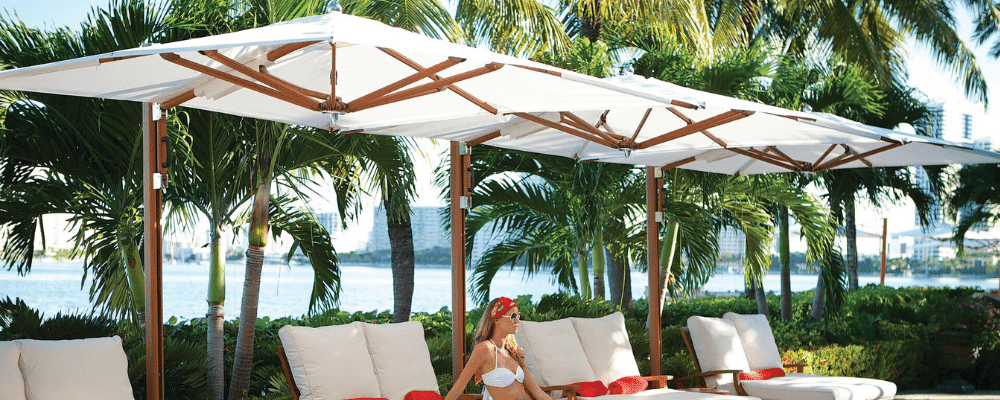
Round, square and rectangular parasols distribute shade differently. A round or square canopy can work naturally over a compact dining setting or conversation area, while a rectangular canopy may better follow the proportions of a long dining table or linear lounge configuration.
Architecture can also guide the decision. A rectangular canopy may reinforce the clean lines of a contemporary terrace, while softer forms can provide contrast against strongly rectilinear architecture. Rather than choosing canopy shape in isolation, look at the footprint you are trying to shade.
Allow enough space for movement and circulation
Parasol measurements need to account for more than the open canopy. With a cantilever design, consider the position of the mast and base as well as the space required for rotation or adjustment. Check for interference with rooflines, gutters, trees, balustrades, pool fences and outdoor kitchens.
Also make sure the base does not compromise an important circulation route. With a centre pole parasol, check that the canopy height works comfortably above the table and that the pole and base are compatible with the furniture.
The same principle applies when Osier Belle plans outdoor furniture: dimensions should be assessed in use, not simply against a floor plan. A parasol may technically fit into an area while still making the setting awkward to move around.
Think carefully about wind exposure
Wind should be considered from the beginning, particularly on coastal properties, elevated terraces and apartment balconies.
A large canopy creates a substantial surface area for wind to act against. The mast, mechanism and anchoring system therefore need to be appropriate for the parasol and its location.
Osier Belle is an authorised retailer of TUUCI parasols, which are engineered as complete shade systems rather than treating the canopy, mast and base as unrelated components. Depending on the model and project, canopy, mast, operating mechanism and anchoring options can be specified to suit the intended application.
Even a well-engineered parasol has limits. Parasols should be closed when conditions exceed the manufacturer’s recommendations and should never be relied upon as permanent protection during severe winds or storms.
For highly exposed locations, discuss site conditions before choosing the parasol rather than assuming the largest or heaviest option will automatically be suitable.
Look beyond the canopy fabric
Fabric is important, particularly under strong Australian UV, but it is only one part of parasol quality. Look at the complete system: mast construction, ribs, joints, opening mechanism, hardware, canopy tension and the way components have been engineered to work together.
A parasol will be opened, closed and adjusted repeatedly throughout its life. Moving components therefore need to withstand regular use without becoming loose or difficult to operate. The canopy itself should be made from an outdoor-grade textile suited to UV exposure and changing weather. Colour selection also matters, both visually and practically.
A parasol occupies a large area within the visual field, so its canopy colour should work with the upholstery, wicker, teak, paving and architecture around it rather than being selected independently.
Get the base or anchoring right
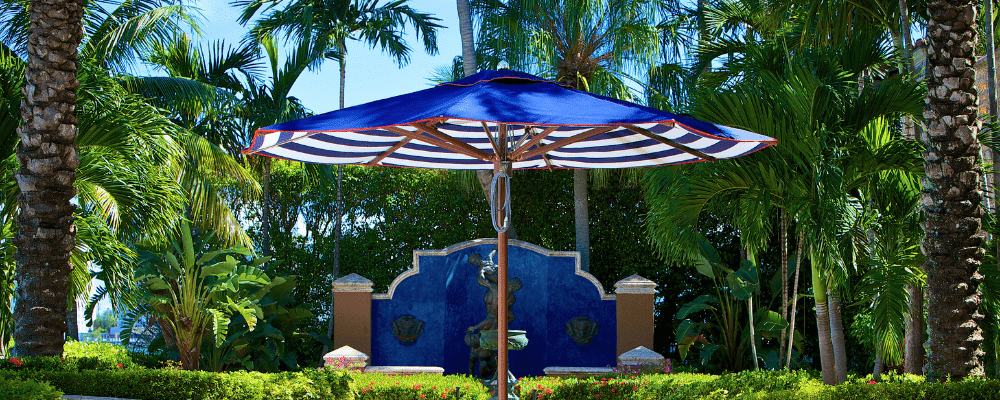
The base is one of the least glamorous parts of a parasol, but one of the most important. Freestanding bases provide flexibility because the parasol can potentially be repositioned, although the weight and footprint required will vary significantly depending on the size and type of parasol.
Permanent or semi-permanent anchoring can create a cleaner result and may be preferable for larger installations, particularly where the parasol has a dedicated position within the landscape design.
The appropriate solution depends on the parasol model, surface beneath it and degree of exposure. This is worth resolving early in a new build or landscape project. If an in-ground or integrated fixing can be planned before paving is completed, the finished result can be considerably cleaner than trying to retrofit a solution later.
Integrate the parasol with the furniture
The strongest outdoor settings do not look as though the parasol was added once everything else was finished. A large cantilever parasol can help visually define a modular lounge zone, while a centre pole canopy can make an outdoor dining table feel like a complete setting.
Consider how its proportions relate to the furniture beneath it. A broad Lux or Revé modular lounge can comfortably sit beneath a generous canopy, while a smaller dining setting may call for a more restrained parasol.
Materials and finishes should also connect. Rather than matching every element, look for complementary tones across the canopy, frame, outdoor fabrics, wicker, teak and surrounding architecture. Osier Belle’s take-home material samples can help when coordinating the parasol with a broader outdoor furniture palette.
Plan shade alongside outdoor zoning
On larger terraces, a parasol can also help establish different outdoor zones. A shaded dining area close to the kitchen can sit alongside a more open poolside setting. Alternatively, a cantilever parasol positioned over a lounge can create a defined outdoor living room without requiring a permanent roof structure.
Think about how shade moves between those zones as the day progresses. If you are planning the entire outdoor area at once, furniture placement and shade should ideally be resolved together. This prevents situations where the ideal parasol position conflicts with a sofa, pool fence, outdoor kitchen or major circulation route.
Our guide to planning outdoor zoning covers these broader layout considerations in more detail.
How should you care for an outdoor parasol?
A high-quality parasol is designed for outdoor use, but sensible care will help maintain its appearance and operation. Close the canopy when it is not required and whenever strong winds or storms are expected. Do not leave a wet canopy tightly closed for prolonged periods; allow it to dry first where possible.
Remove leaves and debris periodically, particularly where they can collect around canopy folds or moving components. Follow the manufacturer’s instructions when cleaning the fabric rather than using aggressive chemicals or abrasive methods. Hardware, joints, bases and operating mechanisms should also be checked periodically, particularly in coastal environments where airborne salt can accumulate on exposed components.
A protective cover can reduce unnecessary exposure during extended periods of non-use.
Choosing the right parasol for your outdoor space
The best outdoor parasol is not necessarily the largest canopy or the most complex mechanism. It is the one that provides useful shade where you need it, works with the furniture beneath it and suits the conditions of the site.
Start with the movement of the sun. Then consider whether a cantilever or centre pole design better suits the layout, how much coverage is genuinely required, the available space for a base or fixing and the degree of wind exposure.
For more complex outdoor spaces, Osier Belle can consider parasols as part of the wider furniture and layout plan. As an authorised TUUCI retailer, the team can help assess canopy configuration, positioning and anchoring alongside the furniture, architecture and intended use of the space.
Combined with tools such as ShadeSketch, this moves parasol selection beyond choosing a size from a catalogue. The objective is simpler: shade that falls where you actually want to sit.
