
A parasol can define how an outdoor setting is used from morning through to late afternoon. When weighing up cantilever versus centre pole parasols, the decision is not simply about the look of the canopy. It affects where people sit, how freely chairs move, the scale of the base, and whether the shade remains useful as the sun tracks across an Australian summer sky.
For a refined outdoor scheme, both styles have a place. The right choice comes down to your furniture arrangement, exposure to wind, available footprint and the degree of flexibility you expect from the space.
Cantilever versus centre pole parasols: the essential difference
A centre pole parasol has a mast running through the middle of the canopy, usually positioned through a dining table or secured in a freestanding base. It is the classic, balanced form: direct, architectural and highly effective when the pole belongs exactly where the table’s centre is.
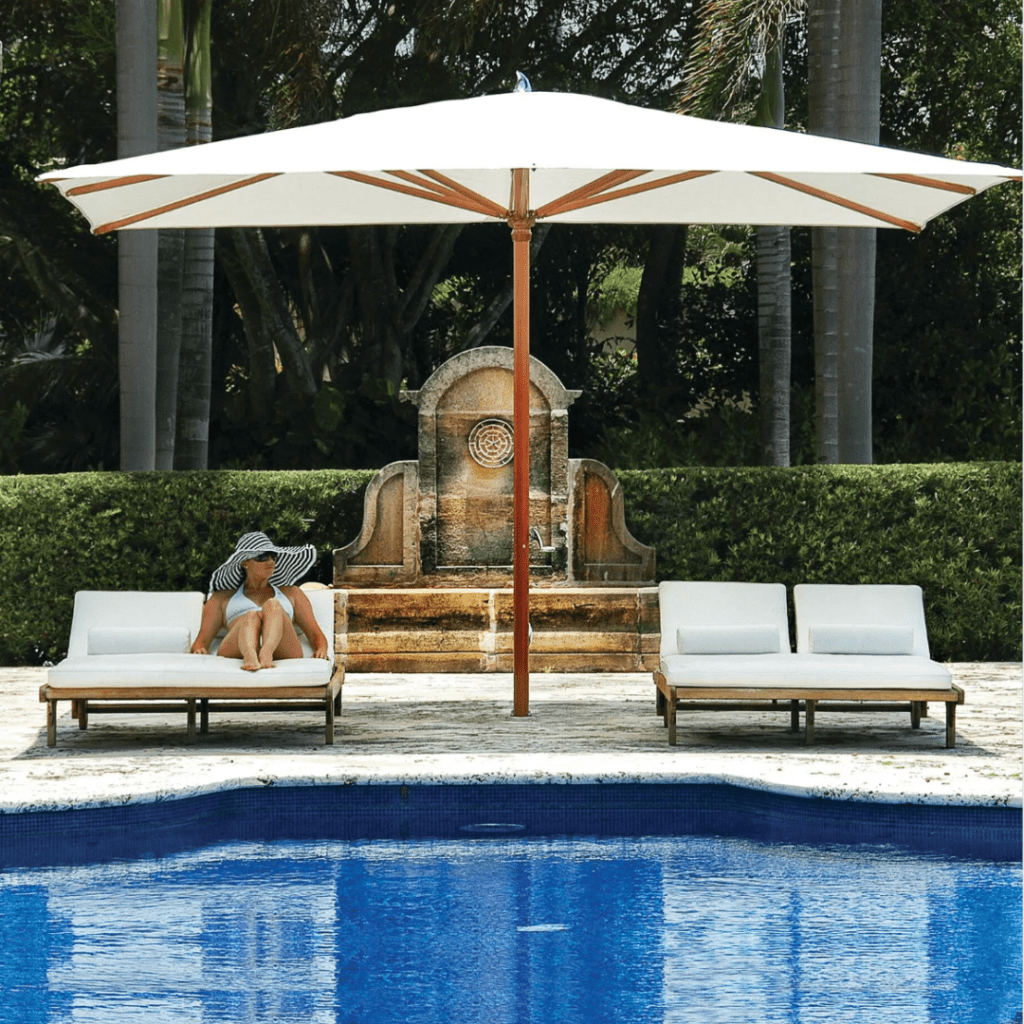
A cantilever parasol, sometimes called an offset parasol, carries its canopy from an arm extending out from a side-mounted mast. With no central pole beneath the canopy, it creates an uninterrupted shaded area over a lounge, daybed or dining setting. Many designs can rotate, tilt or adjust their canopy angle, making them particularly versatile through changing light conditions.
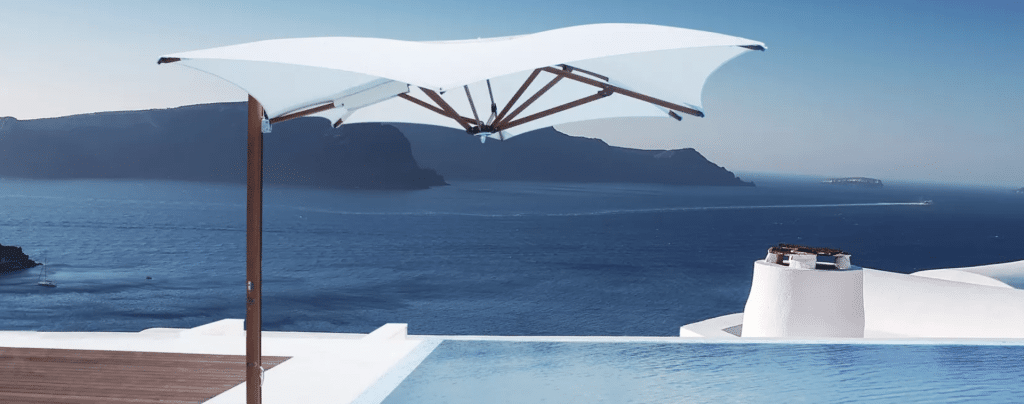
Neither is inherently superior. A cantilever model offers greater freedom under the shade, while a centre pole design generally has a smaller visual and physical footprint. The final furniture layout can determine the best option for the space.
When a cantilever parasol earns its place
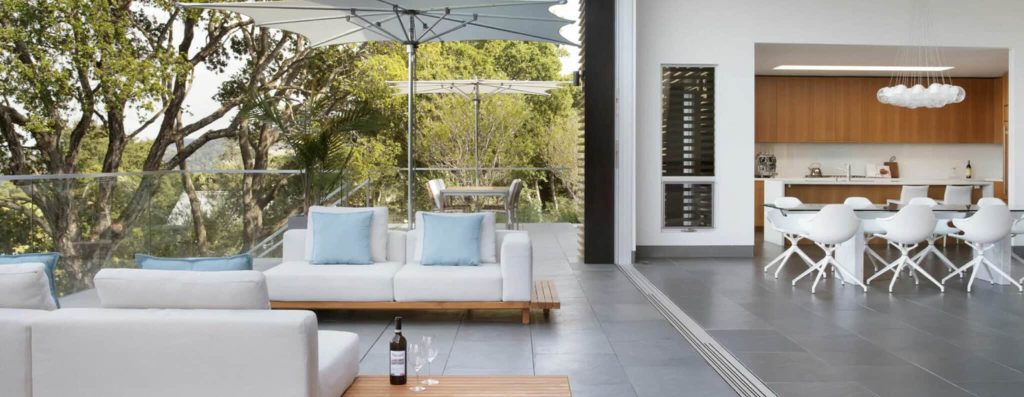
A cantilever parasol is often the preferred choice for a generous entertaining zone where uninterrupted comfort matters. It allows a large outdoor sofa configuration to remain open and inviting, without a pole interrupting the centre of a coffee table or forcing guests to arrange themselves around it.
This makes it especially suited to poolside lounges, sculptural daybeds and deep-seated modular settings. If your dining table does not include a parasol hole, an offset design also gives you shade without compromising the table’s surface or silhouette.
The ability to reposition the canopy becomes particularly valuable in Australia. Afternoon sun is often lower and more direct than midday light, so a parasol that can rotate or tilt may provide far more useful shade than a fixed canopy.
There is, however, a practical commitment. Cantilever parasols need a substantial base or properly engineered fixing to counterbalance the extended arm. That footprint needs to be resolved alongside the furniture rather than squeezed into whatever space remains once the lounge or dining setting has been installed.
This is where planning the parasol and furniture together pays off. At Osier Belle, shade can be considered as part of the overall outdoor setting, alongside lounge dimensions, daybeds, dining furniture and circulation, rather than as a separate accessory added at the end.
Best applications for cantilever designs
A cantilever parasol works particularly well when you want shade over:
- A freestanding lounge or modular configuration
- A substantial dining table without a central parasol opening
- A poolside daybed or sun-lounging area
- A flexible zone used differently throughout the day
Its visual presence is substantial, so scale matters. A broad cantilever canopy works naturally with generous furniture and expansive terraces, while an oversized parasol can dominate a compact setting even if its shade coverage is technically useful.
Why centre pole parasols remain a design classic
Centre pole parasols offer clarity and restraint. Their symmetry works naturally with round, square and rectangular dining tables designed with a central parasol opening. The pole aligns with the table’s geometry, the canopy frames the setting above, and the entire composition feels intentional rather than added on.
For smaller courtyards and apartment terraces, this efficiency is valuable. The base sits beneath the table, rather than beside it, preserving pathways around chairs and keeping the setting contained. A centre pole parasol can also be simpler to open, close and store, particularly where the outdoor area has overhead clearances or nearby planting.
There is a material advantage too. With the mast directly supporting the canopy, the structural load is more evenly distributed than in an offset design. That does not mean a centre pole parasol is immune to wind, but it usually requires less counterweight and presents a more compact profile when closed.
The trade-off is obvious once a group gathers around the table: the pole is part of the experience. On a well-proportioned dining table it is barely noticed, particularly when the pole aligns with a central lazy Susan or decorative vessel. On a smaller table, however, it can reduce usable surface area and limit where food, lighting or flowers can sit.
Best applications for centre pole designs
A centre pole parasol is particularly well suited to:
- Dedicated outdoor dining settings
- Compact terraces and courtyards
- Areas where a cantilever base would compromise circulation
- Homeowners who prefer symmetry and a more restrained canopy profile
The canopy and table should always be proportioned together. A canopy that is too small provides little useful protection beyond the centre of the table, while one that is oversized can visually overwhelm the furniture beneath it.
Plan the shade, not just the parasol
The most successful outdoor spaces begin with a shade plan. Start by considering how you use the area at different times of day. A breakfast setting may need morning cover, while a west-facing lounge requires protection later in the afternoon. Marking the sun’s movement over a few days often reveals that a beautiful parasol in the wrong location will do very little when it is needed most.
Then measure the complete operating footprint. For a cantilever model, allow space for the mast, base, canopy swing and safe circulation around it. Check that the canopy will clear balustrades, pool fencing, rooflines, mature trees and outdoor kitchen elements when it opens or rotates.
For centre pole models, confirm the table opening and the height beneath the canopy. The canopy should provide enough cover for seated guests without overwhelming the table beneath it. A parasol that is too small gives a narrow patch of shade; one that is too large can crowd neighbouring zones and complicate access.
Scale is also about visual proportion. A substantial canopy can anchor a broad stone terrace or pool setting, while a more compact form may complement a quiet balcony without closing it in. Consider the colours and finishes already present in cushions, upholstery, timber and masonry. Neutral canopy tones tend to sit elegantly within changing seasonal schemes, while darker colours can create a sharper architectural statement.
Materials and care for Australian conditions
Like the furniture beneath it, a parasol needs to cope with intense UV, summer storms, heat and, in coastal areas, salt-laden air. Look for strong outdoor canopy fabrics, corrosion-resistant frames, quality hardware and well-engineered opening mechanisms. These moving components deserve particular attention because they are repeatedly placed under load throughout the life of the parasol.
Care still matters. Close the canopy when it is not in use, particularly when wind is forecast, and use a fitted cover during prolonged periods of non-use. Check the base, joints and operating mechanism periodically rather than waiting until something feels loose. No parasol should be treated as permanent protection in strong winds. The most luxurious shade solution is still one that is used appropriately for the conditions.
Choose around the way you use the space
If your outdoor area revolves around a flexible lounge, daybed or large table without a central opening, a cantilever parasol often provides the greatest freedom.
If the space is compact and dining-led, a centre pole parasol may use the available footprint more efficiently while creating a beautifully balanced setting.
The strongest choice is the one that gives shade where you actually spend time, maintains comfortable circulation and feels proportionate to the furniture and architecture around it.
