
A beautifully resolved outdoor setting should never feel like an afterthought. Made to order outdoor furniture gives you the freedom to choose pieces around the way you entertain, relax and move through your home, rather than trying to make a standard suite fit the space. Whether it’s a coastal deck, compact balcony or expansive poolside terrace, that distinction influences both the appearance of the setting and how comfortably it functions for years to come.
For discerning homeowners, architects and landscape designers, the appeal is about far more than having extra options. It is about achieving the right proportions, selecting materials suited to the environment and creating furniture that genuinely belongs to the architecture rather than simply occupying the space.
What made to order outdoor furniture really means
Made to order is often confused with fully bespoke furniture. While the two can overlap, they are not quite the same. A fully bespoke piece begins as an entirely new design. Made-to-order furniture starts with an established collection that has already been refined for comfort, proportion and durability, then allows meaningful customisation around size, configuration, finishes and upholstery.
At Osier Belle, every collection is handcrafted at our own factory in Cirebon, Indonesia. Rather than selecting furniture from warehouse inventory, each order is produced around your chosen specifications. This gives clients the confidence of proven designs while still allowing the flexibility to create something tailored to their project. Whether configuring a modular lounge to suit the dimensions of a terrace, creating the ideal dining seating, or selecting finishes and fabrics that complement surrounding architecture, the result feels considered rather than compromised.
Design begins with how the space will be used
The most successful outdoor rooms are planned around everyday living. Before selecting materials or silhouettes, think about how the space will actually be used. A family that regularly hosts long lunches requires a different layout from a couple creating a quiet retreat beside the pool. A generous daybed serves a different purpose from a modular lounge designed around evening entertaining.
Scale is equally important. Large-format furniture creates a sense of luxury only when there is enough room to move comfortably around it. Dining settings need space for chairs to be pulled back, while lounge areas require clear circulation to doors, pathways and the pool. Seat depth also changes the way a setting feels. Deep lounges encourage long afternoons outdoors, while slightly more supportive seating often suits conversation and entertaining. The best solution is always the one that reflects the people who will use the space most often.
At Osier Belle, this design conversation forms part of the made-to-order process. Our showroom team regularly works alongside homeowners, interior designers, architects and landscape architects to refine layouts before production begins, ensuring the finished furniture responds to both the architecture and the lifestyle it supports.
Materials chosen for Australian conditions
Australia asks more of outdoor furniture than many climates around the world. Intense UV exposure, salt air, humidity, heavy rain and fluctuating temperatures all influence how furniture performs over time. Made-to-order production allows materials to be selected with these conditions in mind rather than treating them as an afterthought.
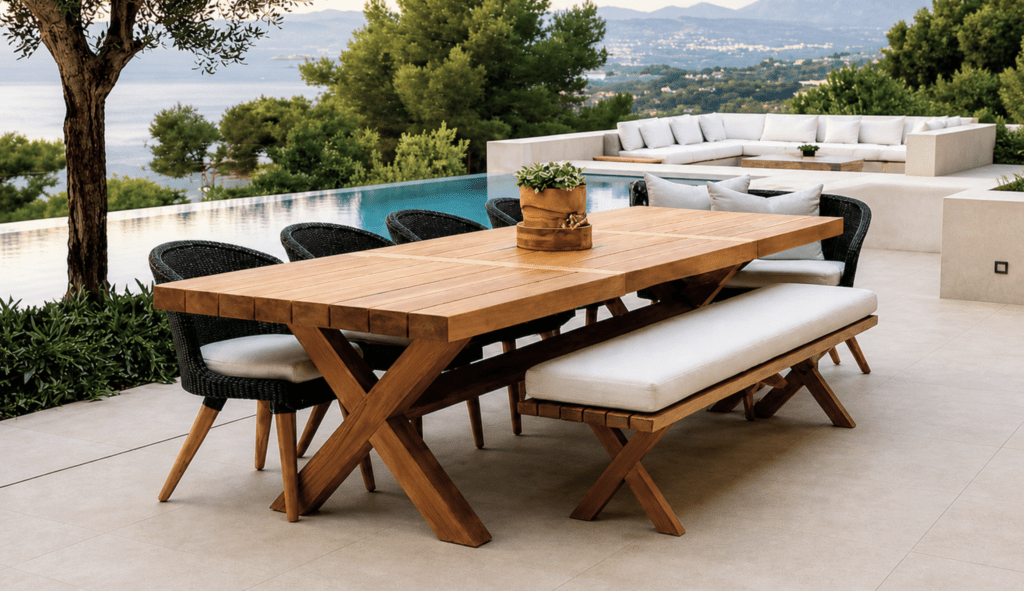
Premium teak remains one of the finest choices for outdoor furniture because of its natural durability and warmth. Osier Belle teak is sourced through a trusted FSC and TFT-certified supplier in Jepara, Indonesia before being handcrafted into furniture at our own factory. Every piece is then protected with Cutek Extreme CD50 prior to leaving production, helping the timber perform beautifully in Australian conditions from day one. For relaxed resort-inspired living, premium all-weather wicker offers texture and comfort while remaining engineered for long-term outdoor use. Handwoven European fibres over precision-welded aluminium frames provide lasting structural integrity without sacrificing softness or elegance.
Performance continues through to the upholstery. With more than 500 premium outdoor fabrics available, clients can tailor colour, texture and practicality to suit everything from exposed coastal terraces to covered entertaining spaces.
The details that make a setting feel considered
Luxury outdoor furniture is often defined by the details people notice only after living with it. Configuration is one of the most important. A modular lounge with a left or right chaise should respond to views, circulation and afternoon sun rather than simply fitting the available dimensions. A freestanding ottoman may offer greater flexibility than a fixed chaise where entertaining requirements regularly change.
Small design decisions also influence everyday comfort. Whether a dining table is round or rectangular, how easily chairs tuck beneath it, whether side tables are positioned within easy reach or how generously cushions are proportioned all contribute to the overall experience. Because every Osier Belle order is handcrafted rather than mass produced, these decisions become part of the design process instead of compromises made after delivery.
Why craftsmanship takes time
One of the defining characteristics of made-to-order furniture is that it cannot be rushed. Unlike stock furniture that is collected from a warehouse, every Osier Belle order progresses through material selection, handcrafted construction, weaving or joinery, upholstery, finishing and quality control before shipment to Australia.
Each piece passes through the hands of skilled artisans rather than an automated production line. This additional time allows the craftsmanship behind every collection to remain consistent while ensuring finishes, proportions and detailing meet the standard expected of luxury outdoor furniture. Rather than viewing lead times as an inconvenience, they are better understood as part of investing in furniture designed to remain part of your home for many years.

Planning ahead delivers better results
Made-to-order furniture rewards early planning. If you’re building a new home, renovating or completing a landscape project, begin selecting furniture well before construction finishes. This allows sufficient time for design decisions, production, shipping and delivery without compromising the overall project timeline.
It is also worth measuring access before confirming an order. Gates, lifts, stairwells and side passages all influence how larger pieces will be delivered and assembled.
Bringing floor plans, photographs and material samples into the showroom allows colours, textures and proportions to be considered together rather than as isolated decisions. This collaborative process helps ensure every piece feels intentionally connected to the home from the moment it is installed.
When made to order is the right choice
Made-to-order furniture is particularly valuable when standard dimensions would compromise the layout, when the architecture deserves a more considered response or when quality and longevity matter more than immediate availability.
There are certainly situations where stocked furniture is appropriate, particularly for projects with urgent deadlines or straightforward requirements. The important question is whether speed justifies compromising on comfort, proportion or material selection.
At Osier Belle, we believe luxury outdoor furniture should be designed around the way you live, not the limitations of standard production. From handcrafted modular collections like Lux and Joli, to custom fabric selections, concrete tables and premium teak dining settings, every made-to-order piece is created to become part of your home’s architecture rather than simply furnishing an empty space.
The result is furniture that encourages slower lunches, longer conversations and more time outdoors, crafted not simply to fit your space, but to feel as though it was always meant to be there.
