
A pool changes the way a home is used. It draws people outside on hot afternoons, becomes the backdrop for long lunches and gives even a quiet weekday morning a sense of retreat. Knowing how to furnish a pool area is therefore about more than placing a pair of sun loungers near the water. It is about creating a composed outdoor setting that feels generous, functions beautifully and stands up to Australian conditions.
The most successful pool spaces have a clear sense of purpose. They allow someone to dry off without dripping through the house, offer a comfortable place to read in the shade, and make entertaining feel considered rather than improvised. Start with the experience you want the area to provide, then let the architecture, landscape and available footprint guide the furniture plan.
At Osier Belle, we approach poolside living as an extension of the home. Every collection is handcrafted using premium materials selected for Australia’s demanding climate, allowing outdoor spaces to feel as refined, comfortable and enduring as the interiors they connect to.
Start with zones, not individual pieces
Luxury pool areas rarely rely on a single furniture setting. Instead, they create a sequence of spaces that support different moments throughout the day. The relaxation zone naturally belongs closest to the water. Position adjustable sun loungers where they receive reliable sun, allowing enough room for people to move comfortably around them. Two beautifully proportioned loungers with a substantial side table often create a more elegant composition than several smaller pieces competing for space.
The social zone should sit slightly beyond the splash area. A generous outdoor lounge with deep cushions, occasional chairs and a substantial coffee table creates a place where guests naturally gather before lunch, after a swim or long into the evening once the pool lights come on. Dining belongs where it maintains the strongest relationship with the outdoor kitchen, barbecue or entertaining space. It might overlook the pool, but it does not need to sit immediately beside it. Separating dining from active swimming often creates a calmer, more comfortable entertaining experience.
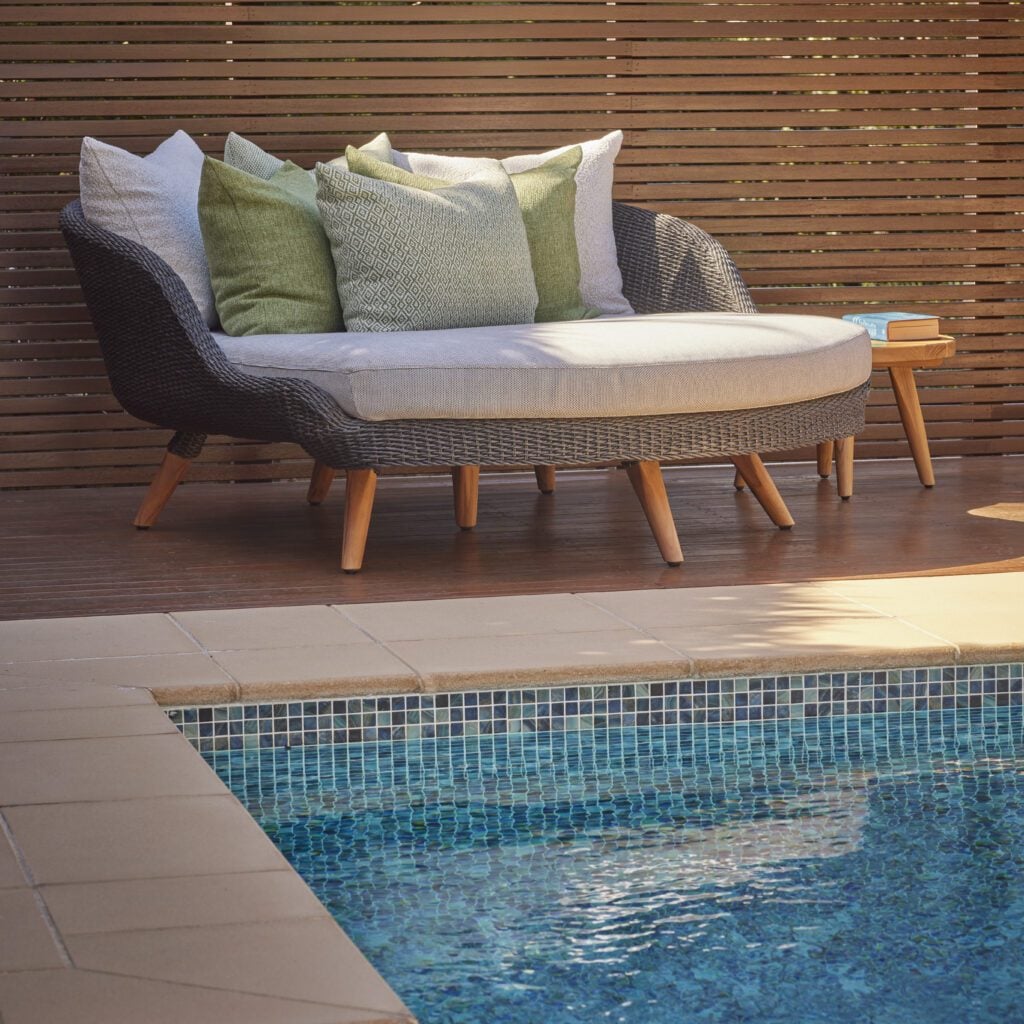
Where space allows, a daybed introduces another layer of luxury. Positioned beneath a tree canopy or beside the pool, it creates a destination for quiet afternoons spent reading, relaxing or simply enjoying the landscape.
Create a dedicated sun-lounging terrace
Sun loungers are often the defining feature of a luxury pool setting, but their impact comes from thoughtful placement rather than quantity.
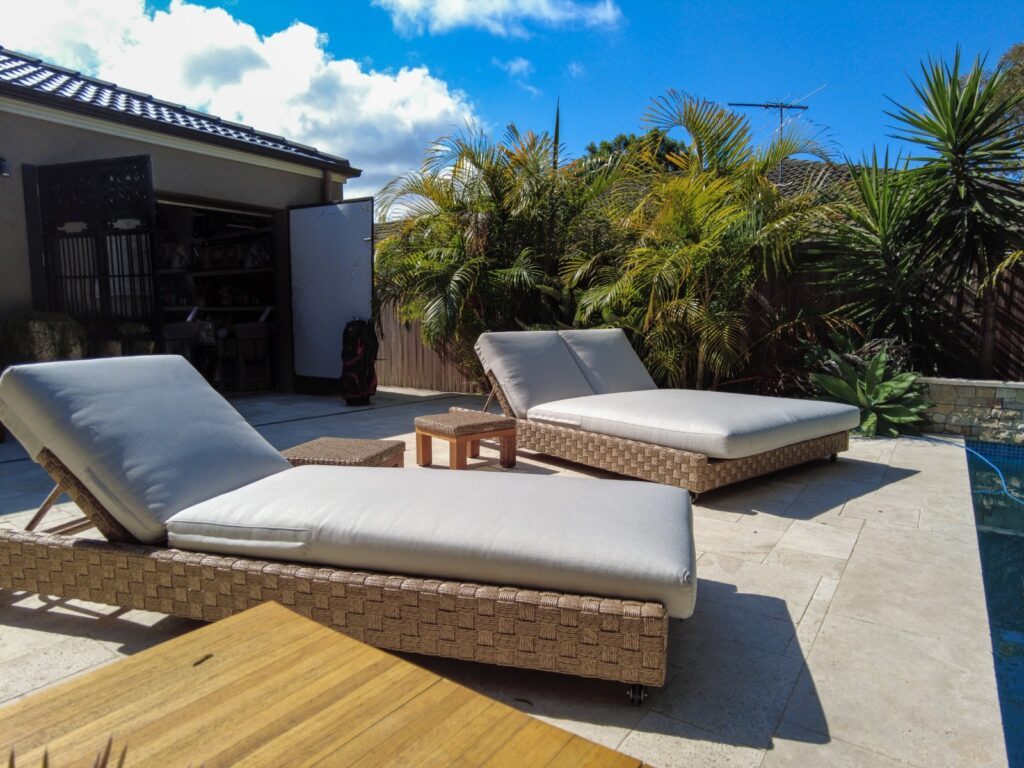
Allow enough room for loungers to fully recline while maintaining generous circulation around them. Position them to capture winter sun where possible, while considering where natural or movable shade will fall during the hottest part of summer.
Within the Osier Belle Teak Collection, handcrafted teak sun loungers bring timeless warmth against limestone, natural stone and rendered walls, while woven collections create a softer resort-inspired aesthetic for more relaxed landscapes.
The side table deserves just as much consideration. It should comfortably accommodate drinks, sunscreen, books and towels while feeling substantial enough to anchor the setting visually. Sculptural concrete or handcrafted teak tables both work beautifully, depending on the architectural style of the home.
How to furnish a pool area around circulation
Luxury is experienced through ease of movement. Before selecting furniture, map the paths between the house, pool gate, outdoor shower, lawn, entertaining areas and barbecue. These routes should remain open even when loungers are fully reclined and the space is busy with family and guests.
Pool fences deserve particular attention. Furniture should never compromise required clearances or create climbable objects within compliant zones. In compact courtyards this may mean positioning lounge furniture slightly beyond the pool perimeter while allowing the water to remain the visual focal point.
Scale matters just as much as clearance. A generous modular lounge from the Lux or Oliver George collection can beautifully anchor a large entertaining terrace, while more compact spaces may benefit from the softer proportions of Revé or Joli. Furniture should always complement the architecture rather than overwhelm it.
Make shade part of the composition
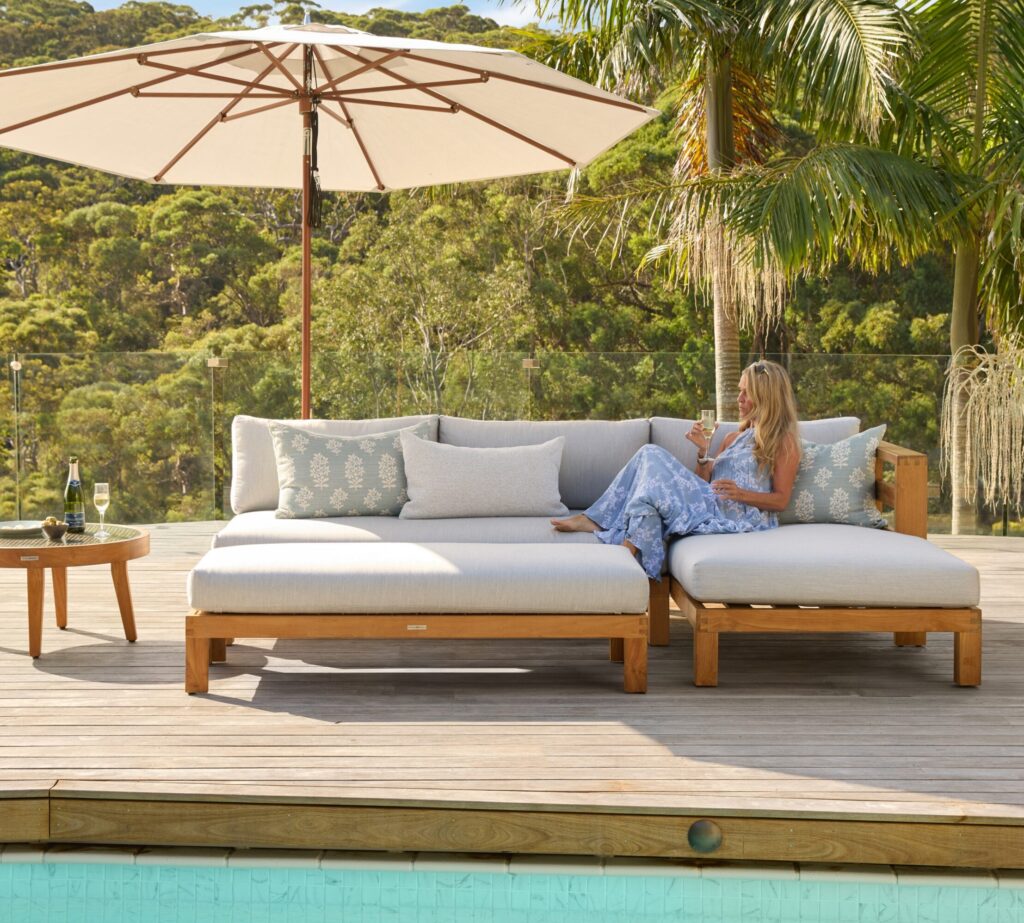
Luxury outdoor furniture should not rely on chasing shade throughout the day. A thoughtfully positioned cantilever umbrella, pergola or established tree canopy allows seating to remain comfortable while reducing unnecessary UV exposure on cushions and upholstery.
Rather than treating shade as an afterthought, integrate it into the furniture layout from the beginning. Covered lounge settings naturally become secondary outdoor living rooms, creating a relaxed retreat where swimmers can transition comfortably from the pool without immediately returning indoors.
Choose materials made for Australian pool environments
Poolside furniture lives in one of the harshest outdoor environments. Chlorinated water, salt spray, reflected heat, sunscreen and intense UV exposure all challenge materials over time. This is where craftsmanship becomes just as important as appearance.
Handcrafted teak remains one of the finest choices for poolside living, developing an elegant silver-grey patina naturally or maintaining its warm honey tone through occasional care. Its weight and authenticity suit contemporary architecture, coastal homes and timeless landscape design alike. Premium all-weather wicker softens hard architectural surfaces while introducing warmth and texture. At Osier Belle, handwoven wicker is crafted over precision-welded aluminium frames using premium UV-resistant fibres engineered specifically for Australian conditions.
Powder-coated aluminium offers exceptional durability with a clean contemporary aesthetic, while concrete occasional tables introduce sculptural permanence and complement both teak and woven furniture beautifully. Performance extends beyond the frame. Quick-dry foams, premium outdoor fabrics and breathable cushion construction ensure every collection continues looking and performing beautifully long after installation.
Build comfort into the composition
Beautiful furniture is only successful if people genuinely want to spend time using it. Think beyond appearance and consider how the space will actually be lived in. A couple may prefer a pair of luxurious teak loungers and a daybed, while larger families often benefit from modular seating that adapts to changing occasions.
Collections such as Walter and Lux offer generous seating proportions designed for long afternoons outdoors, while modular configurations allow additional sections or ottomans to be introduced as entertaining needs evolve. Fabric selection deserves equal attention. Soft stone, warm sand, mineral grey and natural woven textures complement the colours already provided by water, planting and sky while remaining practical for everyday poolside living.
Create cohesion with the home and landscape
The most memorable pool settings feel like a natural continuation of the home’s architecture. Rather than introducing completely different colours and materials outdoors, repeat key elements from the interior. Timber tones, stone finishes, dark window frames or neutral upholstery palettes create visual continuity from inside to outside.
Mediterranean-inspired homes naturally pair with handcrafted teak, woven textures and earthy ceramics. Contemporary architecture often suits charcoal frames, tailored upholstery and sculptural concrete forms. Lush tropical landscapes benefit from restrained furniture palettes that allow foliage and water to remain the visual focus. As evening arrives, subtle landscape lighting completes the experience. Gentle illumination around seating areas and pathways enhances comfort without competing with reflections across the pool.
Plan for longevity and evolving outdoor living
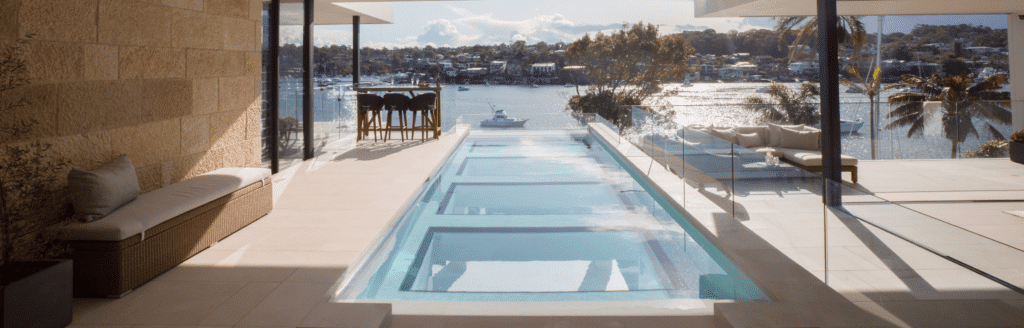
Luxury poolside furniture should remain enjoyable long after installation while adapting to the way your household changes over time. Leave breathing room around planting, rinse away salt or chlorine residue where required and use breathable furniture covers during extended periods away from home. Quality materials are designed for outdoor living, but sensible care helps preserve their appearance and performance for years to come.
Access should also be resolved before ordering substantial pieces. Measure gates, side passages, stairwells, lifts and delivery routes carefully, particularly when selecting large sofas, daybeds or concrete tables. One advantage of Osier Belle’s handcrafted collections is the opportunity to customise dimensions, fabrics and configurations. Rather than choosing the closest standard solution, furniture can be tailored to the proportions of the space and the way the home is used.
It is also worth allowing the setting room to evolve. You may later add an occasional chair beside the daybed, an extra ottoman for larger gatherings or complementary side tables as your entertaining style changes. A Poolside Daybed with Storage can provide a practical place for towels and accessories, while modular collections allow seating to expand without disrupting the original design.
At Osier Belle, every bespoke piece is created with this longevity and flexibility in mind. Whether you are placing a pair of teak sun loungers beside the water, creating a resort-inspired retreat with the Walter Outdoor Daybed, or furnishing a complete entertaining area with Lux, Revé or Oliver George, the strongest result begins with thoughtful planning, premium craftsmanship and furniture that reflects how you genuinely live outdoors.
