
A sun-drenched pool terrace and a sheltered city balcony can both look exceptional, yet they ask very different things of their furniture. When considering teak vs wicker furniture, the right choice is less about declaring one material superior and more about matching its character, construction and maintenance needs to how you live outdoors.
Teak brings natural warmth, architectural weight and a sense of permanence. Premium all-weather wicker offers relaxed comfort, generous proportions and an inviting resort feel. Both have a place in thoughtfully designed outdoor spaces, especially when crafted for Australian conditions rather than simply designed to look good in a showroom.
At Osier Belle, both teak and wicker are elevated through handcrafted construction, premium materials and bespoke design. Whether you’re drawn to the sculptural elegance of the Teak Collection or the relaxed sophistication of woven collections such as Tressé, Provence and Bulle, every piece is designed to become a lasting part of your outdoor lifestyle rather than a seasonal purchase.
Teak vs wicker furniture: the essential difference
Teak is a dense hardwood valued for its naturally occurring oils, tight grain and ability to perform in exposed conditions. A well-made teak dining table, bench or lounge has visual solidity. It suits spaces where furniture needs to hold its own against stonework, timber cladding, established planting or bold architectural facades.
Wicker describes a woven aesthetic rather than one single material. For luxury outdoor furniture, it refers to premium weather-resistant synthetic fibres handwoven over powder-coated aluminium frames. This distinction matters. Natural rattan, cane and reed are beautiful indoors or in protected alfresco spaces, but they are not engineered to withstand persistent UV exposure, heavy rain and coastal environments in the same way as premium outdoor wicker.
The distinction influences everything from appearance and comfort to maintenance and longevity. Teak is typically chosen for its authentic material presence and timeless character, while wicker offers softness, texture and relaxed resort-inspired comfort.
Teak vs Wicker Comparison
| Feature | Premium Teak | Premium All-Weather Wicker |
|---|---|---|
| Overall aesthetic | Natural, architectural and timeless | Relaxed, textured and resort-inspired |
| Best suited to | Dining spaces, exposed terraces, contemporary architecture | Lounges, poolside spaces, covered entertaining areas |
| Construction | Solid A-grade teak hardwood | Handwoven synthetic wicker over aluminium frame |
| Comfort | Structured seating with luxurious cushions | Deep, relaxed seating with generous proportions |
| Weather performance | Excellent in sun, rain and coastal environments | Excellent when made with premium UV-resistant fibres |
| Maintenance | Occasional cleaning and optional timber protector | Light washing and occasional cleaning of weave and cushions |
| Ages over time | Develops an elegant silver-grey patina | Retains colour and weave when properly manufactured |
| Popular Osier Belle collections | Teak Collection | Tressé, Provence, Bulle, Revé, Joli |
How each material performs in Australian conditions
Australia does not offer one outdoor climate. Intense summer sun, tropical humidity, frosty inland winters and salt-laden coastal breezes all influence how furniture will age. Material quality is therefore just as important as material choice.
Teak in sun, rain and coastal air
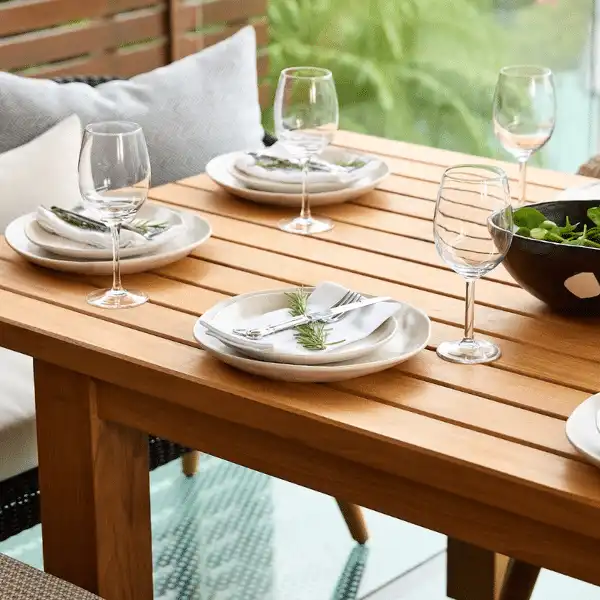
Quality teak has been trusted for centuries in demanding outdoor environments because of its exceptional durability and naturally high oil content. At Osier Belle, every teak piece is handcrafted from sustainably sourced A-grade teak, selected for its density, strength and beautiful grain. Over time, untreated teak naturally transitions from its warm honey-gold colour to a distinguished silver-grey patina. Neither finish is a sign of deterioration. It is simply the timber responding naturally to sunlight and weather exposure.
For homeowners who prefer teak’s original golden appearance, periodic cleaning and the use of a suitable teak protector such as Cutek can help maintain its colour. Those who appreciate the natural silvered finish need only occasional cleaning to keep the timber looking its best. Near the coast, teak remains one of the finest choices for outdoor furniture. Regular rinsing removes salt deposits, while quality marine-grade hardware and precision joinery ensure the furniture continues performing beautifully through seasonal movement.
The Osier Belle Teak Collection showcases this craftsmanship across dining tables, extension tables, sun loungers, benches, sofas and daybeds, offering a timeless material palette that complements both contemporary and traditional architecture.
Wicker in heat, moisture and UV
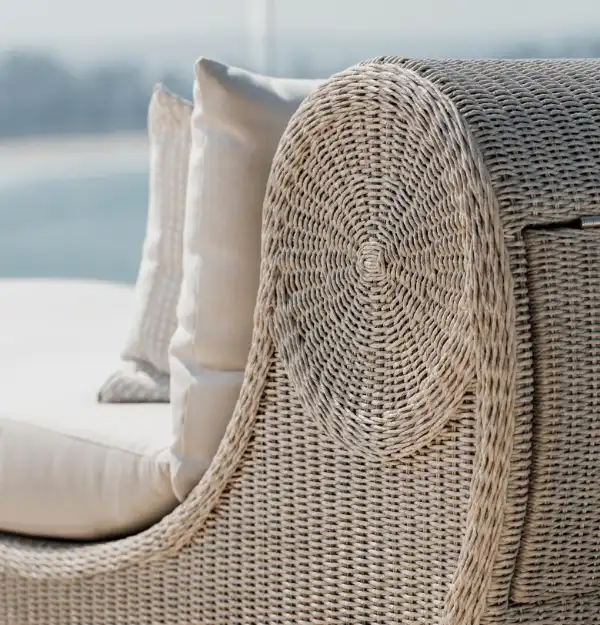
Premium outdoor wicker has evolved significantly beyond traditional woven furniture. At Osier Belle, each piece is handwoven using premium synthetic fibres over heavy-duty powder-coated aluminium frames, creating furniture designed specifically for Australia’s demanding climate.
Unlike natural fibres, premium all-weather wicker will not absorb moisture, making it particularly practical around pools and in humid environments. Rainwater passes through the weave, while quality quick-dry cushions recover far more quickly after wet weather. The quality of the weave makes all the difference. Premium UV-stabilised fibres remain flexible despite years of sun exposure, helping prevent the brittleness, fading and cracking commonly seen in lower-quality wicker furniture.
Collections such as Tressé, Provence, Bulle, Revé and Joli demonstrate how woven furniture can feel every bit as refined as solid timber. Their sculptural proportions, intricate weaving and luxurious cushions create inviting outdoor spaces designed for long afternoons, entertaining and everyday relaxation. Like any premium outdoor material, wicker benefits from occasional care. Salt spray, chlorine, sunscreen and debris should be washed away periodically to preserve the weave and maintain its appearance.
Comfort, scale and the way you entertain
Material often establishes the visual direction, but comfort should ultimately guide the decision. Consider how your outdoor space will be used throughout the day, from quiet morning coffee to family lunches and evening entertaining.
Wicker naturally lends itself to deep-seated sofas, modular lounges, occasional chairs and daybeds. Its woven texture softens larger furniture, allowing generous lounge settings to feel welcoming rather than visually heavy. This makes it ideal for poolside retreats, covered terraces and outdoor rooms where relaxation is the priority.
Teak expresses comfort differently. A handcrafted teak dining setting creates a composed, architectural centrepiece for entertaining, while teak lounge furniture paired with luxurious outdoor cushions balances refined aesthetics with exceptional comfort. Benches also provide flexible seating without overwhelming a dining space.
Before choosing either material, think beyond the furniture footprint. Allow space for chairs to move comfortably, walkways around lounge settings and practical access through gates, lifts, pool fences and balconies.
The design language of teak and wicker
Although both materials can suit luxury outdoor living, they create distinctly different design expressions.
Teak feels grounded, tactile and timeless. Its natural grain introduces subtle variation, ensuring every piece possesses individual character. It complements modern concrete and steel architecture just as comfortably as coastal homes, Mediterranean gardens and classic Australian residences. Wicker creates a softer visual rhythm. Fine weaves in charcoal, warm grey and natural tones introduce texture without visual heaviness. When paired with tailored outdoor cushions and refined proportions, wicker feels sophisticated rather than casual.
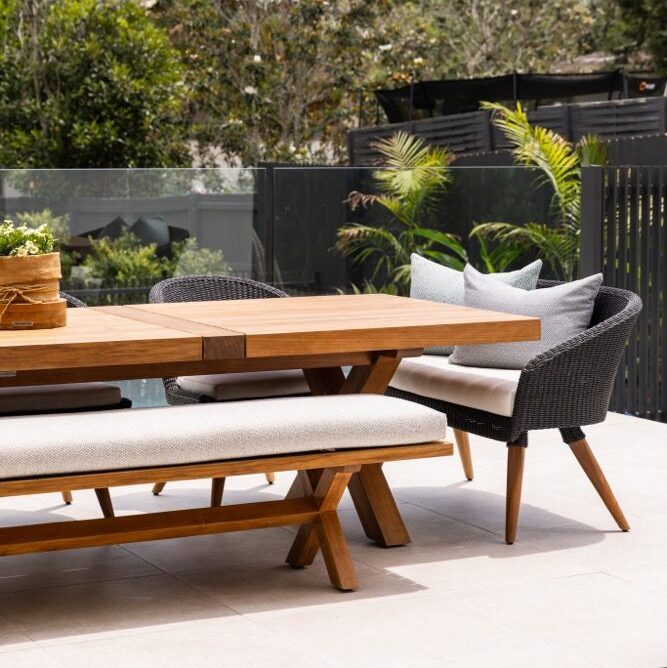
Many of the most successful outdoor spaces combine both materials. A teak dining table can establish an elegant entertaining zone, while nearby woven lounge furniture introduces warmth and relaxation around a pool or firepit. Repeating fabrics, neutral colour palettes and natural textures helps unify both areas into one cohesive outdoor environment. This layered approach is reflected throughout Osier Belle’s collections, where handcrafted teak and woven furniture can be combined seamlessly to create bespoke outdoor settings tailored to individual homes.
Maintenance and long-term value
Neither material is maintenance-free, but both are remarkably straightforward to care for when manufactured to a high standard.
Teak simply requires occasional cleaning and a choice between preserving its original golden colour or embracing its natural silver-grey patina. Breathable furniture covers can reduce cleaning while allowing moisture to escape. Wicker benefits from regular dusting or a gentle rinse to remove debris from the weave. Cushions should be cleaned according to the fabric manufacturer’s recommendations, and quality outdoor fabrics will continue looking their best with routine care.
Long-term value ultimately comes down to construction. Premium outdoor furniture should feature quality materials, precision joinery, durable frames, UV-resistant fibres, high-performance fabrics and superior cushion technology. These details may not always be obvious at first glance, but they become increasingly important over years of outdoor use. Well-crafted furniture maintains its comfort, structural integrity and visual appeal long after lower-quality alternatives begin showing signs of wear.
Which one should you choose?
Choose teak when you want authentic natural materials, architectural presence and furniture that develops even more character over time. It is particularly well suited to exposed outdoor spaces, dining-focused entertaining and homes where timeless craftsmanship is central to the design.
Choose premium all-weather wicker when comfort, relaxed lounging and resort-inspired living are the priority. Its generous proportions and inviting texture make it ideal for conversation areas, poolside settings and outdoor rooms designed for spending hours rather than minutes.
For many homeowners, however, the best solution is not choosing one material over the other.
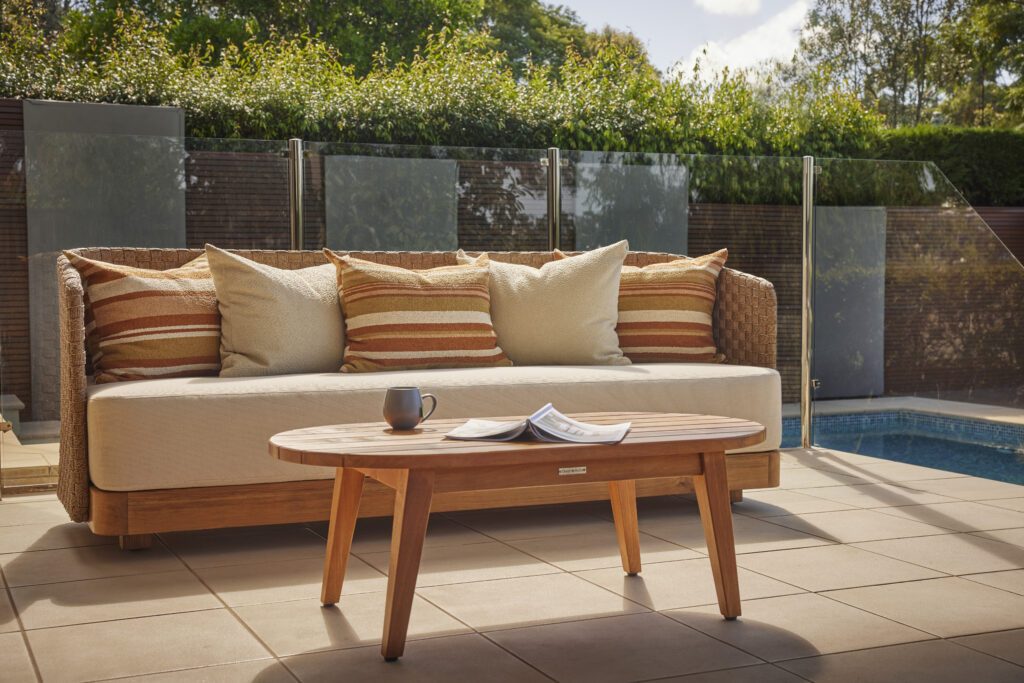
At Osier Belle, some of the most successful outdoor spaces combine handcrafted teak dining furniture with luxurious woven lounge collections, creating layered environments that feel balanced, sophisticated and uniquely personal. Because every piece is handcrafted and many collections can be customised in size, finish and fabric, your outdoor furniture can be tailored to complement both your home and the way you live.
Whether you’re drawn to the enduring beauty of our teak collection or the endless possibilities with 20 wicker styles and colours, the right choice is the one that enhances how you gather, entertain and enjoy your outdoor space for years to come.
