
A beautifully considered terrace can lose its appeal quickly when a lounge begins to sag, timber silvers unevenly, or a powder-coated frame starts to bubble after a few summers. So, how long should outdoor furniture last? For well-made pieces selected for their setting and cared for appropriately, the answer is often 10 to 20 years, with some materials lasting much longer. In Australia, however, the material alone does not determine the result. UV exposure, salt air, heat, rainfall and the standard of construction all have a say.
For a luxury outdoor setting, longevity is not simply about keeping furniture intact. It is about preserving comfort, proportion, finish and the sense that the space has been designed as one considered extension of the home.
How long should outdoor furniture last in Australia?
There is no single lifespan that applies to every outdoor sofa, dining setting or sun lounger. A covered inner-city balcony has very different demands from a poolside entertaining area in Queensland or a windswept coastal deck in Victoria. Still, these are useful expectations when you invest in quality materials and sound manufacturing.
| Material or component | Expected lifespan with suitable care | What to watch for |
| Premium Teak | 20 years or more | Surface weathering, staining and movement around joints |
| Powder-coated aluminium | 15 to 20 years or more | Chips, poor coating coverage and corrosion at fixings |
| Quality synthetic wicker | 10 to 15 years | Brittleness, fading and loose weave from UV exposure |
| Concrete | 15 years or more | Hairline cracks, staining and inadequate sealing |
| Outdoor cushions and fabrics | 5 to 10 years | Fading, flattened fills, mould and weakened seams |
These ranges assume the furniture is purpose-built for outdoor use, not merely styled for it. A table may look substantial at first glance, but its lifespan can be shortened by untreated hardware, thin wall tubing, exposed end caps or water that has nowhere to drain. The hidden details matter just as much as the silhouette.
Outdoor Furniture Material
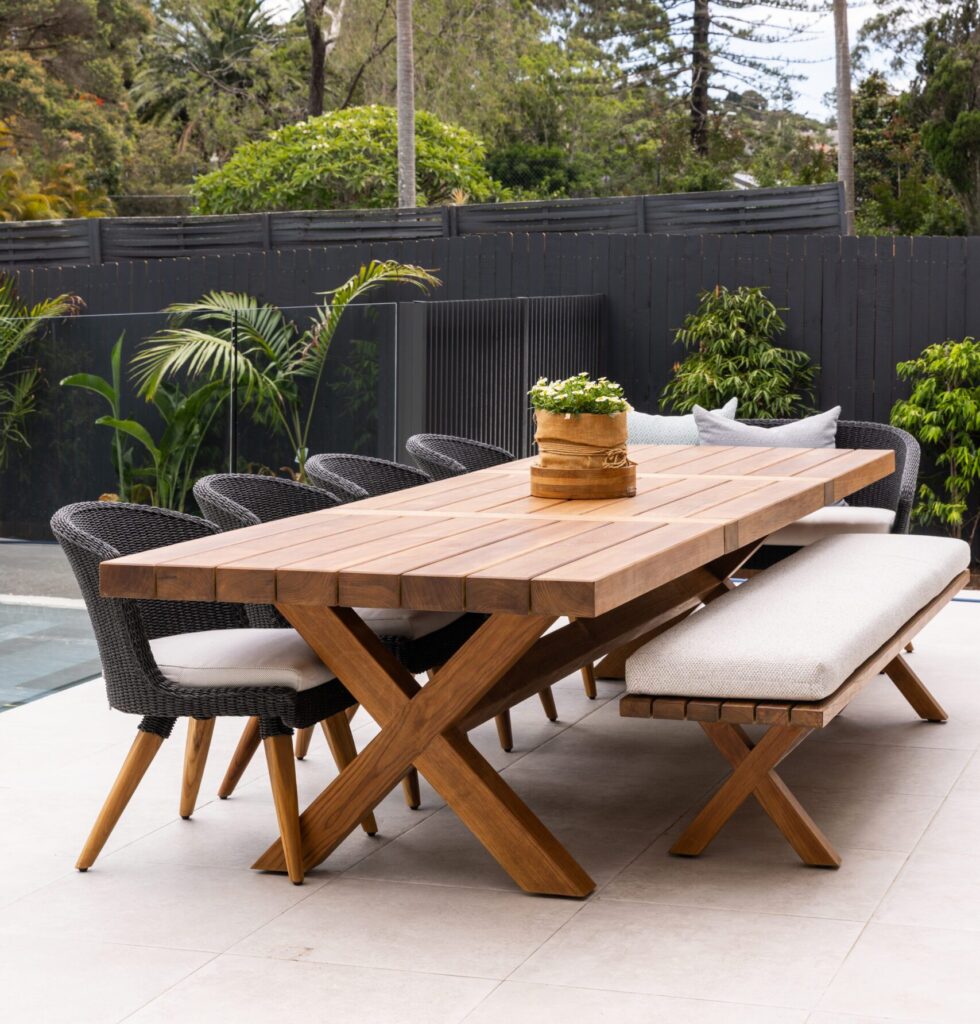
Teak earns its reputation through natural resilience
Teak is a considered choice for dining tables, benches and lounge frames because its natural oils help it withstand moisture and resist decay. Furniture made with premium grade teak with carefully engineered joinery, can become a decades-long feature of an outdoor space. At Osier Belle, all our teak furniture is made constructed from A6 Grade teak sourced directly from Jepara, Indonesia, an area renowned for exceptional quality, sustainably managed and protected by the FSC (Forest Stewardship Council and TFT (The Forest Trust).
As a natural resource, teak will naturally weather and settle into its environment, developing a silver tone over time. However, for those who prefer the original golden brown tone of teak can regularly maintain their furniture with Cutek to minimise weathering. To help you get the most out of your bespoke luxury outdoor furniture, we provide teak maintenance services to keep your teak pieces in showroom condition.
An established cleaning routine is still needed for outdoor teak furniture to ensure water doesn’t get pooled and surfaces remain clean. The distinction is important: a weathered finish can be elegant; neglected timber can develop preventable staining and surface roughness.
Aluminium depends on the coating and the frame beneath it
Aluminium is valued for its lightness, clean lines and resistance to rust. Yet not all aluminium construction performs equally in Australian conditions. A high-quality, fully welded frame with a durable powder coat is a strong choice for contemporary lounges and dining designs, particularly where furniture needs to be moved with ease.
Look closely at joints, feet, drainage points and the underside of the frame. These are the places where moisture and salt can settle. Near the coast, prompt removal of salt residue and attention to scratches will help protect the coating and maintain the crisp finish that makes aluminium so appealing.
Wicker should feel refined, not fragile
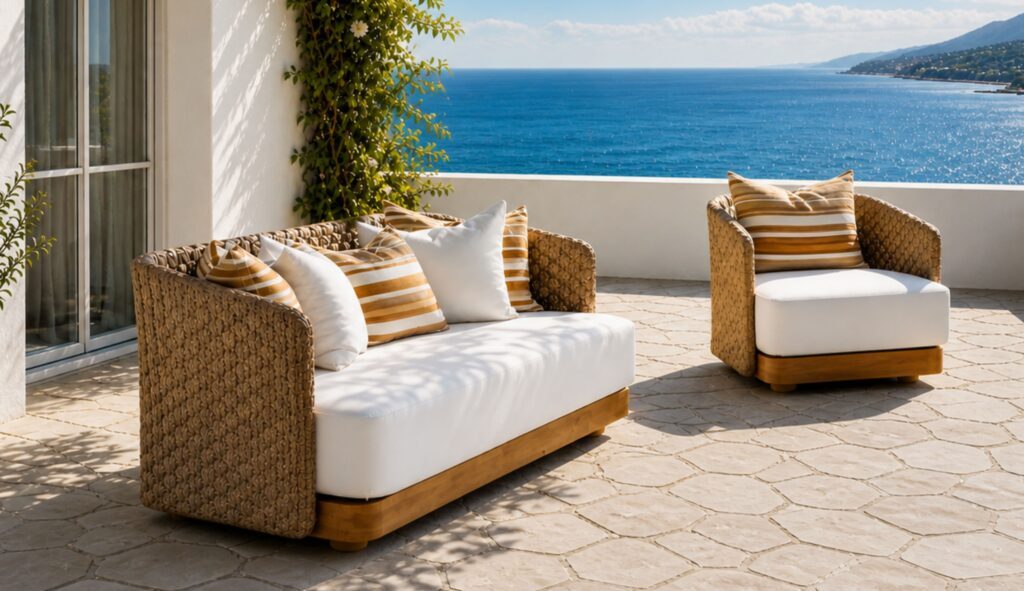
Modern outdoor wicker is usually a high-performance synthetic fibre woven over a frame. Its appeal lies in texture, comfort and the ability to create generous, sculptural lounge pieces without visual heaviness. When the fibre is UV-stable, consistently woven and supported by a quality frame, it can retain its character for many years.
The trade-off is that wicker has more surface area exposed to sunlight than a smooth metal frame. In harsh sun, inferior fibres can dry out, fade or become brittle. A piece with an irregular, hand-finished feel should still have even tension and no sharp, loosely finished ends.
That is why we carefully twist each fibre of our wicker furniture before weaving. This allows the material to rotate and flex when expanding and contracting under heat, ensuring a flawless finish that is specifically designed for Australian conditions.
Concrete is architectural, but it asks for thoughtful placement
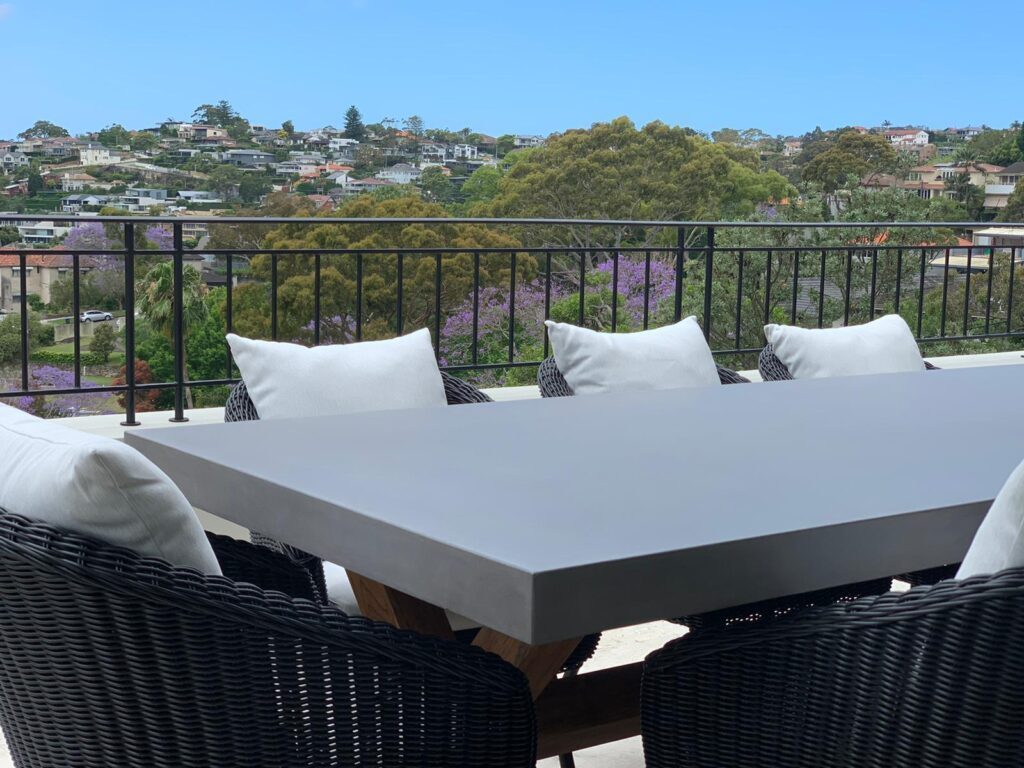
Concrete dining tables, side tables and benches bring weight and permanence to an outdoor scheme. They are particularly effective beside masonry, stone, rendered walls and contemporary pool surrounds. All Osier Belle concrete dining tables feature sealed concrete which is highly durable, although it is not entirely maintenance-free.
As a porous material, it can absorb spills if its seal is compromised. Its weight also affects access, flooring load limits and future flexibility. Before choosing a substantial concrete piece, confirm lift access, gate widths, stairs, pool fences and the final location. Furniture that arrives smoothly and sits correctly from day one is far more likely to remain part of the space for the long term.
Australian conditions can shorten or extend a lifespan
Australia’s climate is not one condition but many. Intense UV is a national consideration, while humidity, frost, dry heat, heavy rain and coastal salt each create their own pressures. The most successful outdoor spaces acknowledge the local environment rather than treating it as an afterthought.
In coastal locations, salt-laden air can settle invisibly on frames, fasteners and fabrics. A regular fresh-water rinse is a simple but valuable habit. In humid regions, cushions need airflow and a dry place to be stored during extended wet periods. In areas with fierce summer sun, a quality parasol, covered zone or protective furniture cover can make a meaningful difference to both colour retention and fabric life.
Covers are useful, but only when they are breathable, correctly fitted and used on clean, dry furniture. A cover that traps moisture against cushions or timber can create more trouble than it prevents. For many homes, the best approach is a combination of shade, sensible storage for soft furnishings and occasional cleaning.
Construction reveals whether a piece is built for the years ahead
When comparing outdoor furniture, it is easy to be drawn first to form, colour and seat comfort. Those are essential, but construction is where long-term value becomes visible. Inspect the joins in timber, the consistency of welding in metal, the stability of table bases and the quality of the fittings. Furniture should feel composed under weight, not flex, rattle or twist.
For upholstered pieces, ask what is inside the cushions as well as what is on them. Quick-drying foam, breathable mesh bases and removable covers help furniture recover after rain and make maintenance more practical. High-performance outdoor fabric should feel inviting rather than overly technical, while offering strong resistance to fading and everyday marks.
Scale also contributes to longevity in a less obvious way. A sofa that is too deep for the space, or a dining table that constricts circulation, is more likely to be replaced even if it remains physically sound. When we design custom outdoor pieces we measure the usable area, not just the footprint, allow for room to pull out chairs, walk around a daybed and open doors without disrupting the layout.
Care that protects the investment without becoming a chore
Quality outdoor furniture should support relaxed living, not create a demanding weekend task list. A light, regular routine is generally more effective than an annual rescue effort. Brush off leaves and debris, wipe down frames with mild soapy water, and address food, sunscreen and drink spills before they settle.
Timber benefits from cleaning that follows the grain, while aluminium and wicker should be washed with a soft cloth or brush rather than anything abrasive. Cushion covers should be cared for according to their fabric instructions. Even fade-resistant fabrics appreciate being brought inside or stored dry during long stretches of harsh weather.
It is also wise to check glides, bolts and moving parts once or twice a year. A small adjustment can prevent uneven wear, particularly on a table placed over natural stone, decking or tiled surfaces with slight variations.
When replacement is sensible, not premature
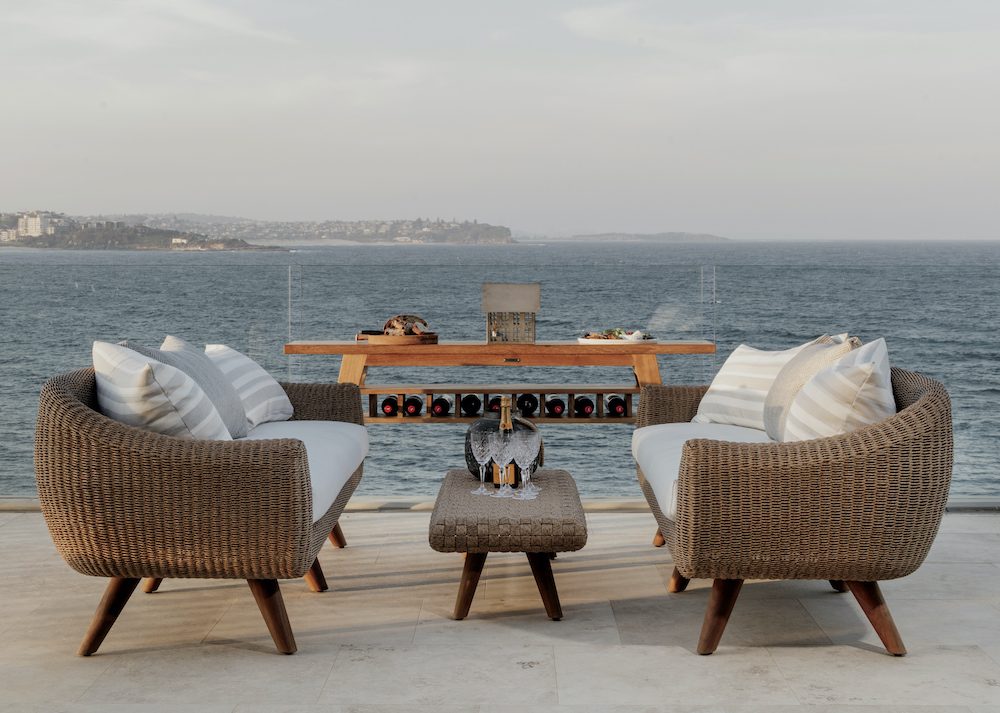
A faded cushion cover or a weathered timber surface does not mean the entire setting has reached the end of its life. Premium furniture is often designed so that cushions, covers or individual components can be refreshed, allowing the frame and overall design to remain in place.
Replacement becomes more compelling when structural integrity is compromised: persistent wobble, failed welds, corroded hardware, cracking that worsens, or cushions that no longer provide support. It can also be the right decision when a renovation changes how the space is used. A growing family, a new pool or a reworked entertaining zone may call for different proportions, even when the original pieces are still serviceable.
At Osier Belle, the aim is to create pieces that continue to belong in a home long after the first season. Choose materials that suit your climate, allow for generous circulation and care for them with a light hand. The reward is an outdoor setting that feels settled, comfortable and distinctly yours year after year.
