
A well-designed terrace should feel less like an exterior addition and more like one of the most compelling rooms in the home. It is where morning light, long lunches, poolside afternoons and evening entertaining meet.
Knowing how to style a luxury terrace begins with treating it as architecture: considering proportion, outlook, circulation, materials and the way you genuinely want to live there. The difference is rarely one statement piece. It is the relationship between every element – a lounge positioned for the view, a dining setting with room to move around it, materials connected to the home and furniture proportioned specifically for the space.
How to Style a Luxury Terrace: Start With the Plan
Before selecting finishes or cushions, assess the terrace as it will actually be used. Measure its full footprint, but also record door swings, steps, balustrades, pool fencing, outdoor kitchens, columns, planters and access routes. A beautiful dining setting that blocks the path from the kitchen will become frustrating very quickly.
Sun and wind matter too. An exposed waterfront terrace may benefit from lower, more substantial furniture, while a shaded urban setting can comfortably carry lighter upholstery and softer forms. Divide larger terraces into zones. Position dining close to the kitchen or barbecue, allow the lounge to take advantage of the strongest outlook, and reserve poolside or quieter areas for a daybed or sun loungers.
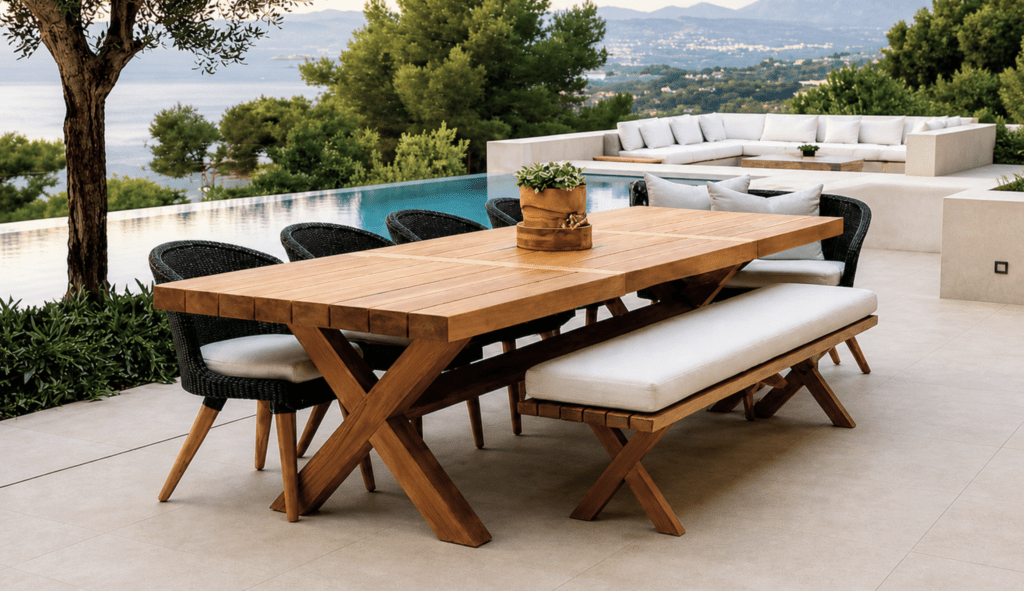
Choose a clear focal point
Every terrace benefits from somewhere for the eye to settle. It may already exist – a pool, established tree, coastline or fireplace. Arrange furniture to acknowledge it rather than compete with it.
Where the view is the hero, a lower lounge profile can preserve sightlines from both the terrace and inside the home. Collections such as Lux work particularly well where clean proportions and architectural restraint are important.
Where the architecture needs a stronger focal point, create one through a substantial teak dining table, sculptural daybed or the rounded form of a Bulle or Tressé setting. The objective is not to add more. It is to give the terrace a clear centre.
Select Furniture for Scale, Not Just Seating Numbers
A common mistake is choosing furniture by the number of people it can technically accommodate. Luxury living is more generous than that. A six-seat table may suit six people, but it also needs enough room for chairs to pull back comfortably and for serving pieces to remain on the tabletop.
On a broad terrace, undersized furniture can appear temporary and leave the space visually fragmented. Consider a deep modular lounge with integrated ottomans, or two facing sofas with a substantial central table. These arrangements create a genuine outdoor room, particularly when they echo the geometry of the home.
Conversely, a narrow balcony-style terrace needs restraint. One beautifully proportioned sofa, two occasional chairs and a compact table may deliver far more sophistication than trying to force a full dining and lounge suite into the same footprint. Select pieces with refined profiles, then invest in their comfort and finish.
Seat depth deserves particular attention. Deeper lounges encourage long, relaxed gatherings, while a more upright profile is often better for conversation, cocktails or terraces used frequently by older family members. This is where a showroom consultation can be valuable: dimensions feel very different in person than they do on a floor plan.
Build a Material Palette That Belongs to the Home
The terrace should extend the interior language without copying it literally. If the home features warm timber flooring, natural stone and soft neutral upholstery, teak, woven textures and limestone-toned cushions can continue that story outdoors. For more contemporary architecture, consider the restraint of powder-coated aluminium, concrete and crisp tailored upholstery.
Aim for two or three primary materials, then repeat them with intention. Osier Belle often works across teak, handwoven wicker, upholstered furniture and concrete within the same setting. Each brings something different: teak contributes warmth, wicker softens architectural surfaces and sealed concrete provides visual weight.
Australian terraces are demanding environments. Salt air, ultraviolet exposure, heat and sudden rain can all shorten the life of poorly specified pieces. Choose furniture engineered for the conditions, with corrosion-resistant frames, outdoor-grade fabrics, quick-dry cushioning and finishes suited to the location. A protected terrace in Melbourne will have different needs from an exposed waterfront setting in Queensland or Western Australia.
Layer Comfort Carefully
Once the main furniture is in place, introduce the elements that make people stay. Outdoor cushions should not be an afterthought. Use them to create depth through variation in weave, scale and tone, rather than a collection of unrelated patterns. A restrained palette of sand, tobacco, olive, charcoal or mineral grey will generally hold its sophistication across seasons.
A generous outdoor rug can define a lounge zone and soften hard architectural surfaces. Choose one sized large enough for the front legs of every major seat to rest on it. A rug that is too small makes even exceptional furniture feel disconnected.
Lighting should be planned in layers. Soft, warm illumination near lounge and dining areas creates atmosphere, while subtle path or step lighting improves safety. Avoid relying on one bright overhead fitting. The most inviting terraces reveal their edges, planting and textures gradually after dark.
Shade is equally fundamental. A quality parasol gives flexibility where permanent structures are impractical, particularly beside a pool or over a daybed. For dining, make sure the canopy diameter actually covers the extended chairs, not only the table surface. Fixed awnings and pergolas can be excellent solutions, but they should be designed with drainage, wind exposure and views in mind.

Use Greenery as a Structural Element
Planting gives a terrace privacy, softness and a stronger connection to the surrounding landscape. Rather than scattering small pots around the perimeter, use fewer, larger planters to establish rhythm. Grouping substantial vessels can screen neighbouring buildings, define zones or frame an arrival point without cluttering the floor.
Match planting to the exposure and the level of care available. Hardy species may be the sensible choice for a sun-drenched terrace that is not visited daily, while lush layered planting can suit a protected area with irrigation. The planters themselves should relate to the architecture: ceramic for softness and craft, metal for a sharper contemporary edge, or stone-look finishes for permanence.
Keep maintenance purposeful. A luxury terrace loses its composure when cushions are faded, leaves collect in corners or pots are crowded with struggling plants. Storage furniture can discreetly house covers, throws and entertaining essentials, making it easier to reset the space after each use.
Finish With Pieces That Invite a Ritual
The final layer is personal, but it should still be edited. A tray on the coffee table, a sculptural lantern, a set of considered serveware or a folded throw can create warmth without turning the terrace into a display. Leave room for a drink, a book, a shared platter and the small signs of real use.
For a design-led result, establish the permanent architecture first, then refine the furniture layout before committing to accessories. Osier Belle approaches outdoor living in the same spirit: with pieces designed around comfort, proportion and lasting material performance, not short-lived trends.
The best terrace is not styled once and left untouched. It adapts to summer gatherings, quiet winter sun and the changing ways a household comes together. Start with a plan that respects the site, choose pieces made to endure, and leave enough space for life to unfold beautifully.
