
A beautifully proportioned outdoor setting can lose its appeal quickly when the cushions fade, hold water or feel flat after one summer. This outdoor upholstery guide is designed for Australian homes where intense UV, sudden downpours, chlorinated pool water and coastal salt air place real demands on every fabric and filling choice.
Upholstery is not simply the finishing layer of an outdoor sofa, lounge chair or daybed. It determines how a piece feels to use, how confidently it can remain outdoors, and how gracefully it will age alongside the architecture of your home. The right specification brings softness and sophistication to an entertaining area without compromising on performance.
An outdoor upholstery guide starts with the climate
Australia does not offer one outdoor climate. A covered balcony in inner Melbourne has different requirements from a poolside entertaining zone in Brisbane or a sun-drenched Perth courtyard. Begin by considering how exposed the setting will be, rather than choosing a fabric by colour alone.
For spaces with full western sun, colourfastness and UV resistance should take priority. Deep hues can create visual drama, but they absorb more heat and may show fading sooner than mid-tones or lighter neutrals if the furniture is unprotected. In a covered area, you have greater freedom to introduce textured weaves, softer tones and more tailored detailing, though reflected heat and rain driven by wind can still affect the cushions.
Coastal homes need particular care. Salt settles on fabric, frames and zips, while persistent moisture can encourage mildew where airflow is limited. Quick-drying cushion construction and regular rinsing are valuable in these locations. Near a pool, consider how sunscreen, chlorine and wet swimwear will interact with the upholstery. A practical fabric should still look considered after a long afternoon of use, not demand concern from every guest.
Choose performance fabric, not just an outdoor-looking fabric
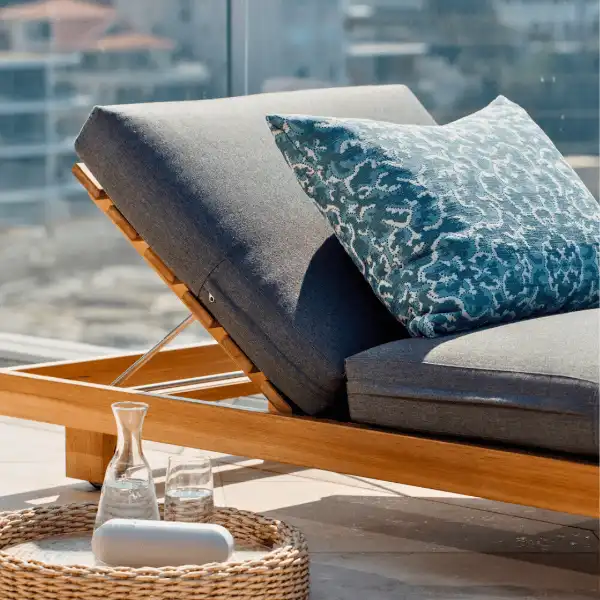
Premium outdoor upholstery fabric is engineered to resist the issues that shorten the life of ordinary textiles: ultraviolet exposure, moisture, staining and abrasion. That does not mean every performance fabric feels synthetic or overly technical. The best contemporary options have the hand-feel and visual depth expected in a refined interior, while being purpose-built for outdoor living.
Solution-dyed acrylic is widely valued for its excellent fade resistance and broad range of colours and textures. Because the colour is integrated during fibre production rather than applied to the surface later, it performs particularly well in high-UV environments. It is a strong choice for sofas, daybeds and dining cushions intended for regular exposure. Osier Belle’s Fabric Portfolio includes textiles from Sunbrella, Dickson Constant and Agora, selected for their softness, woven textures and extensive colour options as well as outdoor performance. The collection is made from 100% solution-dyed, marine-grade acrylic, combining the look and feel expected of luxury upholstery with the durability required for outdoor use.
Other outdoor textiles can also provide moisture resistance and durability, but performance varies considerably between fibres and constructions. Rather than relying on a generic “outdoor” label, compare UV resistance, colourfastness, cleanability and the manufacturer’s intended application. For settings where moisture exposure is a particular concern, waterproof upholstery provides another option. The Osier Belle Shield range incorporates a membrane on the reverse of selected fabrics to create a waterproof barrier, helping prevent surface water from reaching the cushion beneath. This can be particularly useful for highly exposed poolside or uncovered settings, although the right specification should still take into account comfort, airflow, exposure and how the furniture will be used.
Textured fabrics create another consideration. Bouclé-inspired and richly woven finishes can make an outdoor space feel more architectural and inviting, particularly where indoor and outdoor rooms are designed as one visual story. However, textured surfaces can hold dust, pollen and debris more readily than a smooth weave. They are best selected with the setting, cleaning routine and household lifestyle in mind.
Colour should work with light, landscape and maintenance
A fabric swatch under showroom lighting tells only part of the story. Our Fabric Portfolio spans silver and grey, natural and neutral, white and ivory, charcoal and darker tones, as well as more expressive colours and mixed tones. Exploring these options alongside the materials already present in the home can help narrow the palette before making a final selection. Take-home samples allow shortlisted fabrics to be viewed against existing paving, stone, timber, pool finishes and interior materials in the actual light of the space. This can be particularly useful with nuanced neutrals, which may appear considerably warmer or cooler depending on their surroundings. Warm ivory may suit travertine and pale timber beautifully, while a cooler grey can appear blue beside creamy limestone. Green-grey, clay, sand and charcoal tones often give outdoor upholstery lasting versatility because they connect naturally with landscape materials.
Pale upholstery feels fresh and expansive, especially on a compact balcony or shaded terrace, but will show marks more readily. Charcoal and darker neutrals are forgiving in high-use zones, yet can become noticeably hot in direct sun. The most successful choice usually sits between those extremes: a mid-tone with enough depth to disguise everyday use and enough softness to retain a relaxed, luxurious appearance.
What sits inside the cushion matters as much as the cover
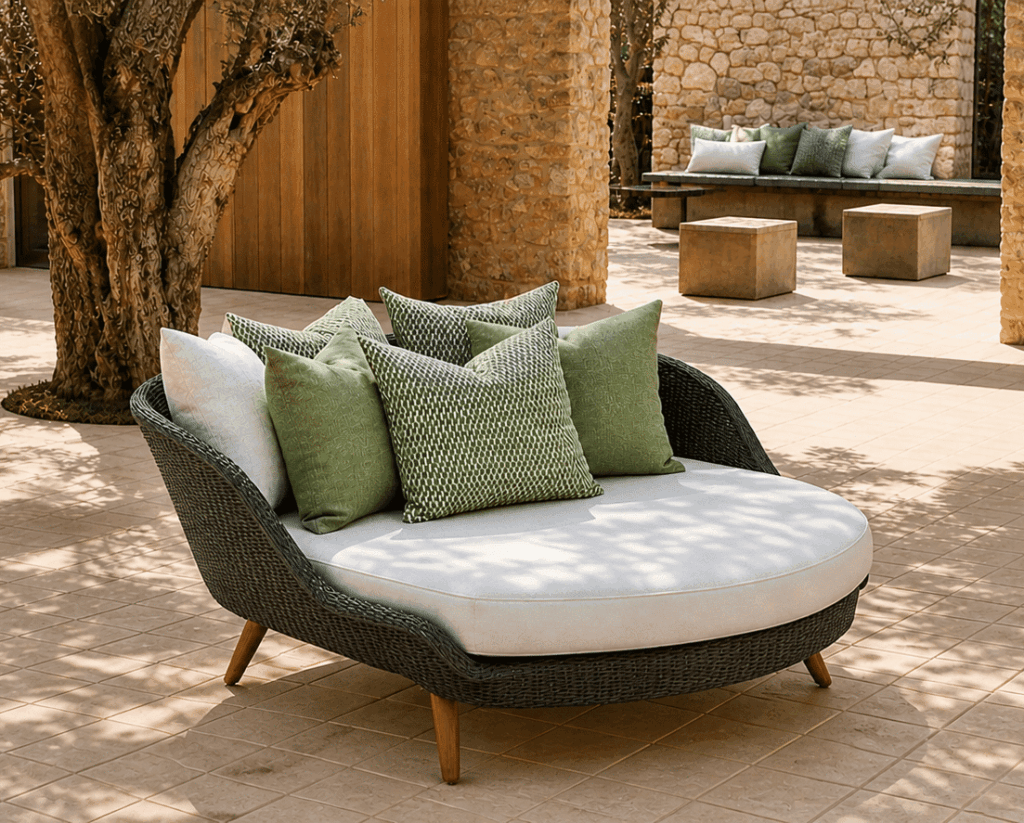
A beautiful cover cannot compensate for poor cushion construction. Comfort, drainage and shape retention depend on the foam, fibre and protective layers within.
For exposed applications, quick-dry foam is often the preferred foundation. Its open-cell structure allows water to pass through rather than remain trapped inside, helping the cushion dry more quickly after rain. This is particularly valuable for pool surrounds, uncovered terraces and coastal homes, where a conventional foam insert may stay damp long after the surface fabric appears dry.
The trade-off is feel. Quick-dry foam can be firmer than indoor upholstery foam, especially when new. High-quality cushion design balances this support with a softer wrap or fibre layer, creating a more inviting sit without restricting drainage. Seat depth, back angle and cushion thickness should be considered together. A deep lounge may call for a more structured back cushion, while a casual low-profile setting can accommodate a softer, relaxed arrangement.
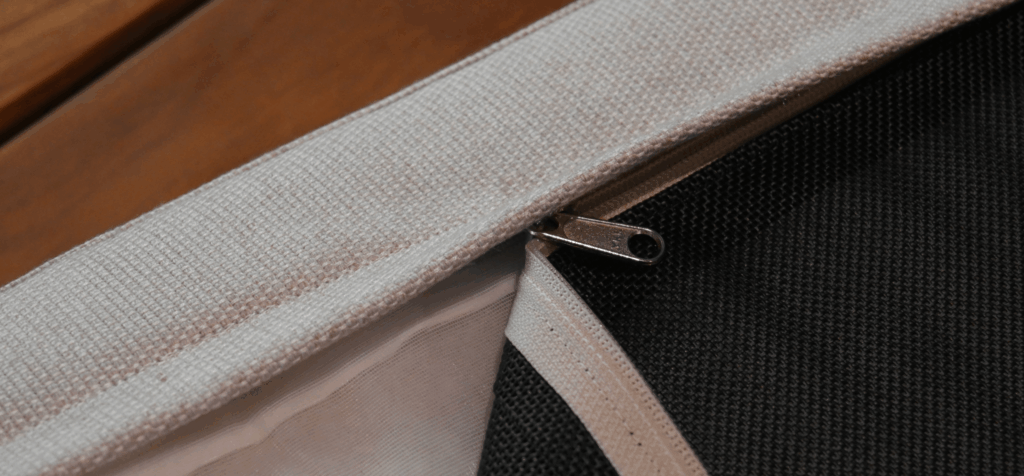
Practical care should also influence the specification. Osier Belle’s outdoor fabrics are designed with ongoing care in mind, while many furniture designs use removable covers with quality YKK zips. Depending on the selected fabric and its care instructions, removable covers can make routine cleaning considerably easier without compromising the tailored appearance of the upholstery.
Design upholstery around the way you entertain
Outdoor upholstery should suit the rhythm of the space. A formal dining setting benefits from firmer, slimmer seat cushions that support long lunches without overwhelming the chair silhouette. A poolside daybed needs generous cushioning, but should dry efficiently and allow for easy movement when shade changes. A modular lounge intended for family gatherings may need deeper seats, durable fabric and cushions that retain their shape through frequent use. With suitable Osier Belle designs, cushion dimensions and thickness can be considered alongside the overall furniture proportions rather than treating upholstery as a standard component added at the end.
Scale is equally important. Oversized, plush cushions can look inviting in a large covered pavilion, but may crowd a narrow terrace or obstruct circulation around a dining table. Allow practical clearance for doors, pool fences, balustrades and the route from kitchen to seating area. If access is tight, consider the dimensions of each furniture module and cushion before delivery, including lifts, stairways and side gates.
For a cohesive result, repeat one or two material cues from the home. A woven fabric may echo a timber screen, while warm neutral upholstery can soften concrete or complement stone flooring. Avoid matching every element too precisely. Contrast between a tailored sofa, a natural timber table and textural planting is often what gives an outdoor room depth.
Care preserves the finish you selected
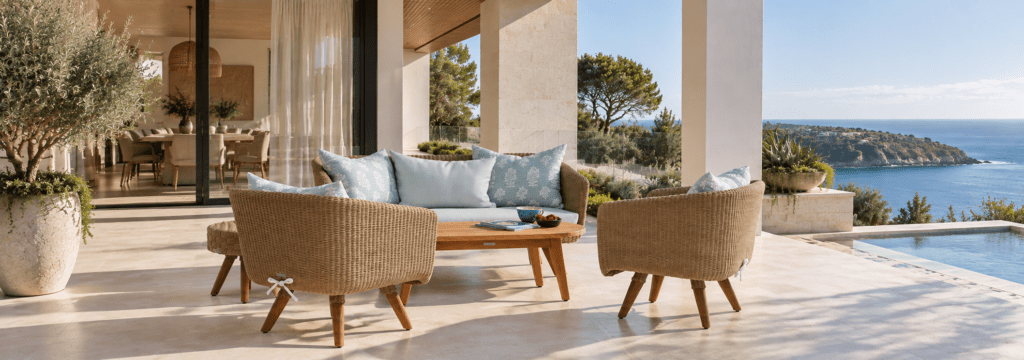
Even the finest performance upholstery benefits from regular attention. Follow the cleaning instructions provided for the specific fabric rather than applying a general household cleaning method. Brush away loose debris, address spills promptly and avoid aggressive scrubbing or unapproved cleaning products that could affect the finish.
Cushions should be allowed to dry fully after heavy rain. Stand them on their edge where practical to promote airflow, particularly in humid weather. Covers are useful when furniture will not be used for extended periods, but avoid trapping moisture beneath non-breathable covers. Properly constructed outdoor cushions are designed to cope with normal weather exposure, but reducing unnecessary exposure during prolonged severe weather can help preserve their appearance over time. If cushions are stored or covered, make sure they are completely dry first so moisture is not trapped around the fabric or filling.
Rotate loose cushions periodically so the most-used positions do not age differently from the rest of the setting. If your space receives harsh sun for much of the day, a well-positioned parasol or architectural shade can protect both the upholstery and the people using it.
When customisation is worth considering
Custom upholstery becomes especially valuable when a standard colour or seat profile does not suit the architecture. A tailored fabric selection can connect an outdoor lounge to interior joinery, a pool finish or a landscape palette, while adjusted cushion dimensions can improve comfort for a particular furniture design.
This is also where expert advice matters. A beautiful pale linen-look fabric may be entirely appropriate beneath a deep roofline, yet unsuitable for an exposed beachfront deck. The right choice is rarely about selecting the most expensive specification. It is about matching material, construction and care expectations to the exact conditions of the space.
Outdoor upholstery has to achieve something interior fabric rarely does: provide genuine comfort while coping with sun, moisture, changing temperatures and the realities of everyday outdoor living.
Choosing purpose-made outdoor fabrics, quick-drying cushion construction and colours suited to the setting makes that balance considerably easier. Osier Belle’s extensive Fabric Portfolio, Urecel QuickDry Foam and made-to-order cushion specifications allow upholstery to be considered as part of the furniture from the beginning, rather than simply selected as its final decorative layer.
Get those decisions right and outdoor upholstery can deliver the softness and comfort of an interior setting without asking the space to behave like one.
