
A beautifully arranged terrace can lose its appeal quickly when cushions are faded, waterlogged or marked by mildew. So, can outdoor cushions stay outside? In many Australian settings, yes – provided they have genuinely been designed for outdoor use.
The important distinction is what sits beneath the fabric. Outdoor cushions need materials that can withstand intense UV, sudden rain, humidity and regular use without becoming an ongoing maintenance project. For furniture intended to remain part of everyday outdoor living, the fabric, foam, thread, zips and internal construction all matter.
Can outdoor cushions stay outside year-round?
High-quality outdoor cushions can remain outside through normal Australian weather when they are made with outdoor-grade textiles, quick-drying foam and breathable construction. At Osier Belle, our cushions are designed specifically to live outdoors rather than being indoor-style cushions covered in weather-resistant fabric. That philosophy extends through the complete construction – from solution-dyed acrylic upholstery and outdoor thread to quick-dry foam and zips designed to make covers easy to remove.
That does not mean cushions benefit from being left saturated through weeks of rain or exposed unnecessarily during severe weather. Year-round outdoor performance and zero maintenance are two different things. A covered alfresco setting may require very little intervention. An uncovered daybed beside a pool, waterfront balcony or exposed terrace deserves a more regular upkeep routine to ensure they remain looking their best for many seasons to come.
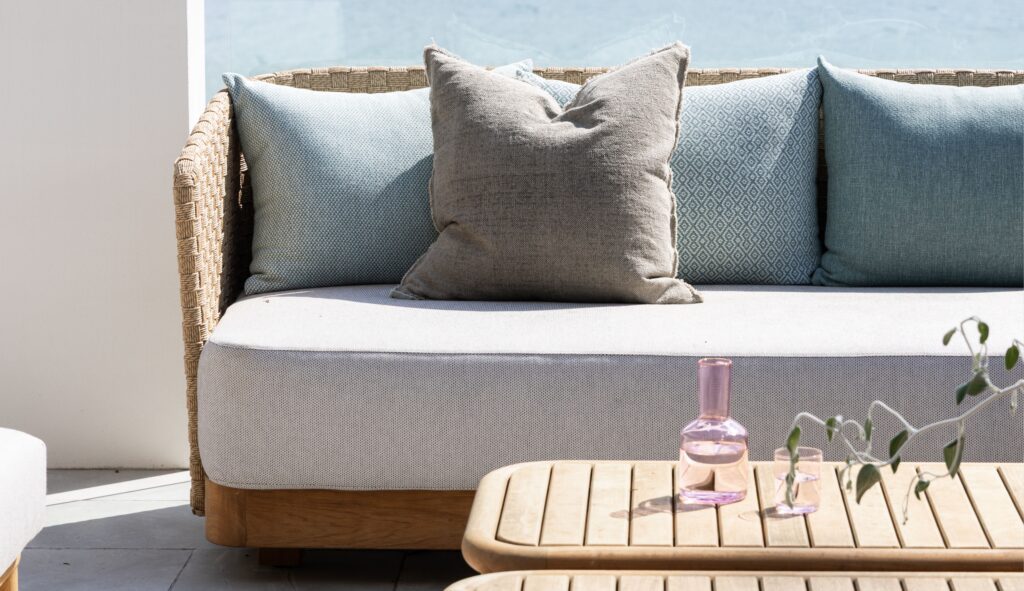
What makes an outdoor cushion genuinely weather-ready?
The visible cover is only part of the story. A cushion that looks luxurious on day one must also be engineered for the moisture and sun it will meet over years of use.
Solution-dyed outdoor fabric
Outdoor upholstery needs to withstand considerably more UV exposure than most interior textiles. Osier Belle uses 100% solution-dyed acrylic outdoor fabrics, where colour is incorporated through the fibre rather than simply applied to its surface. This provides significantly stronger colourfastness under Australian sunlight while allowing clients to choose fabrics with the texture and hand feel expected of an interior setting.
We on work with trusted ad established outdoor textile houses and offer an extensive range of designer fabrics, giving our clients far more freedom than choosing between a small group of predetermined outdoor colours.
Water repellency is useful, but it should not be confused with complete waterproofing. Sustained rain can still enter through seams or zips, which is why the construction beneath the fabric matters.
Quick-dry foam and breathable filling
Conventional indoor foam behaves like a sponge when saturated and we have all had that unfortunate situation where an outdoor cushion is dry to the touch, but quickly seeps through clothing the moment you sit down. That is why we use Urecel QuickDry Foam in all of our outdoor cushions. It is manufactured using Hydro-Blast Reticulation to create an open structure where water can drain and air can circulate. This allows cushions to recover much more effectively after rain or poolside use.
It is one of the least visible differences between outdoor settings when they are new, but one of the most important after several years of living with them.
Thoughtful drainage and construction
Outdoor performance should extend right down to the thread and zips. At Osier Belle, we use outdoor-rated thread in our upholstery and designed cushion covers with concealed zips positioned to make them easier to remove and replace for washing. These details may sound minor, but seams and fastenings are often among the first areas to deteriorate when outdoor furniture has been manufactured primarily around appearance or cost.
Sun is often the greater long-term challenge
Rain is obvious but UV damage is slower. North- and west-facing outdoor spaces can expose cushions to hours of intense sunlight every day, while pools, pale paving and glazing can increase reflected light.
This makes fabric quality particularly important. It also means colour should be selected with the site in mind rather than from a sample alone. Osier Belle offers take-home fabric samples so colours can be viewed in the light where the furniture will actually live. A neutral that looks warm in a showroom may read very differently beside cool limestone in full afternoon sun.
Shade can also dramatically improve comfort and longevity. A well-positioned parasol protects upholstery during the harshest part of the day while making the setting more enjoyable to use throughout the day.
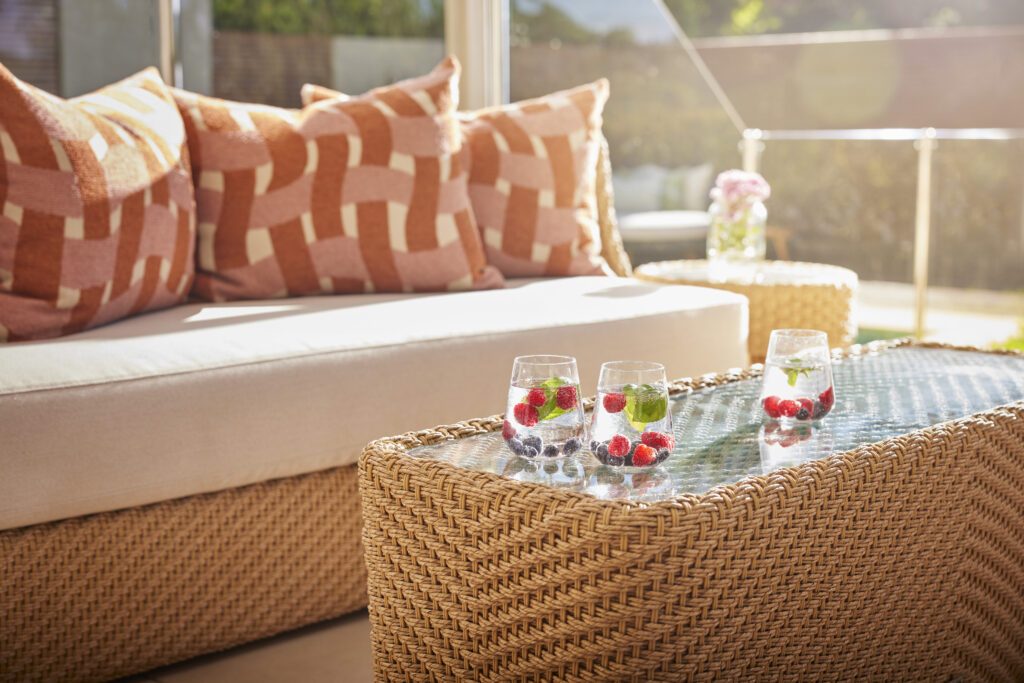
When should cushions be stored?
There is no need to move genuinely outdoor cushions at the first sign of rain. However, storage becomes sensible during prolonged wet weather, severe storms, long absences from home or in locations where cushions cannot dry properly because of shade or poor airflow.
If cushions are stored, make sure they are completely dry first. Placing damp cushions into enclosed storage is an easy way to create mildew. Outdoor storage furniture can keep cushions and accessories close to the entertaining area, while fitted furniture covers provide another option during periods of non-use. The priority should always be a fit that protects without trapping moisture unnecessarily.
Caring for outdoor cushions should be simple
Good outdoor cushions should not demand constant attention. Remove leaves and dry debris periodically, treat spills quickly and follow the cleaning instructions for the specific textile. Removable cushion covers make deeper cleaning considerably easier.
After heavy rain, give cushions airflow rather than allowing them to remain compressed against the seat base. Standing them upright temporarily will help water drain and air move through the foam. Around pools or coastal homes, occasional fresh-water rinsing can also remove sunscreen, pool chemicals and airborne salt before residue accumulates.
Match the cushion strategy to the setting
A covered Melbourne terrace, exposed Brisbane balcony and waterfront Sydney home all ask something different of outdoor upholstery. The answer is therefore not simply whether outdoor cushions can stay outside. It is whether your cushions have genuinely been built for the conditions in which you intend to leave them.
At Osier Belle, that consideration begins inside the cushion rather than at the fabric surface. Solution-dyed acrylic textiles, outdoor thread, removable covers and Urecel QuickDry Foam are selected together so the cushion can be treated as an integral part of the outdoor furniture rather than something that needs to be rescued whenever the weather changes.
Choose cushions made for outdoor life, give them airflow when conditions demand it and protect them sensibly during extended periods of extreme weather. The result should be outdoor seating that feels ready to use far more often than it feels like something you need to maintain.
