
A beautifully styled outdoor setting can look impeccable on delivery day and tired by the end of summer if the construction beneath the surface is compromised. That is the real question behind wicker outdoor furniture quality – not whether it looks refined in a showroom, but whether it will continue to hold its shape, comfort and finish through hard sun, rain, salt air and regular use.
Quality is rarely about one feature alone. It is the combination of material selection, frame engineering, weaving technique, cushion construction and proportion. When those elements are considered together, wicker becomes one of the most elegant and dependable materials in luxury outdoor living. When they are not, the same look can age very quickly.
What wicker outdoor furniture quality actually comes down to
The phrase wicker is often used loosely, which is where confusion begins. Wicker refers to the weaving style rather than the structural material itself. In premium outdoor furniture, the woven exterior is typically paired with a powder-coated aluminium frame and all-weather synthetic fibres designed for exterior conditions.
That distinction matters. Natural fibres may have visual charm indoors or in protected spaces, but exposed outdoor environments in Australia demand much more. High-quality synthetic wicker is engineered to resist fading, cracking and brittleness, while a strong internal frame prevents wobble, distortion and sagging over time.
This is also why two pieces can appear similar from a distance yet perform very differently after a year outdoors. Good wicker furniture does not rely on appearance alone. It is built from the inside out.
The weave should be consistent, dense and expertly finished
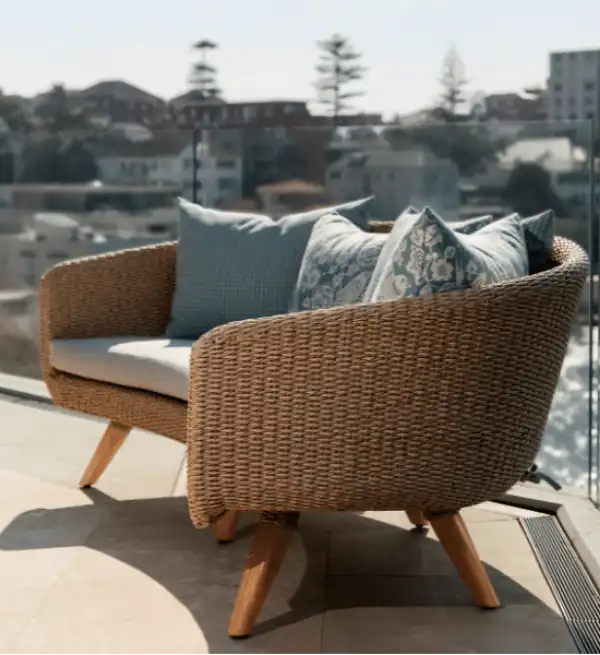
A quality weave has an immediate visual calm to it. The pattern sits evenly, the tension feels consistent and the finish looks deliberate rather than rushed. Loose ends, irregular spacing or a weave that already appears stretched are all signs that shortcuts may have been taken.
Synthetic wicker used in premium settings is typically high-density and UV-stabilised. That helps it retain colour and flexibility, which is essential in Australian climates where prolonged sun exposure can be unforgiving. Lower-grade fibres often become dry and brittle, then split or fade unevenly.
At Osier Belle, we use premium synthetic wicker from Rehau and Viro, made from PET fibres with the colour incorporated into the material rather than simply painted onto the surface. This helps the wicker resist cracking, decay, chipping and discolouration over time.
Quality wicker should feel substantial in the hand, not papery or hollow. It should wrap the frame cleanly and maintain its form around curves, corners and edges. This is where craftsmanship becomes visible. A sophisticated silhouette depends on a weave that complements the design rather than fighting against it.
Hand-finished detail still matters
Even with advanced materials, workmanship remains central. At Osier Belle, our team specialises in hand-weaving intricate wicker designs, with the tension, alignment and finishing completed with meticulous attention to detail. This level of craftsmanship can be the difference between furniture that feels tailored and furniture that feels mass produced.
For clients furnishing architecturally considered homes, these details are not minor. They influence how the furniture sits alongside stone, timber, concrete and planting schemes. Quality has a visual language, and consistency is part of it.
Cushions are part of the quality equation
Wicker may define the aesthetic, but cushions define much of the everyday experience. Deep, supportive seat cushions and properly constructed back cushions are often what turn a formal-looking setting into one that is genuinely inviting.
High-quality cushion inserts should hold their shape and recover well after use. Outdoor fabrics should resist fading and cope with moisture sensibly, but they also need to feel refined. There is little luxury in a setting that looks elegant but feels stiff, thin or temporary.
It is also worth considering whether cushion covers are removable and whether fabric options can be selected to suit the palette of the home. In premium outdoor design, comfort and visual cohesion should work together.
Australian conditions expose every shortcut
Furniture that performs well in a mild climate may struggle dramatically in Australia. Intense UV, sudden downpours, humidity and coastal salt place real pressure on materials. This is where wicker outdoor furniture quality becomes less about marketing language and more about engineering.
A piece intended for a covered terrace in Melbourne may need a different level of exposure resistance than a poolside setting on the Queensland coast. That does not mean one standard should be lower. It means quality furniture should be selected with placement in mind.
The best approach is always specific. How much direct sun will the setting receive? Is the area fully exposed or partly sheltered? Will it sit near a pool, a beachfront, or under a pergola? These considerations shape the most suitable material finish, cushion fabric and configuration.
Design quality matters as much as material quality
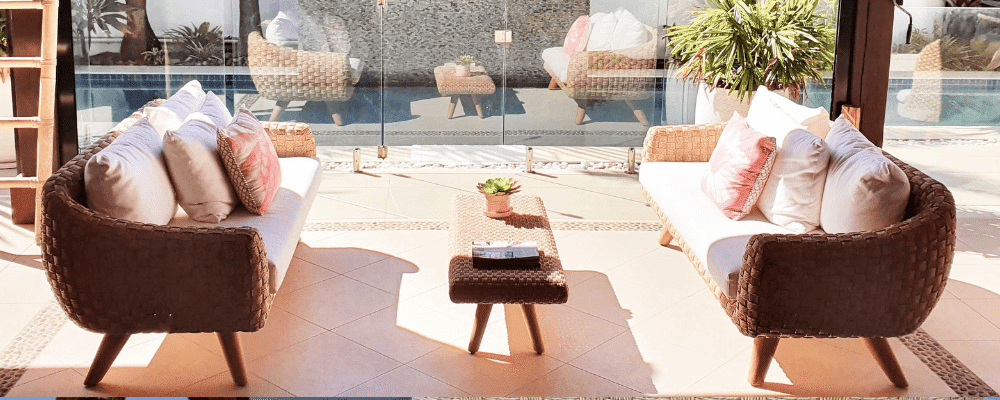
One of the most overlooked parts of wicker outdoor furniture quality is design discipline. Furniture can be made from excellent materials and still feel underwhelming if the proportions are awkward or the scale is wrong for the space.
Luxury outdoor living relies on more than durability. It relies on furniture that sits comfortably within the architecture, allows flow around the setting and creates a sense of ease. On a compact balcony, that may mean slimmer arms and a more refined footprint such as Tressé. On a broad terrace, it may call for modular seating with enough presence to anchor the zone offered in our Bulle and Provence ranges.
How to recognise genuine long-term value
Price alone does not tell you enough. True value sits in longevity, comfort retention, service support and design relevance over time. A setting that still looks composed after years of use is usually the result of better materials and better decisions made upfront.
When assessing quality, ask practical questions. What is the frame made from? Is the wicker UV-stabilised? How are the cushions constructed? Can finishes or dimensions be tailored? Is there confidence behind the product, or only styling around it?
This is also where independent design and manufacturing control can make a meaningful difference. Osier Belle operates its own private factory in West Java, giving us direct control over manufacturing, quality and the finer details of each design rather than outsourcing production to a third-party manufacturer.
Wicker outdoor furniture quality should feel evident, not exaggerated
The strongest pieces rarely need dramatic claims. Their quality is visible in the precision of the weave, the balance of the proportions, the comfort of the seat and the confidence of the construction. They feel stable, generous and considered. They continue to work not just through one season, but across many years of living, entertaining and quiet use at home.
At Osier Belle, that understanding shapes how luxury outdoor furniture is designed for Australian conditions and design-led spaces alike. Because the right wicker setting should not ask you to choose between elegance and endurance.
If you are selecting for a home that deserves both, look past the surface finish and trust the details that stay with you long after the first impression.
