
Teak has long been regarded as one of the finest timbers for outdoor furniture, and for good reason. Its naturally high oil content, dense grain and exceptional durability allow it to withstand harsh conditions that would quickly deteriorate many other timbers. Even so, Australia’s intense UV, heavy rain, coastal salt, pool chemicals and seasonal weather all influence how teak looks and performs over time.
Understanding how to protect teak outdoors isn’t about preventing it from ageing, it’s about helping it age well. With the right maintenance routine, quality teak can remain beautiful for decades, whether you prefer the warm golden tones of newly finished timber or the softer silver-grey patina that develops naturally with exposure.
Start with quality teak
The best teak care begins before any maintenance products are applied. Dense, mature teak naturally contains oils that help repel moisture and resist decay, making it particularly well suited to Australian outdoor living. Well-constructed furniture also makes a difference. Precision joinery, quality hardware and carefully selected timber all contribute to how well a piece performs through changing seasons.
At Osier Belle, this process starts before the furniture reaches your home. Every piece is handcrafted from premium A6-grade teak sourced through a trusted FSC and TFT-certified supplier in Jepara, Indonesia, before being manufactured at our own factory in Cirebon, Java. Starting with exceptional timber means ongoing maintenance is focused on preserving the material rather than compensating for lower-quality construction.
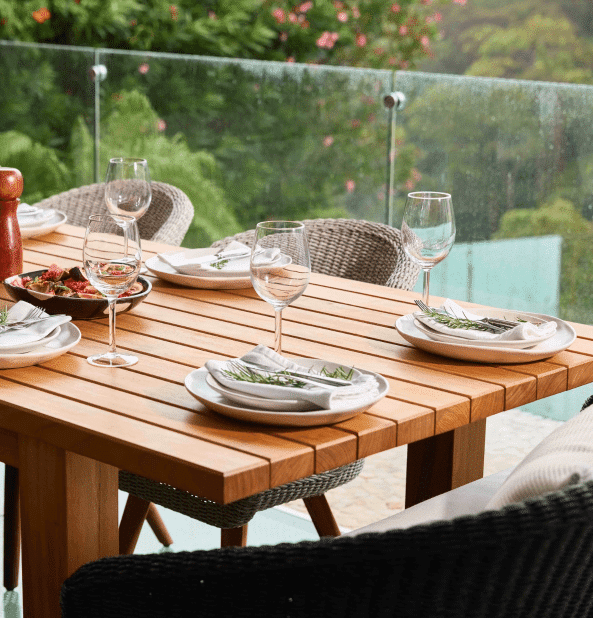
Decide how you want your teak to age
One of the first decisions you’ll make is whether you’d like your teak to retain its original golden colour or naturally develop a silver-grey patina.
Fresh teak begins with warm honey and caramel tones. As it is exposed to sunlight and weather, the surface gradually softens to an elegant silver-grey. This is a completely natural process and affects appearance rather than the strength or longevity of the timber.
Many coastal and contemporary homes embrace silvered teak because it complements limestone, concrete, natural stone and established planting. Others prefer to maintain the original golden warmth to suit timber cladding, traditional architecture or richer outdoor colour palettes.
Neither option is right or wrong. The key is understanding that maintaining the original colour requires more regular protection, while allowing the timber to silver naturally simply shifts the focus towards keeping it clean and free from surface contaminants.
Protect the timber without sealing it in
One of the biggest misconceptions about teak is that it should be heavily sealed or coated like other exterior timbers. In reality, teak performs best when it can breathe naturally. Thick film-forming finishes such as varnishes can eventually crack or peel as the timber expands and contracts outdoors. Penetrating timber treatments are generally a better option because they protect from within while allowing moisture to escape naturally.
This is why every Osier Belle teak piece is treated with Cutek Extreme CD50 before leaving the factory. Rather than sitting on the surface, Cutek penetrates deeply into the timber and is allowed to absorb for four weeks before the furniture is shipped.
Osier Belle offers two finish options:
- Clear: protects the timber while allowing it to naturally weather into the silver-grey patina many homeowners love.
- Black Ash: enriches the timber with a deeper, contemporary tone while reducing the classic reddish appearance often associated with teak.
For homeowners who wish to maintain the original colour over time, periodic reapplication of Cutek helps replenish the protection while preserving the natural appearance of the timber.
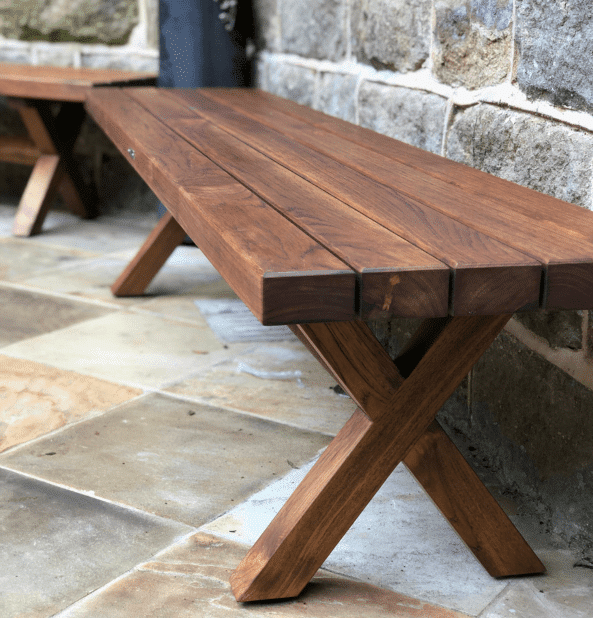
Clean teak regularly
Routine cleaning is the simplest way to keep teak looking its best. Every few weeks, or more frequently in exposed locations, wipe the furniture with a soft cloth or sponge using mild soapy water. This removes dust, pollen, food residue, sunscreen and other contaminants before they become embedded in the timber’s surface.
Outdoor dining tables should be cleaned after entertaining, particularly if food oils, wine or sauces have been left on the surface. Avoid pressure washers, abrasive brushes or harsh household cleaners. High-pressure water can damage the timber’s surface, while aggressive cleaning products may affect both the grain and any protective treatment.
Manage Australia’s outdoor conditions
Australian outdoor environments present different challenges depending on where you live. Near pools, rinse away chlorine or saltwater splashes occasionally with fresh water to prevent residue building up over time. In coastal areas, regular rinsing also helps remove airborne salt carried by onshore winds.
Remove fallen leaves, damp cushions and decorative objects from the furniture regularly. Trapped moisture beneath these items can lead to uneven weathering or temporary staining, while wet leaves may leave tannin marks if left in place. Where possible, position furniture so rainwater drains freely rather than pooling beneath table legs or lounge frames. Small considerations like these help the timber weather more evenly throughout its life.
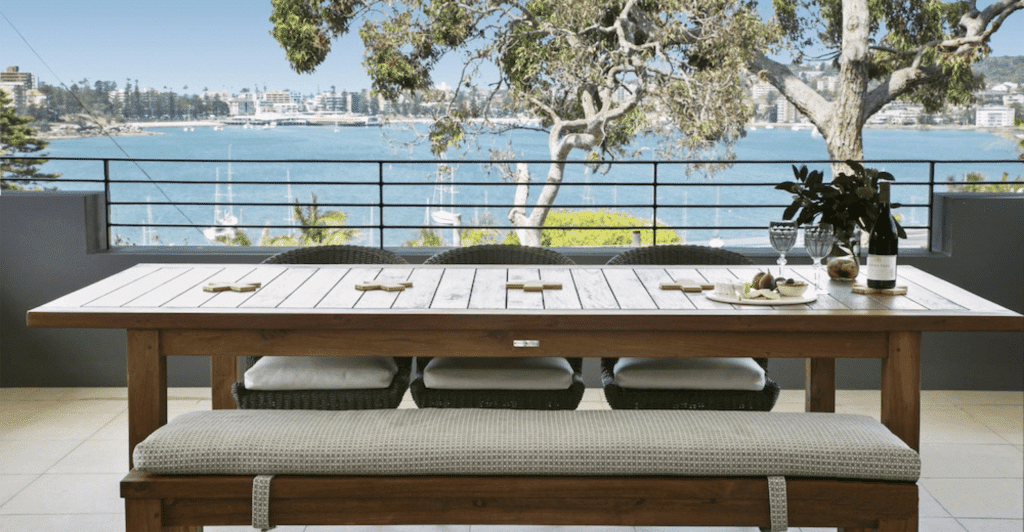
Use protective covers correctly
Furniture covers can be useful during extended holidays or prolonged periods of wet weather, but they should complement your maintenance routine rather than replace it. Always use breathable covers and never place them over damp furniture or wet cushions. Trapped moisture creates the ideal environment for mould and mildew.
If furniture remains covered for an extended period, remove the covers occasionally to allow airflow and ensure the timber stays dry. For furniture used regularly, many homeowners find that good ventilation and routine cleaning are often more beneficial than leaving it permanently covered.
Know when your teak needs attention
Not every mark or colour change means your furniture needs restoring. An even silver-grey patina is simply part of teak’s natural ageing process. However, if the timber begins to weather unevenly, develops stubborn stains or you’d like to restore its warmer appearance, it may be time for more comprehensive maintenance. In many cases, a professional clean followed by reapplication of a quality timber protector is enough to revitalise the furniture without extensive restoration.
Professional teak maintenance
While caring for teak is relatively straightforward, some homeowners prefer to leave periodic maintenance to the experts. Osier Belle offers a professional teak maintenance service for clients wanting to restore weathered furniture, maintain the original golden finish or have Cutek professionally reapplied. For those who enjoy maintaining their furniture themselves, Cutek products are also available through the Osier Belle showroom, along with advice on the most suitable care routine for your setting. The aim isn’t to create unnecessary maintenance. It’s to ensure premium teak continues performing exactly as it was designed to for many years to come.
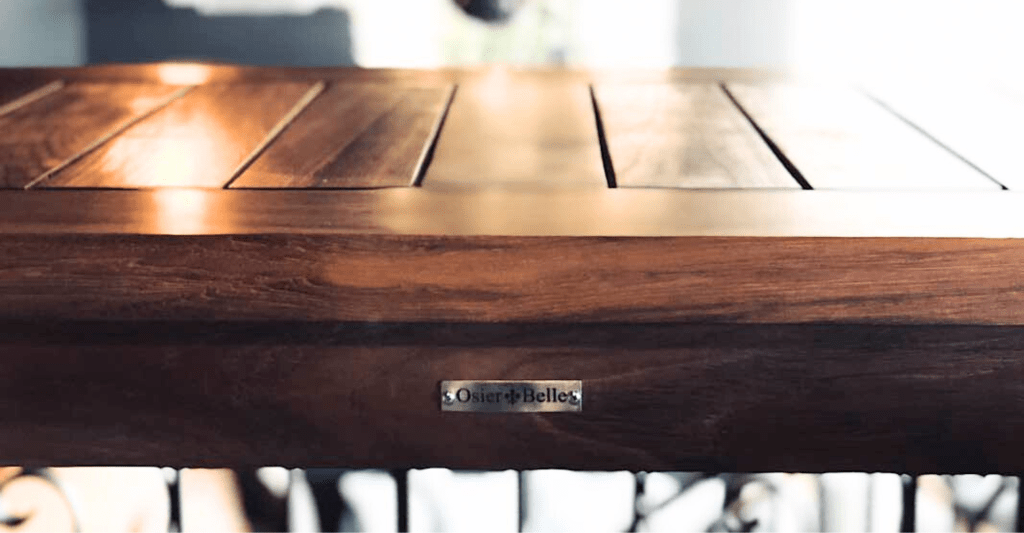
Enjoy the character that develops over time
One of the reasons teak has remained the benchmark for luxury outdoor furniture is that it develops character rather than simply wearing out. Whether your furniture matures into a soft silver-grey or retains its warm golden tones through ongoing care, the timber should continue feeling at home in its surroundings. By starting with quality teak, cleaning it regularly, protecting it with the right products and responding to Australia’s climate, you’ll give your furniture every opportunity to perform beautifully for decades.
At Osier Belle, those same principles guide every stage of the process, from sourcing premium teak in Jepara and applying Cutek Extreme CD50 before delivery to providing ongoing maintenance advice and professional care services. It’s an approach that allows homeowners to spend less time worrying about their furniture and more time enjoying it.
