
A sun-drenched terrace in Brisbane asks very different things of furniture than a windswept coastal deck in Mornington or a shaded inner-city balcony in Sydney. That is why the best material for outdoor furniture is rarely a single answer. It depends on where the pieces will live, how they will be used and how closely the finish, scale and texture need to align with the architecture around them.
For outdoor furniture, the material choice does more than determine durability. It shapes the visual weight of a setting, the comfort of everyday use and the level of maintenance you will realistically want to commit to over time. When outdoor living is part of the way you entertain, unwind and present your home, material selection deserves the same care as any interior finish.
What is the best material for outdoor furniture?
If you want the short answer, the best material for outdoor furniture is the one that suits your climate, your design brief and your expectations of longevity. For many premium settings, that often leads to teak, high-quality outdoor wicker and concrete, each for different reasons.
Teak is prized for its natural oils, structural stability and quiet luxury. Outdoor wicker offers comfort, softness and a more relaxed visual language, provided it is made with superior synthetic fibres over a well-engineered frame. Concrete brings architectural presence and remarkable durability, especially for dining and statement pieces.
None is universally right for every project, and that is exactly the point. In fact, some of the most successful outdoor settings combine two or three materials, using the warmth of timber, texture of wicker and architectural weight of concrete to create balance.
The Australian climate changes the answer
Australia is hard on outdoor furniture. Strong UV exposure can fade inferior materials quickly. Coastal air accelerates corrosion. Heavy rain tests drainage, joinery and finishes. Dry heat can cause expansion and contraction, while pool zones introduce chlorine exposure and constant wet-and-dry cycles.
This is why a material that performs adequately overseas may disappoint here. It is also why buyers looking for long-term value should look beyond surface appearance. The real measure is how a piece is engineered beneath the finish, how the material behaves season after season and whether it still looks resolved after years of daily use.
This was one of the original motivations behind Osier Belle. Founder and designer Penelope Camplisson saw a gap for luxury furniture designed specifically for Australia’s challenging climate, with greater attention paid to cushion thickness, foam, weaving, structural frames, marine-grade components and outdoor fabrics rather than simply adapting furniture designed for other markets.
Teak – the natural benchmark for luxury outdoor settings
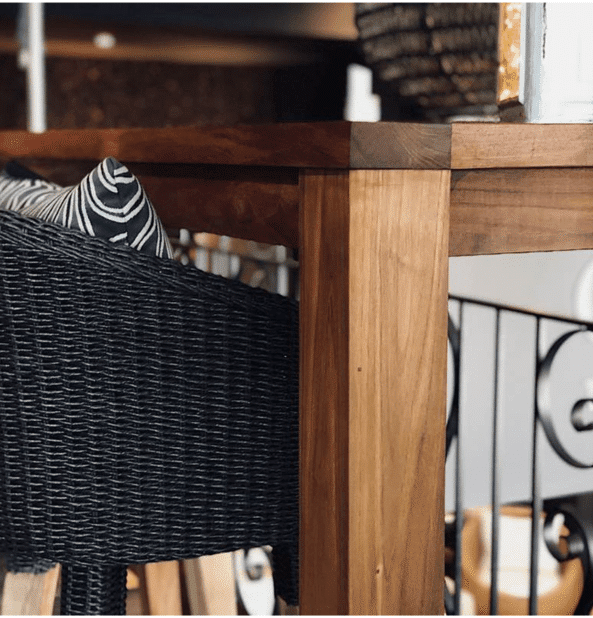
Teak remains one of the strongest contenders for the best material for outdoor furniture, particularly when you want warmth, refinement and genuine longevity. Its natural oil content helps it resist moisture and decay better than many other timbers, and it sits comfortably in both contemporary and classic schemes.
From a design perspective, teak has range. It can soften a minimalist concrete terrace, add richness to a coastal setting or bring a tactile, crafted quality to a sharply detailed architectural home. It is especially effective for dining tables, chairs, benches, lounges and occasional pieces where the grain and joinery can be appreciated up close.
The trade-off is maintenance preference, not structural weakness. Teak naturally develops a silvery-grey patina when exposed to the elements, which many designers and homeowners love. If you prefer the warmer original tone, periodic care is required. Neither approach is wrong, but it is worth deciding which look you actually want before you buy.
Quality matters enormously here. The term teak alone tells you surprisingly little about the quality of a finished piece. The grade and oil content of the timber, kiln drying, joinery and overall construction all influence how it will perform outdoors.
Osier Belle uses A6-grade teak from Jepara, with its current teak furniture protected using Cutek against moisture and UV exposure. Because the furniture is produced in Osier Belle’s own factory, details such as hand-finishing, joinery and dimensions can also be controlled rather than relying on a generic production specification
Outdoor wicker – comfortable, elegant and highly versatile
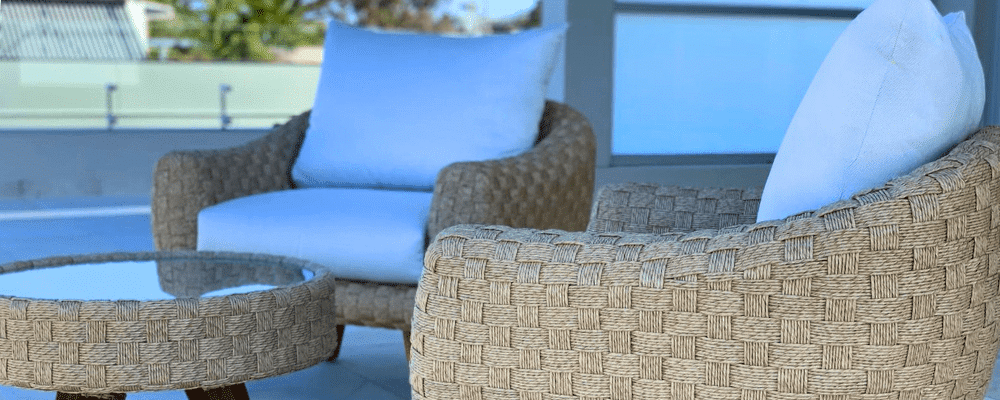
Outdoor wicker has long been associated with relaxed luxury, but not all wicker deserves that reputation. For lounges, modular seating, daybeds and occasional chairs, wicker offers a softness that hard materials cannot. It feels welcoming, works beautifully with deep cushions and brings texture to spaces that might otherwise feel too stark. It also suits a wide spectrum of aesthetics, from coastal and resort-inspired settings to refined contemporary homes.
The difference between premium and inexpensive wicker often lies beneath what you first see. Inferior fibres can become brittle, fade unevenly or lose their shape, while lightweight frames may fail before the weave itself does.
Osier Belle uses Rehau and Viro PET synthetic wicker, selected for outdoor durability rather than natural rattan or fibres that absorb moisture. Each fibre is twisted before weaving so it can accommodate expansion and contraction in heat, while the wicker is handwoven by Osier Belle’s own craftspeople over substantial 3mm-gauge welded aluminium frames.
The result also demonstrates why material and craftsmanship need to be considered together. Even an exceptional synthetic fibre will only perform as well as the frame, weave tension and construction supporting it.
With 20 wicker choices and the ability to customise dimensions, wicker can also be adapted to the architecture rather than simply selected as a predetermined setting.
Concrete – sculptural, grounded and made for statement pieces
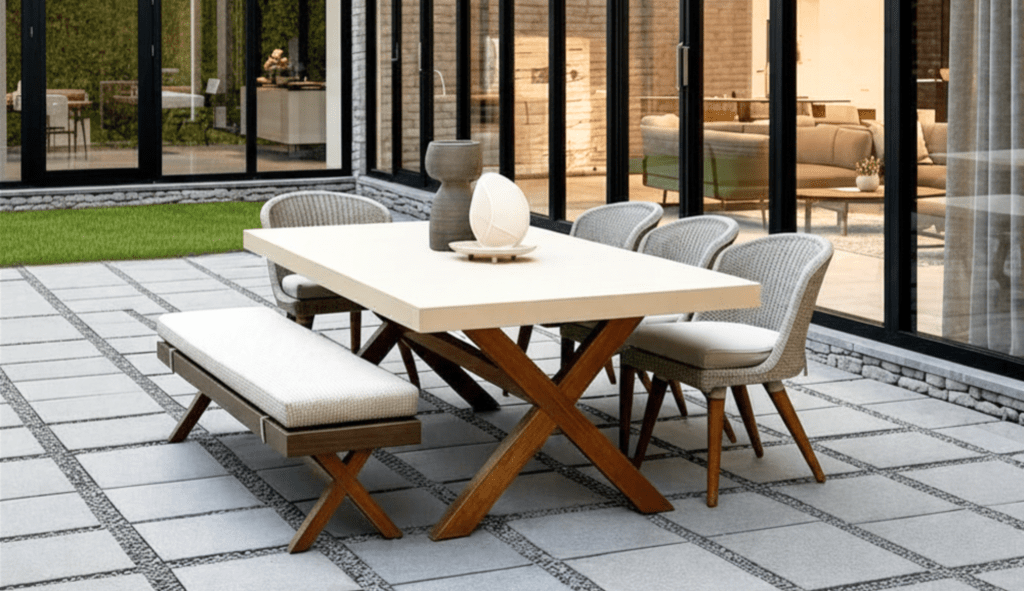
Concrete has become a favourite in design-led outdoor spaces because it delivers presence. A concrete dining table or side table can anchor a terrace with a sense of permanence, pairing naturally with timber, woven textures and upholstered seating. It also suits clients looking for a more architectural material palette, particularly when the home already features stone, render, tiled surfaces or strong linear forms.
However, the word concrete can be misleading here too. The composition and manufacturing process make a considerable difference to how a piece performs outdoors. Osier Belle uses glass fibre reinforced concrete (GFRC) rather than conventional solid concrete for its tabletops. This provides the visual weight of concrete while producing a lighter structure with greater resistance to the cracking and surface deterioration associated with standard concrete. The pieces are also sealed for outdoor use.
There is room for considerably more design flexibility than the material might initially suggest. Osier Belle’s concrete is available in warm white or slate grey, with different tabletop thicknesses, sizes and teak or aluminium base options depending on the design.
Concrete still requires planning. Access matters, particularly for upper-level terraces, pool areas with tight entries and homes with balustrades, stairs or narrow side passages. Its strong visual presence also benefits from balance – think upholstered dining chairs, teak accents or softer planting around it.

Aluminium and steel – where metals fit in
While teak, wicker and concrete often lead premium residential settings, metals still have an important role. Powder-coated aluminium is valued for being relatively lightweight, clean-lined and corrosion resistant, making it particularly useful for furniture frames. Stainless steel can also perform well, although coastal conditions make the grade and ongoing care particularly important.
The reason metal is not always the first answer for luxury outdoor living is that it can feel visually colder on its own. That is less a flaw than a design consideration. Metal performs particularly well when paired thoughtfully with upholstery, timber or woven detailing to soften the overall composition.
Osier Belle’s wicker furniture is a good example. The welded aluminium frame provides structural strength beneath the furniture, while handwoven wicker, teak detailing and generous upholstery create the finish and tactile quality you actually experience.
How to choose the right material for your space
The most successful outdoor spaces are not built from abstract material rankings. They are tailored to the home and the people using it. A poolside lounge area may benefit from quick-drying woven seating with performance cushions. A dining zone exposed to afternoon sun might suit teak or concrete, depending on whether you want natural warmth or architectural weight. A compact balcony may call for visually lighter materials that do not crowd the footprint.
Scale also matters. Large pieces in heavy materials can look magnificent in expansive outdoor rooms but overwhelm tighter spaces. Conversely, lightweight silhouettes can disappear on broad terraces unless they have enough presence. Material and proportion always work together.
Then there is maintenance. Some homeowners are happy to care for teak to preserve a particular finish. Others prefer to let the timber develop its natural patina or select wicker for straightforward cleaning. Neither preference is more sophisticated than the other. Good design starts with honesty about how you live.
The real difference is quality of construction
When buyers ask about the best material for outdoor furniture, they are often really asking a deeper question: what will still look beautiful in five or ten years?
Material is part of that answer, but construction is just as important.
Look at joinery, frame integrity, cushion technology, drainage, upholstery and the quality of the finishes. Turn a chair over and look underneath it. Examine where materials meet and how joins have been finished. These less visible areas can reveal considerably more about the quality of a piece than its showroom styling.
At Osier Belle, this extends to details such as solid rather than flat-packed construction, handwoven wicker, removable zipped cushion covers and Urecel Quick Dry Foam designed to promote drainage and airflow. The teak collection also uses considered joinery, including dovetailing where appropriate.
Controlling design and manufacturing through Osier Belle’s own factory also means these details can be refined and quality checked throughout production, rather than simply specified to an external supplier.
So which material should you choose?
If you want natural warmth and timeless appeal, teak is difficult to surpass. If your priority is comfort and texture for lounge settings, premium synthetic wicker is an elegant choice. If you are drawn to sculptural forms and architectural presence, GFRC concrete can be outstanding. And where strength, lighter weight and a sharper silhouette are needed, aluminium can play an important supporting role.
The best outdoor spaces rarely rely on one material alone. A Revé setting, for example, brings A6-grade teak, Rehau wicker and generous upholstery together in a single design, demonstrating how contrasting materials can complement rather than compete with one another.
Ultimately, choose with the conditions, architecture and way you live in mind rather than judging a material from a showroom sample alone. When the underlying materials are genuinely suited to outdoor use and the construction receives equal attention, the finished setting can continue to feel considered long after its first Australian summer.
