
A beautifully resolved outdoor room can make the difference between a space that is occasionally admired and one that becomes part of daily life. This outdoor lounge comparison looks beyond first impressions to the qualities that determine how a setting will feel, perform and belong within an Australian home for years to come.
The right lounge is not simply the largest configuration that fits the available area. It must sit comfortably alongside architecture, allow clear circulation around doors and pool fences, suit the way you entertain, and retain its composure through hard sun, summer storms and salty air. For a compact balcony, a tailored two-seat arrangement may be the most generous choice. For a broad terrace, a modular setting can create the relaxed centre of a considered entertaining zone.
An outdoor lounge comparison starts with the setting
Before comparing silhouettes, begin with the room itself. Measure the area, but also consider how it is approached and used. A lounge that looks perfectly proportioned on a floor plan may become cumbersome if it interrupts the path from kitchen to dining area, prevents a gate from opening fully, or leaves too little space around a fire feature or pool edge.
Allow enough room to move naturally around the setting. As a guide, passages should feel generous rather than squeezed, especially in high-traffic entertaining spaces. Think about the view from indoors as well. The rear profile of a lounge matters when it is seen through large sliding doors, while low-backed pieces can preserve sightlines to a garden, water view or architectural landscape.
Orientation deserves the same attention. A west-facing courtyard calls for cushions and finishes that can handle intense afternoon light, while an exposed coastal deck needs materials and fittings selected for salt-laden air. Undercover areas offer more freedom with upholstery, but they still benefit from materials designed for outdoor conditions rather than indoor use moved outside.
Fixed, modular or sectional: which format suits you?
A fixed outdoor sofa offers clarity and visual discipline. Its proportions are resolved as one piece, making it particularly effective in formal entertaining areas or architectural spaces where symmetry is central to the design. It is often the right choice when your layout is established and you want a composed, enduring look without the visual breaks created by multiple modules.
Modular lounges bring greater flexibility. Individual sections can be arranged as an L-shape, an extended sofa, opposing conversation settings or, in some cases, separate occasional seats. This makes them well suited to large families, changing entertaining needs and spaces with unusual footprints. Depending on the collection, Osier Belle modules can be configured around corners, open terraces and changing seating needs, with dimensions able to be adjusted where a standard footprint does not quite suit the space.
Sectional configurations are a strong answer for corner spaces, framing a terrace edge or defining a living zone within an open outdoor plan. They can seat a crowd efficiently without requiring a collection of separate chairs. However, a very deep sectional can dominate a narrow area, so check the depth of every module rather than judging the overall footprint alone.
For poolside spaces, daybeds and chaise-style lounges create a more leisurely rhythm than a conventional sofa setting. They are ideal where reclining is the priority, although they do not always provide the upright support needed for a long lunch or an evening of conversation. Many well-planned homes use both: a social lounge closer to the house and a more relaxed reclining piece near the water.
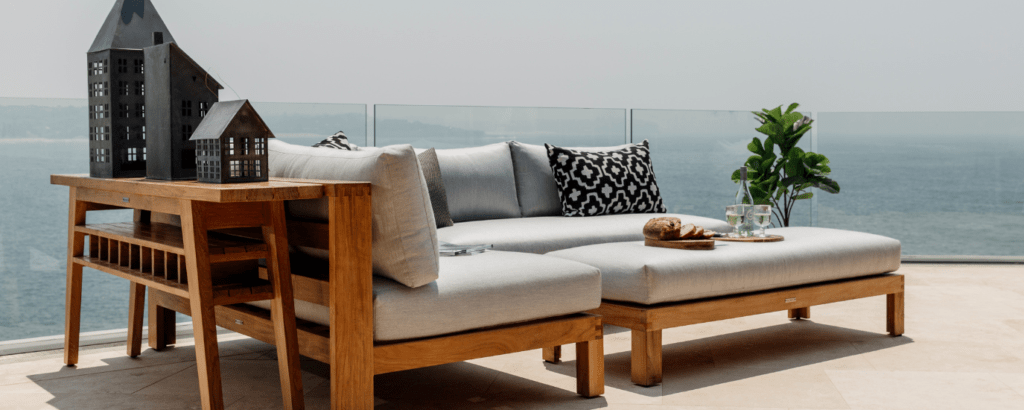
Comparing outdoor lounge materials
Material selection is where luxury becomes practical. The finish must complement the home, but it also needs to suit the climate, maintenance expectations and degree of exposure.
Teak has a natural warmth that works beautifully with stone, concrete, rendered walls and established planting. Its density and natural oils make it a respected choice for outdoor construction. Left to weather, it develops a soft silver-grey patina; maintained regularly, it can retain more of its original golden character. Neither result is inferior, but the choice should be intentional. Teak is substantial, tactile and timeless, yet it requires an owner who appreciates natural variation and accepts that timber changes gracefully over time. We source our teak from Jepara, Indonesia, where selected timber is kiln-dried before being handcrafted into furniture. Osier Belle teak pieces are also treated before leaving the factory, helping protect the timber from the outset rather than relying on the owner to undertake the first treatment after delivery.
Wicker-style outdoor lounges offer texture and an inviting, relaxed sophistication. High-quality synthetic weave, applied over a well-engineered frame, can suit a wide range of architectural styles and is especially appealing where a softer, more layered atmosphere is desired. Look closely at the weave tension, consistency and finishing around corners. A refined weave should feel deliberate from every angle, not merely attractive at a distance. Osier Belle uses Rehau and Viro synthetic wicker, handwoven by skilled craftspeople at our own factory over substantial welded aluminium frames. This combination gives the finished lounge the softness and texture of woven furniture while retaining the structural strength required for long-term outdoor use.
Concrete tables or accents can bring sculptural weight to a lounge arrangement, particularly alongside teak or wicker seating. They offer a striking contrast to upholstered comfort, though their mass means delivery access and final placement must be carefully planned. Check lifts, stairwells, narrow side passages, gates and balustrade clearances before choosing substantial pieces.
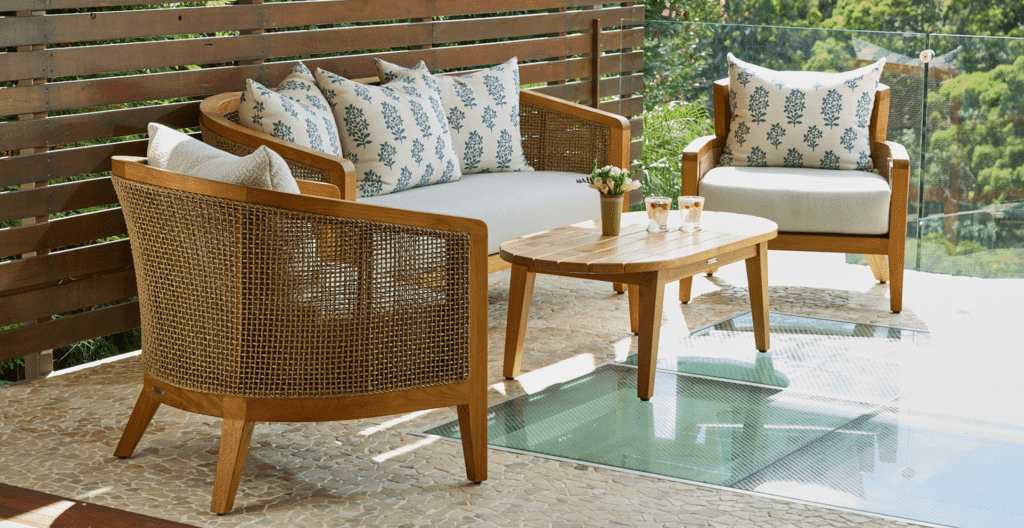
Construction separates a lasting lounge from a temporary one
An outdoor lounge should be examined beneath the cushions as carefully as it is admired from above. Frames need to be stable, accurately joined and engineered to carry repeated use without flexing. With woven pieces, this means a dependable internal structure. With timber, it means sound joinery and thoughtful detailing that manages movement in changing weather. Because Osier Belle operates our own factory in Cirebon, West Java, we have direct oversight of frame construction, timberwork, hand-weaving, upholstery and finishing rather than sourcing completed furniture from third-party manufacturers. This also makes it possible to resolve construction and dimensional details as part of the design process.
Cushions are equally significant. A generous profile may look luxurious in a showroom, but the real measure is whether it remains supportive after long afternoons and repeated seasons of use. Look for high-resilience foam, outdoor-rated fabrics and cushion construction that encourages drainage and drying. Removable covers add practicality, particularly in homes with children, pets or frequent entertaining. Osier Belle uses Urecel QuickDry Foam, which has an open-cell structure designed to encourage drainage and airflow after rain or poolside use, together with 100% solution-dyed acrylic outdoor fabrics. Removable covers with YKK zips make ongoing cleaning more practical.
Fabric colour also affects performance. Pale neutrals bring lightness to a shaded terrace but may need more attentive care in high-use areas. Darker tones can ground a large setting and disguise everyday marks, though they may feel warmer in direct sun. Textured fabrics often offer a forgiving middle ground, bringing depth without demanding a perfectly pristine environment.
Comfort is about proportion, not just softness
The most inviting lounge is one that suits the people using it. Seat height, depth and back angle change the experience considerably. Deep, low seating encourages lingering and relaxation, while a slightly more upright profile supports conversation, dining from a low table and easier movement for guests of different ages.
When comparing options, sit properly rather than perching on the edge. Lean back, test the arm height and imagine the setting with a drink, book or shared platter in hand. When designing for taller family members, deeper seat or custom dimensions are often a consideration for our clients. If the lounge will be used by several generations, a balanced seat height and firmer cushion support may be more accommodating.
Coffee tables, ottomans and side tables complete the comfort equation. A coffee table should be close enough to use without stretching, but not so large that it constrains legroom. Ottomans can provide flexible extra seating or a place to rest your feet, provided they do not turn the arrangement into an obstacle course.
Choosing for long-term value
Price alone cannot explain value in a luxury outdoor lounge. Consider the quality of the materials, the longevity of the construction, the availability of replacement cushions or covers, and whether the proportions will continue to suit the home as your lifestyle evolves. A setting designed for Australian conditions can offer a much more satisfying return than one that needs replacing after only a few demanding summers.
It is also worth asking what degree of customisation is available. Fabric, weave tone, timber finish and module selection can help a lounge sit naturally within an existing architectural palette. At Osier Belle, this conversation begins with the space itself: its dimensions, exposure, access and the atmosphere you want to create. Our made-to-order furniture is developed around the space itself, with suitable designs able to be adjusted in length, width, height, cushion thickness, wicker, fabric and finish – with direct control over those changes with our factory rather than limiting customisation to upholstery selection alone.
Take plans, photographs and key measurements to a showroom consultation. Seeing materials in person reveals qualities that photographs cannot: the warmth of timber, the scale of a weave, the true depth of a seat and the nuanced character of a fabric in changing light. The best choice will not simply fill an outdoor area. It will give that part of your home a reason to be used, shared and enjoyed more often.
