
A sculptural concrete table under a covered terrace changes the whole mood of an outdoor space. It feels grounded, architectural and quietly luxurious in a way lighter materials often do not. The best concrete outdoor furniture ideas are not simply about choosing a statement piece – they are about using weight, texture and proportion to create an outdoor setting that looks resolved and lives beautifully in Australian conditions.
Concrete has a particular presence. It can soften a sharp modern build, bring structure to a coastal setting, or add permanence to a landscape that needs an anchor. When it is well designed, it does not read as heavy or cold. It reads as deliberate.
Why concrete outdoor furniture ideas work so well
For design-led homes, concrete offers something many materials cannot – visual calm with real substance. Its surface has depth, its tone sits comfortably with timber, stone, greenery and water, and it holds its own alongside strong architecture. That makes it especially useful in outdoor areas where you want the furniture to feel integrated rather than added as an afterthought.
There is also a practical reason concrete continues to appeal. In exposed Australian environments, lightweight pieces can shift visually and physically, especially in open terraces, coastal homes or poolside zones. Concrete brings stability. It can cope with sun, salt-laden air and daily use when it is properly made and properly finished.
That said, concrete is not a one-size-fits-all material. Weight, access, placement and scale matter. A beautiful piece still has to make sense for your site, particularly if there are stairs, narrow entries, pool fences or balcony load considerations. Good planning is what allows concrete to feel effortless once it is in place.
At Osier Belle, concrete is treated as part of a broader outdoor material palette rather than a standalone statement. We often pair its architectural weight with handcrafted teak, woven furniture and generously upholstered seating, using contrast in texture and proportion to create outdoor spaces that feel balanced rather than overly hard or heavy.
Concrete outdoor furniture ideas for different spaces
1. A monolithic dining table for entertaining
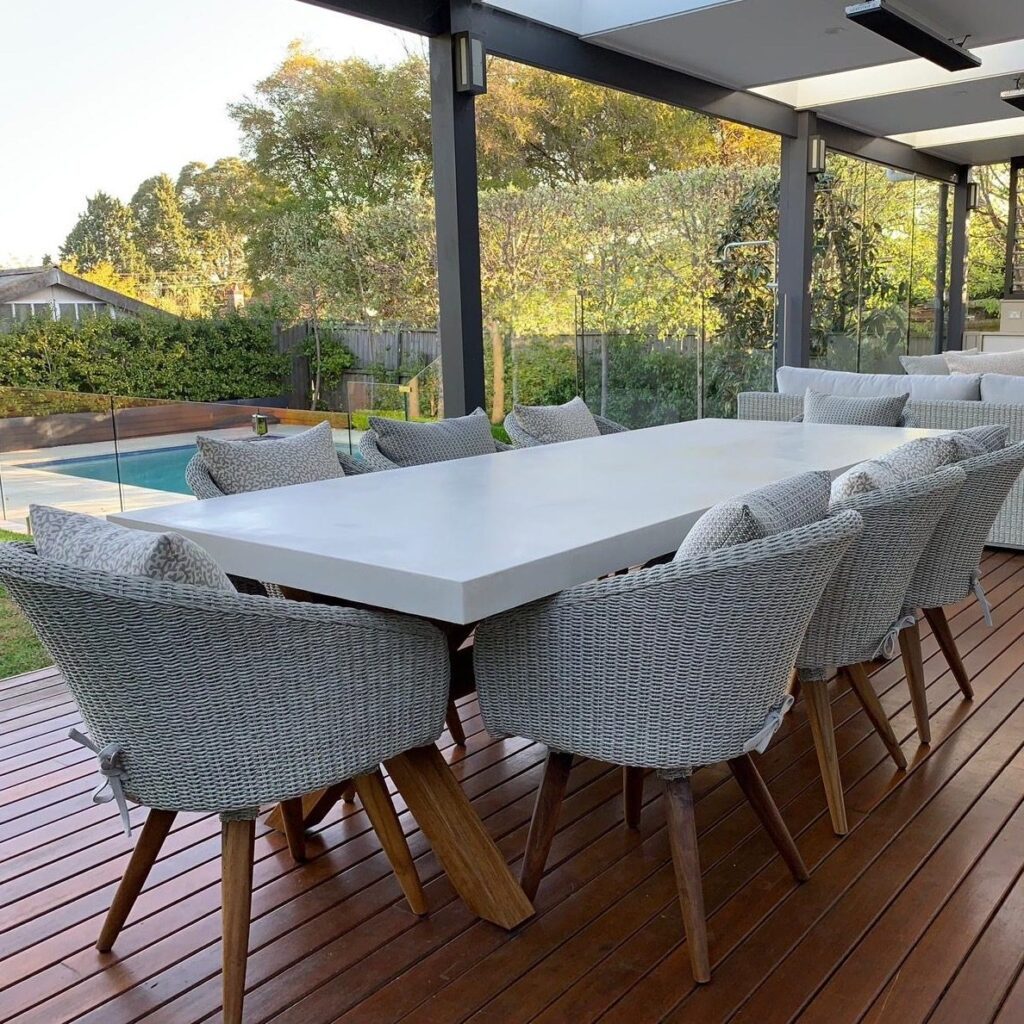
If you entertain regularly, a concrete dining table is often the strongest starting point. It creates an immediate focal point and gives the entire setting a sense of permanence. In larger outdoor rooms, a generously proportioned rectangular table pairs beautifully with upholstered dining chairs, balancing the solidity of the top with softness and comfort.
The detail that matters most is proportion. A thick top can look impressive, but if the base is too bulky the piece may overwhelm the space. In more refined settings, cleaner lines and a slightly lighter profile tend to feel more contemporary. The result is architectural without becoming severe.
Our Concrete Dining Collection takes this approach, using clean, considered proportions that give concrete presence without allowing it to dominate the entire setting. Paired with Osier Belle dining chairs in woven, upholstered or teak finishes, the solidity of the table becomes an anchor for a softer and more comfortable entertaining space.
2. A round concrete table for softer flow
Not every space suits a long rectangular footprint. In a courtyard, smaller terrace or curved landscape plan, a round concrete dining table can create better circulation and a more intimate dining experience. It also softens hard lines in homes dominated by masonry, glazing and steel.
Round forms are particularly effective where movement around the table matters, such as near sliding doors or in compact entertaining zones. You still get the strength and material richness of concrete, but with a gentler visual rhythm.
3. A concrete coffee table to anchor a lounge setting
In an outdoor lounge arrangement, concrete works beautifully as the grounding element. A low concrete coffee table with a tactile finish can give depth to a softer composition of upholstered seating, textured cushions and a rug. It helps prevent the setting from feeling too light or too uniform.
This is often where clients first experiment with concrete, and for good reason. A coffee table introduces the material without committing the entire scheme to it. It can also bridge different finishes, tying together timber, metal and fabric in a way that feels intentional.
4. Nested or paired concrete side tables
For a more layered look, consider smaller concrete side tables rather than one large central piece. They offer flexibility around modular seating, daybeds and sun loungers, and they can be moved as entertaining shifts from morning coffee to evening drinks.
This approach works particularly well in pool areas, where practical surface space matters but the layout still needs to feel relaxed. Smaller forms can also be easier to position in tighter zones where a full coffee table would interrupt circulation.
5. A bench-style concrete piece along a boundary or wall
Where architecture provides long linear edges, a concrete bench can look exceptionally resolved. It suits courtyards, garden perimeters, entry terraces and entertaining zones that need occasional seating without adding visual clutter. With cushions, it feels welcoming. Without them, it remains sculptural.
The trade-off is comfort over long periods. A bench is ideal for flexible seating or shorter gatherings, but less suited to slow lunches unless it is paired with supportive upholstery. This is where custom cushions or layered textiles make all the difference.

6. A concrete console for transition spaces
Outdoor rooms often include transitional areas – spaces near entrances, covered verandahs or alfresco walls that need function without becoming crowded. A slim concrete console can be surprisingly effective here. It gives you a place for serving, display or lighting while contributing to the architectural language of the home.
Because the profile is narrower, it also allows you to use concrete in sites where a full dining or lounge piece may feel too dominant. In design terms, it is a quiet move that can elevate the entire setting.
7. Concrete paired with teak for warmth
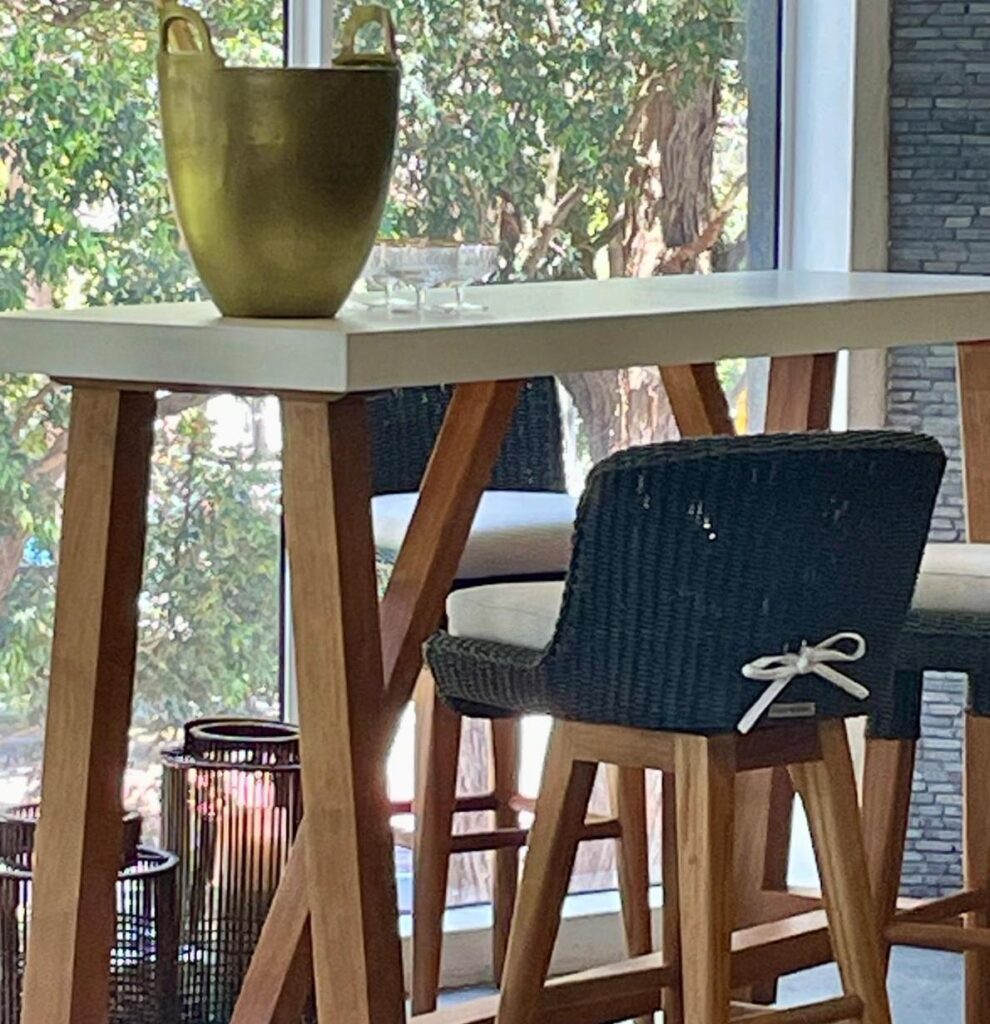
Some of the most successful concrete outdoor furniture ideas are material combinations rather than standalone statements. Concrete and teak are a classic pairing because each material improves the other. Concrete provides composure and structure, while teak introduces warmth, grain and a more relaxed feel.
This combination works especially well in Australian homes that blend contemporary architecture with natural landscape elements. It prevents concrete from feeling stark and allows the space to remain inviting, even when the forms are minimal.
It is a combination we particularly value at Osier Belle. Our teak is sourced through a trusted certified supplier in Jepara, Indonesia and handcrafted at our own factory, bringing genuine natural variation and warmth alongside the more uniform character of concrete. As the teak gradually develops its own patina, the relationship between the two materials becomes even more individual to the setting.
8. Concrete in a tonal, layered palette
Concrete does not have to mean flat grey. In fact, one of the most sophisticated ways to use it is within a tonal scheme of warm stone, sand, bone, charcoal or soft earthy neutrals. A honed or lightly textured finish can sit beautifully with travertine, limestone, rendered walls and muted planting.
For homes near the coast, this palette tends to feel more enduring than high-contrast combinations. It is calm, luxurious and less likely to date. The furniture becomes part of the architecture rather than competing with it.
9. A hero concrete piece in a smaller space
If you are furnishing a balcony or compact terrace, one well-judged concrete piece can be enough. That might be a side table, a compact dining table or a bench that doubles as a visual anchor. The key is not to over-commit the material where scale does not allow it to breathe.
Smaller spaces benefit from restraint. One hero piece creates identity. Too many can make the setting feel compressed.
How to choose the right concrete pieces
The smartest approach begins with the site. Before selecting dimensions or finishes, consider access from the street to the final position. Measure gates, corridors, lifts, stairs and any points where manoeuvring will be tight. For apartments and elevated terraces, structural load requirements should also be considered early. These practical considerations are part of the design conversation for all Osier Belle concrete furniture.
Then look at how the space is actually used. A poolside area has different priorities from a covered dining zone. In one, surface durability and easy movement may matter most. In the other, comfort for long meals and visual connection to the home may lead the decision.
Comfort is often overlooked when people focus too heavily on the table or statement piece itself. Concrete performs best when it is balanced by materials that invite you to stay. Upholstered chairs, generously cushioned benches and softer lounge elements stop the setting from feeling too hard. Luxury outdoors is never just about the frame of a piece. It is about the experience of using it.
Finish is another important consideration. A smoother finish can feel more refined and contemporary, while a more textured surface introduces a natural, almost hand-worked character. Neither is inherently better. It depends on the architecture, the surrounding materials and how polished or relaxed you want the setting to feel.
Creating a considered concrete outdoor setting
Concrete is exceptionally rewarding, but it asks for thoughtful specification. Its weight is a benefit in exposed conditions, though it can complicate delivery and placement. Its visual solidity is part of its appeal, though in very small spaces it may need to be offset with lighter silhouettes elsewhere. And while concrete is durable, quality construction and finishing are essential if you expect a premium result that lasts.
This is where seeing concrete as part of the complete outdoor setting becomes important. At Osier Belle, we consider the scale of the piece alongside the surrounding seating, teak, wicker, fabrics and architecture, rather than selecting a concrete table or occasional piece in isolation. Our showroom consultations give clients the opportunity to compare these materials and proportions together before settling on a combination.
Our concrete furniture is also sealed to help protect the surface against the realities of outdoor living, including moisture, spills and everyday use. While concrete will naturally develop subtle variations and character over time, the protective seal helps make ongoing care simpler and supports the longevity of the finish.
Concrete is at its best when it provides an anchor rather than overwhelming the space. Paired thoughtfully with the warmth of teak, handwoven textures and comfortable outdoor upholstery, it can bring exactly the sense of permanence and architectural confidence that a considered Australian outdoor setting needs.
