
A memorable outdoor dining setting is rarely defined by the meal alone. It is the generous table that invites everyone to linger, the chair that remains comfortable through a long lunch, and the considered relationship between architecture, landscape and light. Outdoor dining is often one of the most-used outdoor spaces in Australian homes, so it deserves the same attention to proportion, materiality and comfort as the interior.
Whether you are planning a poolside entertaining zone, furnishing a covered terrace or refining a compact balcony, the best result begins with how you want the space to feel and function. A dining setting should make everyday meals feel effortless while being ready for the occasions that bring the whole household together.
Begin With How You Entertain
Before selecting a table or chair, consider the rhythm of life around the setting. Do you host extended family lunches, relaxed weeknight dinners or larger celebrations where guests move freely between the kitchen, living area and outdoors? The answer shapes the scale of the table, the number of seats and the clearance required around it.
For a household that regularly entertains eight, a six-seat setting can feel limiting even if it technically fits the area. Conversely, placing an oversized table in a narrow terrace can make the room feel constrained and difficult to navigate. Allow space for people to slide chairs back comfortably, pass behind seated guests and move between the dining area and the house without interruption.
As a practical guide, aim for around 900 mm of clearance from the table edge to a wall, balustrade, planter or fixed outdoor kitchen. More is preferable along a principal walkway. On a balcony, access points, sliding doors and the opening arc of doors should be measured before any decisions are made. These details are not minor considerations – they are what make an outdoor setting feel composed rather than crowded.
Choose the Right Outdoor Dining Table Shape
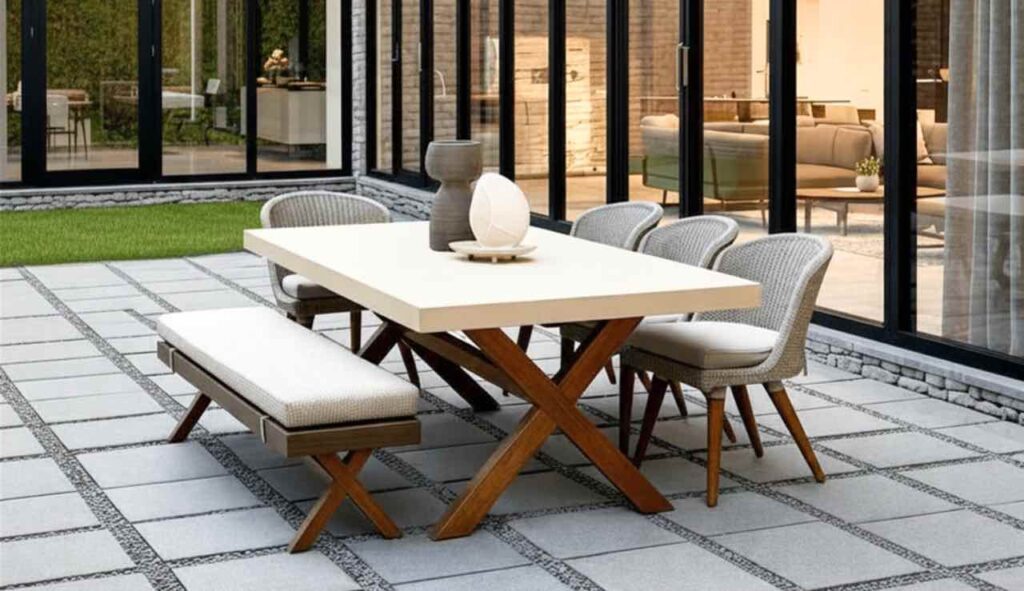
The shape of a table changes the character of the setting as much as its size. Rectangular tables are naturally suited to long terraces, covered entertaining areas and homes where formal gatherings are common. Their linear form works beautifully alongside an outdoor kitchen or a long elevation of the home, creating an ordered visual connection with the architecture.
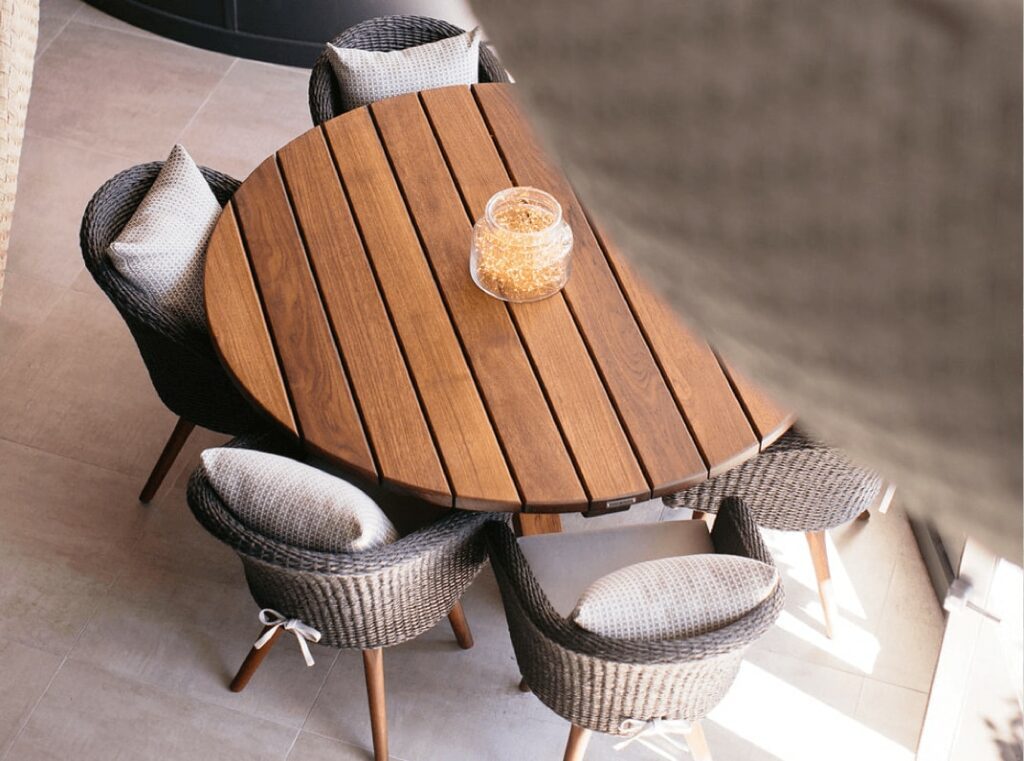
Round tables encourage conversation because every guest is equally connected to the centre. They are particularly effective in square spaces, beneath a parasol, or where circulation needs to flow around the setting. A round table can also soften a landscape defined by hard surfaces, pool fencing or crisp architectural lines.
Oval tables offer a refined middle ground. They retain the seating capacity of a longer dining table while easing circulation at each end. This can be valuable where a rectangular setting would feel too angular or where children and guests frequently move through the space.
The material should be selected for both appearance and exposure. Teak brings warmth and natural character, gradually developing a silvery patina as it weathers. It suits lush planting schemes, coastal homes and designs that call for an organic counterpoint to stone or concrete. Osier Belle uses A6-grade teak sourced from Jepara, with finished teak furniture treated with Cutek before leaving the factory to help protect the timber from the outset.
Concrete introduces a sculptural, grounded presence, particularly beside masonry, natural stone and modern landscaping, though its visual weight should be balanced carefully in smaller spaces. Osier Belle’s outdoor concrete tables are made using glass fibre reinforced concrete and sealed for outdoor use, creating the visual presence of concrete in a form specifically developed for exterior settings.
Standard table dimensions will not suit every outdoor area. With Osier Belle’s made-to-order approach, suitable dining designs can be customised to better respond to the available footprint, seating requirements and circulation around the table. This can be particularly useful on narrow terraces or when a table needs to align closely with an outdoor kitchen or architectural feature.
Seating That Invites Guests to Stay
A dining chair should look elegant from every angle, but it must also support the practical pleasure of sitting comfortably for hours. Seat height, back angle, arm detail and cushion depth all influence the experience. This is why seeing dining chairs in person can be so valuable: what appears perfect in a photograph may feel too deep, too upright or too generous for the table proportions in your own space.
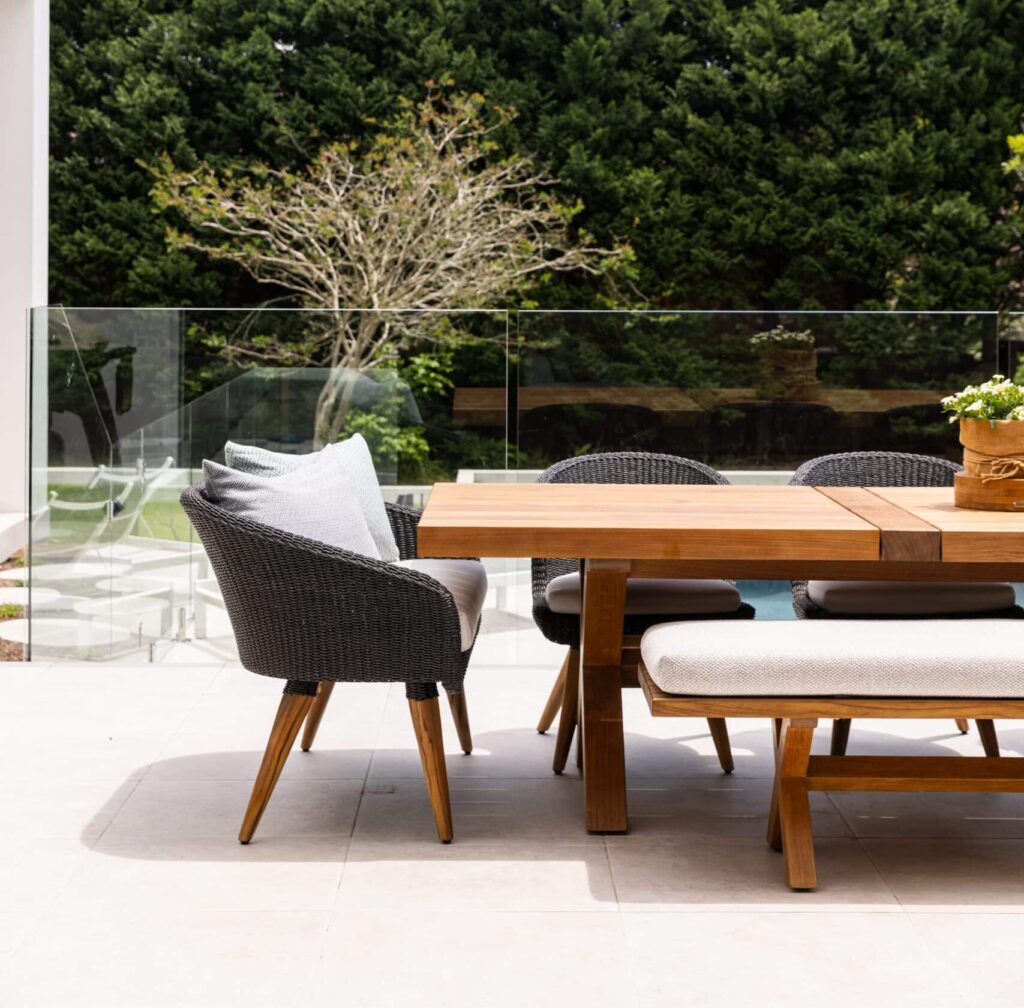
Armless chairs often allow more seats around a table and create a clean, streamlined silhouette. They are a strong choice for compact terraces and settings where flexibility is important. Armchairs add presence and comfort, particularly at the heads of a longer table, but they require more room. Mixing the two can deliver an elegant, tailored composition without sacrificing practicality. Dining seating also provides an opportunity to introduce another material without changing the table itself. Handwoven wicker chairs can soften the solidity of a concrete table, while teak seating can extend the natural warmth of a timber setting. Osier Belle’s dining range is designed across these complementary material palettes, allowing tables and chairs to be combined rather than relying on a completely matching suite.
Cushioned dining chairs bring a more leisurely, lounge-like quality to outdoor dining. Osier Belle uses 100% solution-dyed acrylic outdoor fabrics, including Sunbrella and Agora across many designs, together with outdoor-specific cushion fillings such as Urecel QuickDry Foam. This allows upholstered dining seating to provide genuine comfort while being specified for outdoor use. In a fully covered alfresco space, upholstery can become a defining layer of colour and texture, linking the dining area to interior finishes.
Bench seating is another considered option, especially for families or generous entertaining tables. It creates a relaxed, communal mood and can sit neatly beneath the table when not in use. The trade-off is access: guests seated in the middle of a bench may need others to move before they can leave the table. It works best where the layout has room to breathe.
Design Outdoor Dining Around Sun, Shade and Weather
Australian conditions ask more of outdoor furniture than many climates. Strong UV, summer heat, driving rain and salt-laden coastal air can quickly expose poor materials and weak construction. Quality is not only a matter of finish. It is evident in carefully executed joinery, consistent hand-weaving, cushions that retain their comfort and surfaces selected and prepared for the conditions they will face.
Start by observing the space at the times you are most likely to use it. A west-facing terrace may be delightful in winter and uncomfortable on a January evening without adjustable shade. A dining area beside a pool will be exposed to splash, reflected light and frequent barefoot traffic. Near the coast, material selection and hardware quality deserve particularly close attention.
A parasol can provide flexible shade where a fixed roof is not possible or desirable. Its placement needs planning: the canopy should cover seated guests rather than merely the centre of the table, and the base should not become an obstacle in a tight circulation zone. Cantilever designs can be highly effective beside a dining table, although their footprint and wind rating must suit the site. Shade should ideally be planned alongside the dining furniture rather than added afterwards. Osier Belle’s parasol range includes centre-pole and cantilever options for different layouts, allowing canopy position, table dimensions and circulation to be considered together.
For exposed areas, avoid treating every material as if it will age in the same way. Teak will naturally develop character over time, while woven materials and outdoor fabrics should be specifically selected for prolonged UV, moisture and everyday outdoor exposure. Understanding how each material responds to the conditions is more useful than expecting every surface to remain visually unchanged.
Create a Connection Between Indoors and Out
The most successful dining areas feel like a continuation of the home rather than a separate zone furnished as an afterthought. Look to the interior for cues such as timber tones, stone selections, black metal detailing, soft neutral upholstery or the curves found in lighting and joinery. Repeating one or two of these elements outdoors creates cohesion without making the spaces identical.
Scale is equally important. A substantial dining table can anchor a large open-plan residence and give visual purpose to a broad terrace. In a smaller apartment balcony, carefully selected chair profiles, lower visual weight and a round table may provide the same sense of occasion without overwhelming the footprint.
Lighting extends the use of the area well beyond sunset. Warm, layered illumination is more flattering and inviting than a single bright downlight. Consider the combined effect of overhead lighting, wall lights, garden lighting and candlelight on the table. The goal is enough visibility for dining and serving, while preserving the calm atmosphere that makes guests stay for one more glass of wine.
A rug designed for outdoor use, planters and table accessories can complete the setting, but these elements should support the furniture rather than conceal a weak layout. Begin with the table and seating, establish generous circulation, then add layers that give the space personality.
A Setting Worth Gathering Around
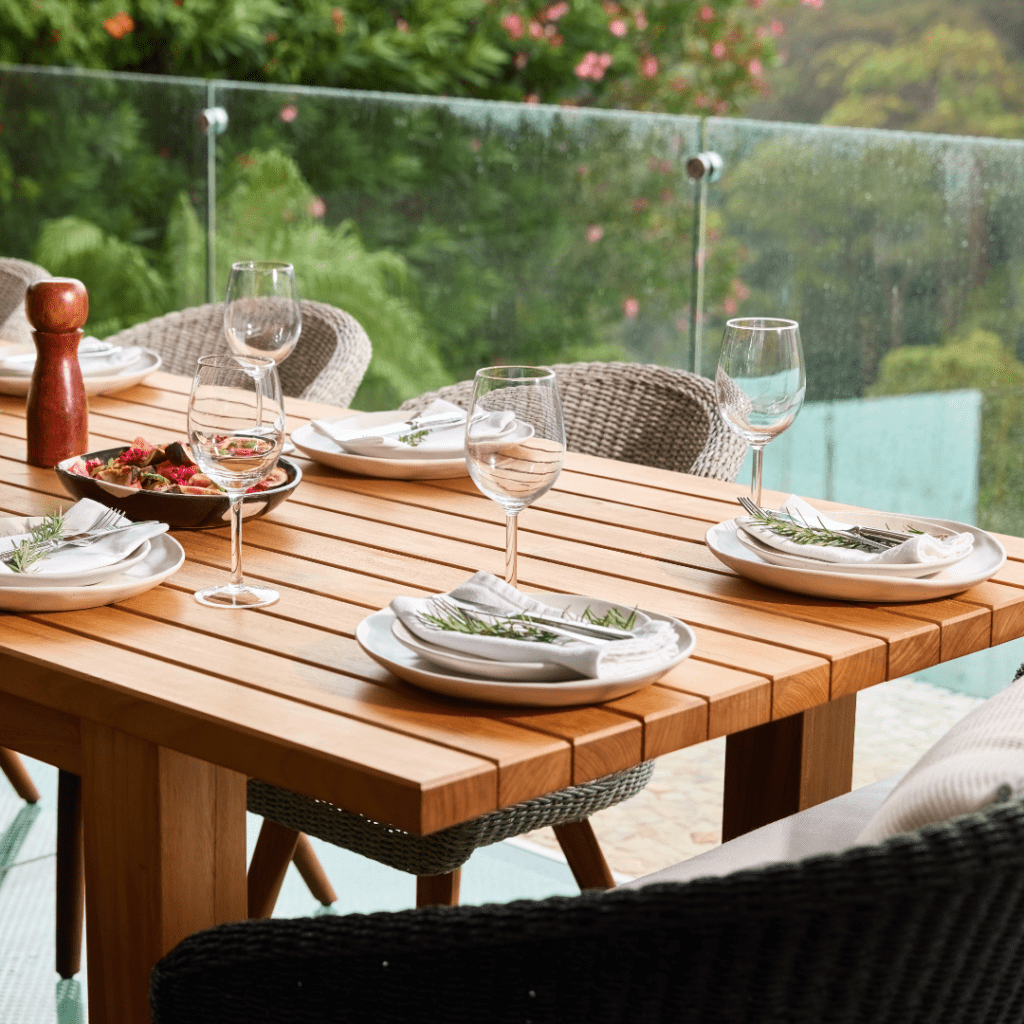
Outdoor dining has a particular place in the Australian home because it brings people together with less ceremony. It accommodates sandy feet after the beach, family birthdays, quiet breakfasts and impromptu dinners that stretch into the evening. The furniture you choose should be equal to all of it – visually distinctive, deeply comfortable and made to endure.
For a design-led result, bring your measurements, photographs and details of the surrounding architecture to an Osier Belle consultation. Table dimensions, dining-chair proportions, materials, finishes and shade can then be considered together, with made-to-order options available where standard dimensions do not properly suit the space.
The best outdoor dining setting is ultimately one that feels just as natural on an ordinary weeknight as it does when the table is full. Get the scale, comfort and materials right, and it becomes less a formal entertaining area than another room of the home – one that happens to be outside.
