
A small balcony can become one of the most used spaces in the home when it is furnished with intent. The right outdoor furniture for small balcony living does not simply fit within the available footprint – it creates a reason to step outside for morning coffee, a quiet afternoon read or an evening drink.
Small spaces reward precision. A difference of 100 or 150 millimetres in sofa depth, arm width or seat height can change whether the balcony feels comfortable or crowded. This is where proportion, sightlines and furniture made around the space become far more valuable than simply trying to maximise the number of seats.
Begin with the balcony, not the furniture
Before selecting a chair, table or lounge setting, measure the usable area carefully. Account for door swings, sliding-door tracks, balustrades, columns, planters and the path required to move comfortably through the space. A setting that technically fits can still be wrong if nobody can pull out a chair without blocking the doorway.
As a useful guide, allow around 600 mm behind dining chairs where possible and maintain a clear route from the door into the space. On a particularly narrow balcony, two generous occasional chairs and a compact table may feel far more luxurious than forcing in a conventional four-person dining setting. Access also needs to be considered before ordering. Lift dimensions, stairwells, tight corners and apartment loading areas can all affect what can physically reach the balcony.
Small balconies are where custom sizing earns its place
Custom furniture is sometimes associated with expansive luxury homes, but compact balconies are where a few dimensional changes can have the greatest impact. Osier Belle’s own factory can adapt suitable furniture beyond simply changing length and width. Height and cushion thickness can also be modified, alongside wicker, fabric and finishes. That means a sofa can be considered around the available circulation, the height of the user and the architecture rather than simply selecting the smallest standard model available.
This is particularly valuable beside balustrades. A seat that is slightly too high may place a balcony rail directly through the eye line once you sit down. Osier Belle has specifically used customised furniture height to resolve this kind of balcony sightline problem – a practical example of customisation improving the experience rather than simply changing the appearance.
Choose one clear purpose
The most successful small balconies do not attempt to be a lounge room, dining room, home office and sun deck simultaneously.
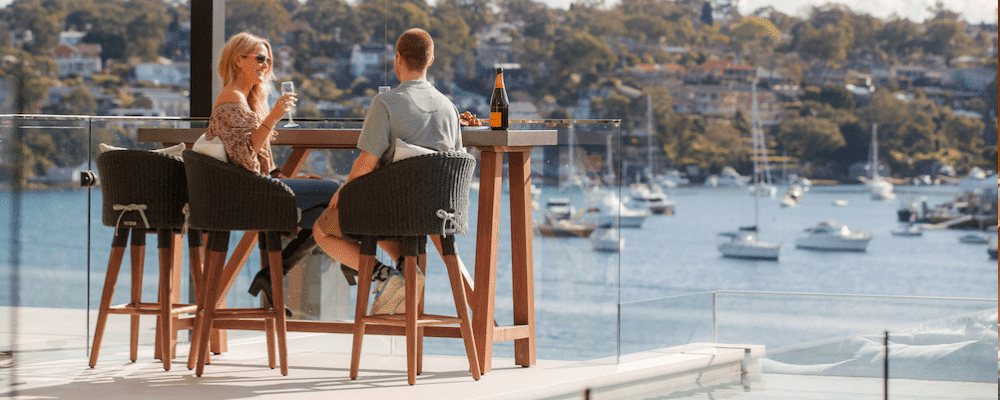
Decide what matters most. If the balcony is primarily used for drinks or breakfast, consider a pair of dining or occasional chairs with a small round table. Circular forms remove hard corners and make movement around the setting easier.
If lounging is the priority, a two-seat sofa or two generous armchairs can establish a more relaxed atmosphere. Slim arms and open frames help retain visual space, while seat depth should be chosen carefully. A very deep sofa may feel luxurious but consume too much of a shallow balcony.
For dining, choose chairs that tuck efficiently beneath the table. A bench can also sit neatly along a wall where loose chairs would otherwise require additional circulation behind them.
Think in visual weight, not only measurements
Two pieces with identical dimensions can feel entirely different on a balcony. This is where visual weight becomes essential. Dense, solid forms can make a compact area feel closed in, while open frames, elevated legs and considered negative space allow the eye to travel through the setting.
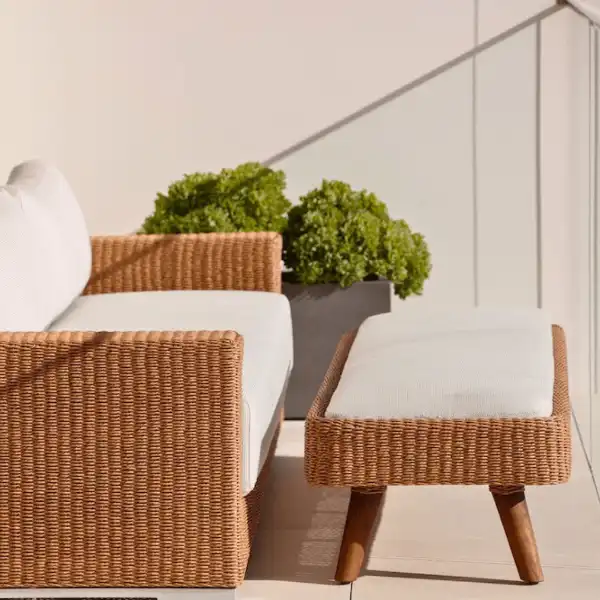
Wicker furniture can bring warmth and texture without appearing heavy, particularly when the weave is refined and the frame is elegantly proportioned. Teak offers a more architectural character, with natural grain that complements stone, concrete and contemporary timber finishes. It develops a silvery patina when left to weather, or can be maintained to retain its warmer original tone.
Concrete tables create a striking focal point, but their weight and scale require careful consideration in apartment settings. Always check the balcony’s load requirements through the relevant building documentation or with the building manager before introducing substantial pieces, large planters or water features.
Colour also influences perceived scale. Paler cushions, warm neutrals and natural timber tones can make a balcony feel more open, while darker frames provide definition against bright paving or coastal light. The best choice depends on the surrounding architecture. A deep charcoal frame can look exceptional against pale limestone, whereas a softer weave may better suit a light-filled coastal apartment.
Choose pieces that can do more than one job
Multifunctional furniture becomes useful when it is purposeful rather than gimmicky. An ottoman can work as a footrest, occasional seat or informal table with a tray. A bench can provide dining seating while sitting neatly along the perimeter. A compact side table can often replace the coffee table that would otherwise consume the centre of the balcony.
Osier Belle’s custom wicker trays are another useful example. A tray placed over a pouf or ottoman can create a stable surface when needed, then be removed when extra seating or legroom becomes the priority.
These small adaptations preserve flexibility without filling the balcony with furniture that is only useful occasionally.
Prioritise materials made for Australian exposure
A balcony can be one of the harshest environments around the home. High-rise locations may experience strong winds, intense reflected heat and driving rain. Coastal balconies introduce salt-laden air, while covered inner-city spaces can remain damp and receive limited direct sun. There is no single perfect material for every address.
Quality outdoor wicker, constructed over a durable frame, offers comfortable texture and a relaxed luxury that suits many balconies. It should be designed to resist fading and deterioration under UV exposure, rather than relying on a surface finish that will quickly lose its appeal.
Teak is valued for its natural oils and enduring strength. It is a timeless option for balconies where an organic material palette is desired, though it requires an acceptance of its changing appearance if left untreated. That weathered finish is not a flaw – it is part of teak’s character.
Cushions deserve the same scrutiny as the frame. Our Premium outdoor fabrics are selected for colourfastness, comfort and ease of care, with quick-drying foam and considered drainage where appropriate. On an exposed balcony, storing cushions during prolonged wet weather or when away for extended periods will help preserve their appearance and feel.
Use one strong arrangement rather than several small ones
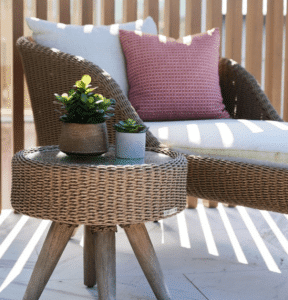
Small spaces benefit from a clear focal point. Instead of scattering stools, side tables and decorative objects across the floor, create one confident arrangement and let it breathe. A two-seat lounge with a single coffee table, for example, can feel far more luxurious than several disconnected pieces competing for attention.
An outdoor rug can define the seating zone on a covered balcony, but it should be proportioned carefully. It needs to sit beneath the front legs of the furniture without swallowing the entire floor. If drainage, exposure or building rules make a rug impractical, a change in furniture material or a pair of sculptural planters can provide the same sense of zoning.
Vertical space is often underused. Tall, narrow planters can introduce greenery without compromising the floor area needed for furniture. Choose plants for the actual conditions, including wind, sunlight and access to water, rather than simply selecting a look. On a high balcony, robust foliage tends to perform better than delicate varieties.
A compact side table is often more useful than a larger coffee table where space is limited. It gives a drink, book or lantern somewhere to rest while allowing the setting to remain flexible. If the balcony has a view, position furniture to honour it. There is little value in a beautiful lounge setting if its occupants must turn away from the skyline, water or garden below.
Balance comfort with the details of apartment living
Balcony furniture should feel generous enough for unhurried use, yet remain respectful of neighbouring residences. Consider how chair legs meet the surface, whether a table base is stable in wind, and how cushions can be secured or stored. A quality piece should offer a sense of permanence without making everyday use difficult.
Privacy also shapes the layout. A high-backed lounge chair can create a degree of enclosure, while planting can soften a close balustrade or neighbouring outlook. Avoid blocking airflow completely, particularly on compact balconies. A sense of openness is part of what makes outdoor living restorative.
Lighting should be subtle and practical. Warm portable lamps or a carefully placed lantern can extend the use of the balcony without creating glare for neighbours. Check strata requirements before adding fixed lighting, screens or anything attached to balustrades and exterior walls.
Leave more space than you think you need
One of the easiest ways to elevate a small balcony is to stop trying to fill it. One sofa and an occasional table may feel more generous than four chairs squeezed around a table. Two exceptional armchairs can create more usable luxury than a compact suite chosen purely because every component technically fits.
Outdoor furniture for small balcony living should make stepping outside easier, not create an obstacle course.
At Osier Belle, this is where design consultation and made-to-order flexibility work together particularly well. Plans, measurements, access and sightlines can be considered before choosing a configuration, with the furniture then adapted where the design allows.
The aim is not to make a small balcony pretend to be a large terrace. It is to give the balcony you have enough space, comfort and quality to become somewhere you genuinely want to spend time.
