
A dining table does more than provide a place to serve lunch. It establishes the visual weight of an outdoor setting, determines how comfortably people gather and often becomes the material reference point for the entire space.
When comparing concrete vs teak outdoor tables, the better choice is rarely about one material being universally superior. Concrete brings architectural presence and solidity. Teak brings warmth, grain and a natural character that changes beautifully over time.
At Osier Belle, both materials are part of the outdoor furniture palette, and the differences begin long before the final table reaches the showroom – from how the teak is sourced and protected to the way concrete tops are reinforced and sealed.
Concrete vs teak outdoor tables: the design difference
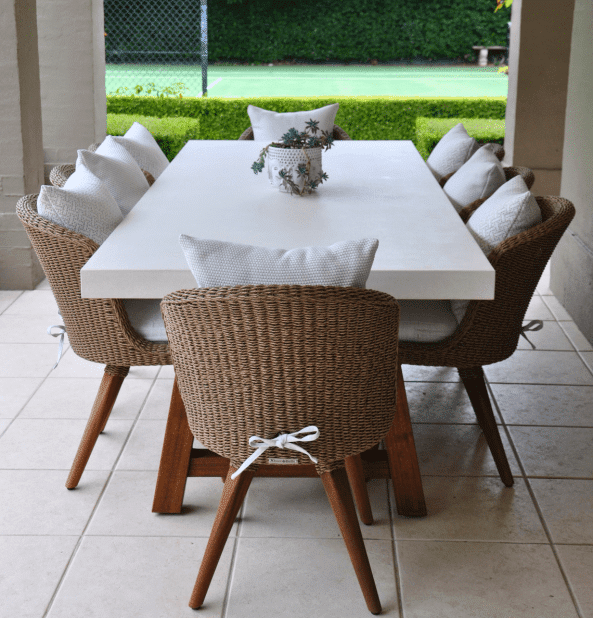
A concrete table has an unmistakable sense of permanence. Its solid form works beautifully alongside rendered walls, travertine, limestone paving, dark-framed glazing and clean-lined pools. In a minimal courtyard or a broad entertaining terrace, concrete can anchor the setting without competing with the architecture. It reads as tailored and substantial, particularly when paired with upholstered dining chairs or woven occasional seating that adds softness around it.
Teak has a different kind of luxury. Its appeal comes from natural variation: the grain, tonal movement and gentle softening of the timber over years outdoors. A teak table can make a contemporary home feel more welcoming, while also sitting naturally within established gardens, coastal planting schemes and homes with stone or brick detailing. It has enough visual character to stand alone, yet it does not feel severe.
The decision often comes down to what the surrounding space needs. Choose concrete where the architecture needs a grounded, sculptural element. Choose teak where you want to introduce natural warmth and texture. In many settings, the strongest answer is a combination rather than a strict choice between the two. Concrete can sit beautifully with teak or wicker dining chairs, while a teak table can be balanced by concrete occasional pieces or architectural paving.
Osier Belle concrete is engineered for outdoor use
Not all concrete furniture is constructed in the same way. Osier Belle has worked with a specialist to develop its fibreglass-reinforced concrete tabletops for dining, bar and coffee tables. This construction creates the architectural character associated with concrete without simply relying on a conventional heavy solid slab.
The finished tops are also sealed with a reputable Australian sealing product to help repel moisture and stains, an important step for a surface expected to handle outdoor entertaining. That preparation does not make concrete completely impervious to everyday life. Wine, oils, acidic foods and strongly coloured sauces should still be wiped away promptly, and mild soap and water are preferable to aggressive cleaners that can affect the protective seal.
The character of concrete should also be understood before buying. Small tonal variations and subtle surface markings are part of the material rather than imperfections requiring a perfectly uniform manufactured finish.
Osier Belle teak starts with the timber itself
Teak quality cannot be judged simply from the word “A Grade”. Osier Belle’s Factory Manager personally selects A6-grade teak in Jepara, Indonesia. The timber is then cut and kiln-dried to an equilibrium moisture content of below 12% before being taken to the Osier Belle factory for handcrafting. This matters because mature, oil-rich teak is naturally stable and resistant to moisture, making it particularly well suited to Australian outdoor settings.
Osier Belle then protects its teak before delivery rather than handing customers unfinished timber and expecting them to undertake that critical initial treatment themselves. Our teak care process uses Cutek, which penetrates the timber rather than creating a surface film that can later peel.
Consider the visual weight of each table
Material changes how large furniture feels.
Concrete has considerable visual mass, even when the dimensions themselves are relatively restrained. It can beautifully anchor a generous outdoor dining zone, but the same table may dominate a narrow courtyard or apartment balcony.
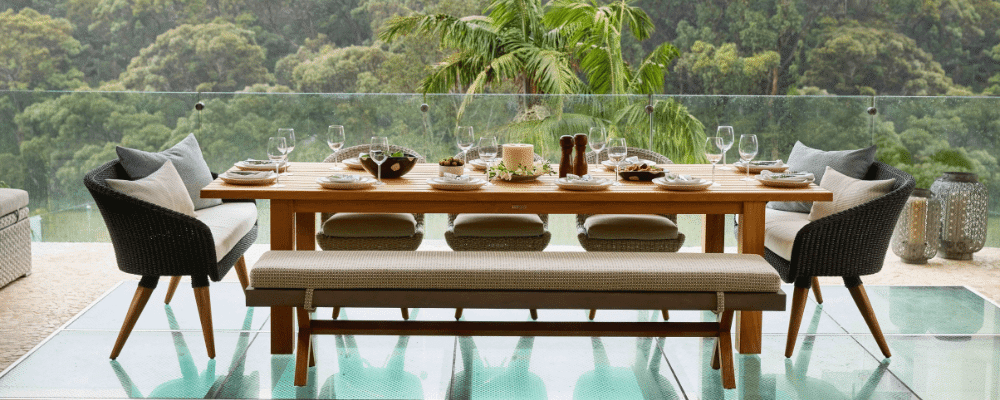
Teak generally feels visually lighter because grain, open bases and finer profiles allow more visual movement through the design. This can make it particularly effective where the table needs to seat a generous number of people without interrupting views towards a pool, garden or balustrade.
That does not mean teak has to feel delicate. A substantial teak dining table can provide as much presence as concrete, only with a warmer material expression.
The important question is what you want the table to contribute to the wider setting.
Shape changes how people gather
Material is only one part of the decision.
A rectangular table suits long terraces and larger gatherings particularly well because it maximises seating along a linear footprint. A round table creates a more conversational arrangement and can soften spaces dominated by rectangular architecture.
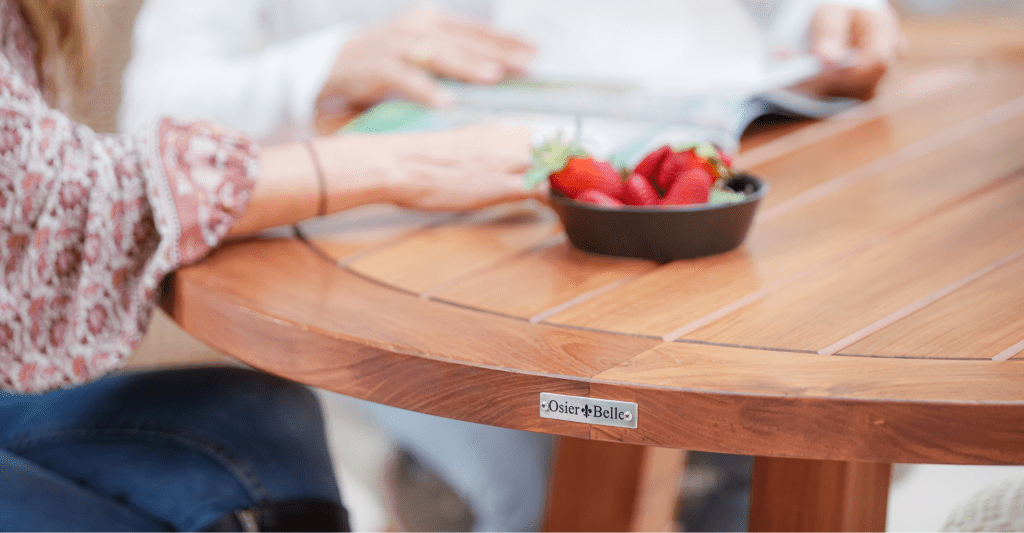
A round concrete table has a sculptural quality that can become the centre of a courtyard. A round teak table often feels warmer and more informal while still carrying considerable visual presence.
Table bases matter too. A central pedestal can make chair placement more flexible, while traditional corner legs provide a clear structure but influence where guests can comfortably sit.
At Osier Belle, the ability to control production through our own factory also allows dining furniture to be considered around the proportions of the space rather than relying entirely on fixed mass-market dimensions.
How concrete behaves in Australian conditions
Concrete is naturally well suited to exterior environments, but the protective surface finish remains important.
Osier Belle’s sealing process helps repel moisture and everyday staining. Regular cleaning with mild soap and water is generally enough for routine care, while abrasive pads and harsh chemical products should be avoided.
Heat is another consideration. A table sitting in uninterrupted summer sun can become hot, particularly in darker finishes.
Position therefore matters. A parasol, pergola or natural tree canopy can improve comfort around the dining table while also protecting surrounding cushions and seating.
Concrete’s weight can be a strength in exposed locations because the table feels grounded and secure. The trade-off is mobility. It needs to be positioned deliberately rather than moved casually around the terrace.
How teak changes over time
Teak behaves very differently because it is a natural timber. Fresh teak carries warm honey and golden tones. When left exposed outdoors, it gradually develops a silver-grey patina.
That change is cosmetic rather than a sign that quality teak is failing. Homeowners can either embrace the silvering or maintain more of the original warmth through periodic care. The important thing is deciding which appearance you prefer rather than expecting outdoor teak to remain visually unchanged.
Osier Belle’s factory treatment gives the timber protection from the beginning, while our ongoing teak maintenance service provides another option for clients who want their furniture professionally cleaned, refreshed or retreated over its life.
That ongoing care is a useful distinction between buying a natural material as a disposable furniture trend and investing in a piece intended to remain part of the home for many years.
Which table is easier to live with?
Neither concrete nor teak is completely maintenance-free. Concrete benefits from cleaning spills promptly and maintaining its protective seal over time. Teak benefits from routine cleaning, and clients wishing to retain its warmer appearance will need to undertake more periodic care than those happy to let it silver.
The more useful question is which kind of ageing you prefer. Concrete develops subtle tonal character while retaining its architectural form. Teak evolves more visibly, becoming softer and more weathered as it responds to exposure. For some homes, that natural evolution is exactly the appeal. For others, the disciplined surface and visual permanence of concrete feel more appropriate.
Concrete or teak: which is right for your home?
Choose concrete if you want a strong architectural anchor, particularly for a generous contemporary entertaining area where the table can remain relatively fixed.
Choose teak if you want natural warmth, visible grain and a material that develops character with the home over time.
Choose a combination if the outdoor space benefits from both.
The more important distinction is quality. Osier Belle’s reinforced and sealed concrete and carefully sourced, kiln-dried and protected teak demonstrate why material names alone never tell the complete story. The best outdoor table is ultimately one that suits the architecture, can physically reach and fit the space, accommodates the way you entertain and ages in a way you are happy to live with.
